Pain has a way of shrinking your life. It changes how you sleep, how long you can work, whether you can drive comfortably, and even how patient you feel with the people you love. That is why so many people start looking for non surgical pain management options before agreeing to invasive procedures or another prescription refill. In many cases, the right plan can reduce pain, improve function, and help your body heal without forcing you into an all-or-nothing choice between medication and surgery.
When non surgical pain management options make sense
Not every painful condition can or should be treated without surgery. Some injuries need immediate surgical care, and some patients truly benefit from an operation after conservative treatment fails. But a large number of pain problems respond well to a non-surgical approach, especially when treatment starts early and is tailored to the cause of pain.
This is often true for back pain, neck pain, joint pain, muscle strain, tendon injuries, sciatica, arthritis flare-ups, auto accident injuries, and overuse conditions. It can also be a smart option for people who are trying to avoid long-term opioid use, reduce inflammation, or return to work and daily activities with less downtime.
The key is not just choosing a therapy. It is choosing the right combination of therapies based on what is driving the pain. Nerve irritation, poor biomechanics, soft tissue injury, inflammation, and chronic muscle tension do not respond the same way, so treatment should not be one-size-fits-all.
The goal is not only pain relief
A good pain plan should do more than take the edge off. It should help you move better, sleep better, and rely less on short-term fixes. For many patients, the real win is being able to get through the day without planning everything around pain medication.
That is where integrated care becomes valuable. Instead of treating pain as a single symptom, a more complete plan looks at tissue healing, inflammation, mobility, nervous system response, and daily function. This is especially important if your pain has lasted for weeks or months, or if you have tried one treatment before and did not get lasting results.
Acupuncture for pain and recovery
Acupuncture is one of the most widely used non surgical pain management options for people who want relief without more medication. Clinically, it is often used for back pain, neck pain, shoulder pain, knee pain, headaches, sciatica, and chronic tension patterns that keep returning.
The treatment uses very thin needles placed at specific points to influence pain signaling, circulation, and the body’s own healing response. Many patients notice that acupuncture helps lower muscle guarding and reduces the constant pain-stress cycle that can make injuries feel worse.
It is also appealing because it can be gentle. For someone who feels worn down by chronic pain or is sensitive to medication side effects, that matters. At the same time, acupuncture is not magic and it is not identical for every patient. Some people feel relief quickly, while others need a series of visits before they notice consistent changes.
Electroacupuncture and cupping
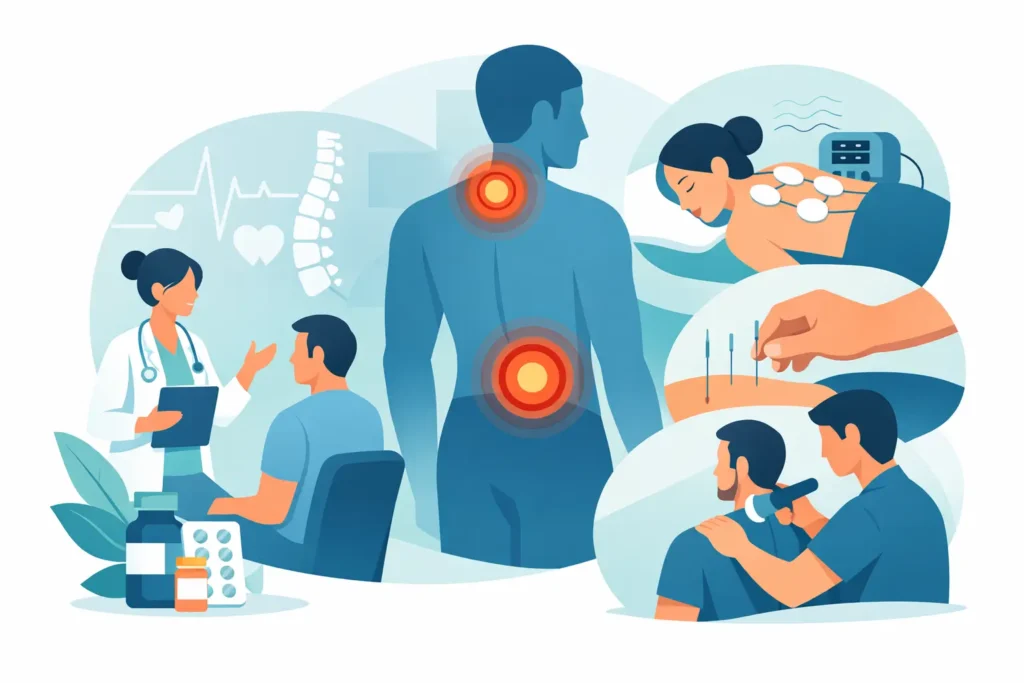
In some cases, standard acupuncture is combined with electroacupuncture, which adds a mild electrical stimulation between needles. This can be useful for stubborn pain, nerve-related symptoms, and deeper muscle dysfunction. Cupping may also be used to improve circulation, reduce soft tissue restriction, and help with tight, overworked muscles.
These therapies tend to work best when the goal is not just temporary relaxation but better movement and reduced irritation in the affected area.
Shockwave therapy for stubborn injuries
When pain is tied to chronic tendon or soft tissue problems, shockwave therapy can be a strong option. This treatment uses acoustic waves to stimulate healing in damaged tissue. It is commonly considered for plantar fasciitis, tennis elbow, shoulder pain, Achilles tendon problems, and other injuries that have lingered longer than expected.
One reason patients look at shockwave therapy is that chronic injuries often get stuck. The tissue is irritated, healing is incomplete, and rest alone no longer solves the problem. Shockwave therapy is designed to encourage a stronger repair response, which can help reduce pain over time.
This is not usually a one-visit fix. Some soreness after treatment is normal, and most patients need a series of sessions. But for the right condition, it can be a practical alternative to injections, prolonged medication use, or waiting until surgery feels like the only remaining option.
Injury care after accidents and acute strain
Pain after an auto accident or sudden injury is easy to underestimate at first. You may feel sore, stiff, or off-balance without realizing how much inflammation and soft tissue damage is developing underneath. Whiplash, low back strain, shoulder pain, and headaches are common examples.
Early evaluation matters because untreated injury patterns can become chronic. A structured non-surgical care plan may include pain-focused therapies, monitoring of function, and gradual treatment aimed at reducing inflammation while restoring motion. Patients often do better when care addresses both immediate symptoms and the risk of longer-term compensation patterns.
That practical approach is especially helpful for working adults who need to recover without disappearing from their responsibilities for weeks at a time.
Physician-guided care matters when pain is more complex
Some patients want natural treatment only. Others feel safer with medical oversight, especially if they have severe pain, multiple injuries, a complicated health history, or concerns about medication dependence. There is no need to force those patients into separate worlds.
A medically supervised clinic model can be valuable because it allows conservative therapies and medical judgment to work together. That means your treatment plan can stay focused on reducing pain and improving function while still accounting for red flags, medication questions, and the need for a more structured recovery process.
For patients who are already worried about pain pills, that balance matters. Nonjudgmental physician-guided care can help people reduce unnecessary medication use without feeling dismissed or left to figure it out on their own.
Reducing reliance on pills without ignoring pain
Many people searching for pain relief are caught in a frustrating middle ground. They do not want surgery, but they also do not want to depend on medication just to get through the day. That is a reasonable concern.
Pain medication can have a role, especially short term, but long-term use comes with trade-offs. Side effects, tolerance, sedation, constipation, and dependence risk are real issues. This is one reason patients often seek non surgical pain management options that support healing while lowering the need for daily pain pills.
For some, that means combining acupuncture with shockwave therapy or injury treatment. For others, it may also involve physician-guided support if opioid dependence has already become part of the picture. A clinic like Acupuncture & Injury can be especially helpful in that setting because it bridges pain care and addiction treatment rather than treating them as unrelated problems.
What to expect from a treatment plan
The most effective non-surgical care usually starts with a clear assessment. Where is the pain coming from? Is the main issue inflammation, nerve irritation, tissue degeneration, muscle spasm, or poor recovery after trauma? The answer shapes the plan.
From there, treatment should be practical and measurable. You should know what the therapy is meant to improve, how long it may take to judge progress, and when the plan needs to change. Good care is not about endlessly repeating visits with no direction. It is about seeing whether pain levels, range of motion, strength, sleep, and daily function are actually improving.
You should also expect honesty. Some patients respond quickly. Others need a longer course because the condition is older, the injury is more severe, or the body has been compensating for a long time. If surgery is truly necessary, that should be acknowledged. Non-surgical treatment is not about denial. It is about trying the least invasive effective option first when appropriate.
Choosing the right non surgical pain management options
The best choice depends on your condition, goals, and medical history. If your pain is mostly muscular or stress-related, acupuncture and cupping may help significantly. If you are dealing with a chronic tendon injury that has not improved with rest, shockwave therapy may make more sense. If you were recently hurt in a crash or workplace injury, you may need a broader injury care plan that focuses on both pain control and restoration of movement.
What matters most is finding a provider who listens carefully, explains the reasoning behind treatment, and adjusts the plan based on your response. Pain relief should not feel like guesswork. It should feel organized, supportive, and grounded in both experience and clinical judgment.
If pain has been running your schedule, your sleep, or your mood, taking the next step does not mean signing up for something extreme. Sometimes it simply means choosing care that helps your body heal while giving you a real path forward without pills becoming the whole plan.
Leave a reply