
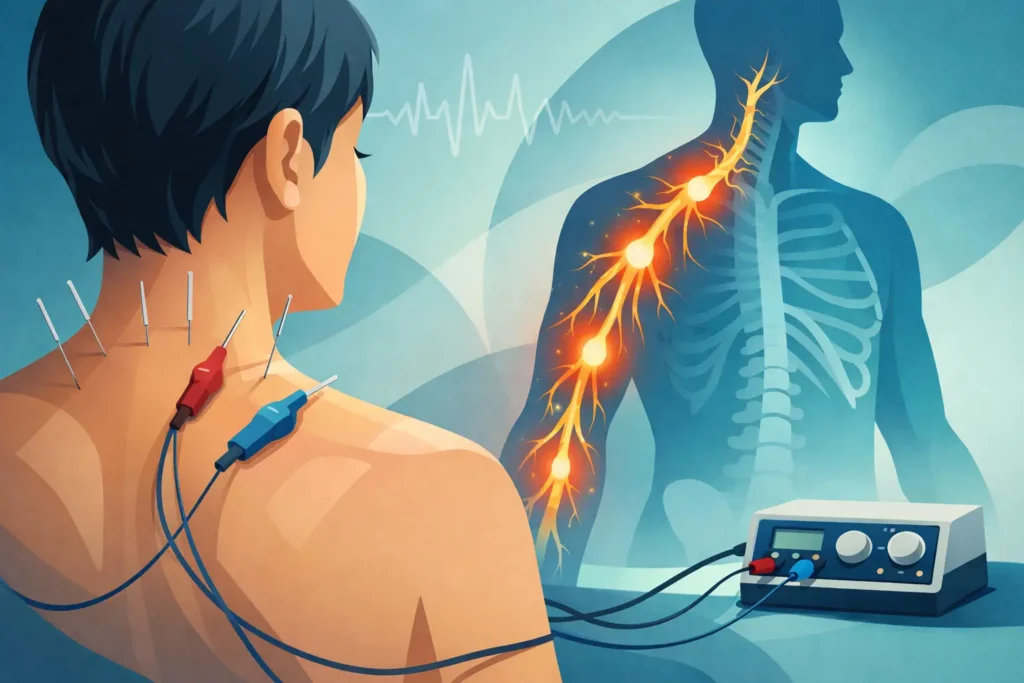
Nerve pain has a way of taking over ordinary life. A light touch can feel sharp, burning can show up without warning, and sleep gets harder when tingling or shooting pain will not settle down. For many patients, electroacupuncture for nerve pain is worth considering because it offers a drug-reducing, non-surgical option that aims to calm irritated nerves while supporting healing.
What electroacupuncture is
Electroacupuncture is a form of acupuncture that adds a mild electrical current to specific needles after they are placed. The current is controlled, adjusted to the patient’s comfort level, and used to create a steady stimulation at selected points. It does not feel like a household electrical shock. Most people describe it as a pulsing, tapping, or gentle buzzing sensation.
In a pain management setting, that extra stimulation can matter. Standard acupuncture already works by targeting points that influence pain signaling, circulation, and muscle tension. Electroacupuncture builds on that by providing more consistent input to the nervous system, which may be useful when pain is persistent, radiating, or tied to nerve irritation.
Why nerve pain is different from other pain
Nerve pain is not the same as a sore muscle after exercise or stiffness from overuse. It often involves abnormal signaling in the nervous system itself. That is why symptoms can include burning, electric sensations, numbness, pins and needles, hypersensitivity, or pain that travels down an arm or leg.
The cause also varies. Some people develop nerve pain after a herniated disc, sciatica, car accident, surgery, or repetitive strain injury. Others deal with diabetic neuropathy, post-viral nerve irritation, or nerve compression in the neck, wrist, or low back. Because the source is not always the same, the best treatment plan is rarely one-size-fits-all.
How electroacupuncture for nerve pain may help
Electroacupuncture for nerve pain is often used with two goals in mind: reducing pain signals and improving the environment around the irritated nerve. That may sound technical, but the idea is simple. If a nerve is inflamed, compressed, or stuck in a pattern of overfiring, treatment should focus on calming that process while helping the surrounding tissue recover.
Research suggests electroacupuncture may influence how the body processes pain by affecting neurotransmitters, local blood flow, and the central nervous system’s response to painful input. In practical terms, some patients notice less burning, less tingling, better movement, and fewer flare-ups over time. Others find that pain is still present but less intense and easier to manage without depending as heavily on medication.
It is not magic, and it is not instant for everyone. Nerve pain tends to be stubborn. When symptoms have been present for months or years, treatment often works best as a series rather than a single visit.
Conditions where it may be considered
A clinician may consider electroacupuncture when nerve pain shows up in patterns such as sciatica, cervical radiculopathy, peripheral neuropathy, post-injury nerve irritation, or pain after an auto accident. It can also be useful when muscle tension is making nerve symptoms worse, as happens when tight tissue adds pressure around already sensitive structures.
That said, appropriateness depends on the patient. Severe weakness, sudden loss of bowel or bladder control, rapidly worsening numbness, or signs of serious neurologic compromise need prompt medical evaluation first. Supportive therapies matter, but red-flag symptoms should never be brushed aside.
What treatment feels like
A lot of first-time patients are less worried about whether it works than whether it hurts. In most cases, the acupuncture needles themselves are very thin, and the electrical stimulation is mild. The goal is not to overwhelm the body. The goal is to create a tolerable, therapeutic signal.
Once the needles are in place, small clips connect to the needles and the machine is turned on gradually. You may feel rhythmic pulsing or a gentle twitching in the area. Comfort matters. If the sensation feels too strong, it should be adjusted.
A session may last around 15 to 30 minutes once stimulation begins, depending on the condition being treated and the overall care plan. Some patients feel relief the same day. Others notice change after several visits, especially when the pain has been chronic.
Electroacupuncture vs. standard acupuncture
Standard acupuncture and electroacupuncture are closely related, but they are not interchangeable in every case. Traditional needle-only acupuncture may be enough for mild pain, stress-related tension, headaches, or whole-body balancing. Electroacupuncture is often chosen when the goal is stronger, more targeted stimulation for pain, muscle dysfunction, or nerve-related symptoms.
That does not mean stronger is always better. Some patients are very sensitive and respond well to gentle treatment. Others need a more active approach. A clinically grounded provider should decide based on your symptoms, exam findings, medical history, and treatment tolerance.
Why combination care often works better
When nerve pain is tied to an injury, inflammation, scar tissue, or movement problem, electroacupuncture usually makes the most sense as part of a broader plan. A patient with sciatica may also need evaluation of the low back and hip. Someone recovering from an auto accident may benefit from injury care, soft tissue treatment, or shockwave therapy depending on the tissue involved. A patient trying to reduce reliance on pain pills may also need physician-guided support and a safer long-term strategy.
This is where integrative care matters. A clinic that understands both natural therapies and medical management can be more useful than a clinic that only offers one lane of treatment. The point is not to force every patient into acupuncture or medication. The point is to use the right tools, at the right time, for the right problem.
Who may be a good candidate
Patients who often respond well are those dealing with persistent nerve symptoms, medication side effects, incomplete relief from other conservative treatments, or a desire to avoid escalating to more invasive options too quickly. It can also be a reasonable fit for people who want to stay functional at work, recover after injury, or support healing without adding another daily medication.
There are also times to be cautious. Patients with certain implanted electrical devices, uncontrolled medical conditions, pregnancy-related considerations, or skin issues at treatment sites may need a modified plan or a different approach. Good care starts with screening, not assumptions.
What results to expect
The most honest answer is that results vary. Some patients get meaningful relief within a few visits. Others improve gradually, with better sleep, less radiating pain, or more tolerance for walking, sitting, and daily activity before they notice major pain reduction.
Progress is not always linear. Nerve pain can flare, especially if the original cause is still being aggravated by posture, repetitive work, inflammation, or an unresolved injury. That is why treatment plans often involve a short course of more frequent visits at first, followed by reassessment.
A realistic goal is not always complete and immediate pain elimination. Sometimes the first win is reducing pain enough to move better, sleep better, and rely less on medication. From there, recovery tends to build.
Questions to ask before starting electroacupuncture for nerve pain
If you are considering electroacupuncture for nerve pain, ask how the provider determines whether your symptoms are actually nerve-based, what conditions they commonly treat, how many sessions they typically recommend before reassessment, and whether your care will be coordinated with other therapies if needed. Those questions matter because technique alone is not the whole story. Diagnosis, timing, and follow-through make a big difference.
For patients in the Marietta and greater Atlanta area, it can be especially helpful to choose a clinic that can evaluate pain from more than one angle. If your symptoms involve injury, inflammation, or concern about long-term pain medication use, integrated care may save time and reduce frustration.
The bigger goal: relief without losing control of your care
People with nerve pain are often told to wait it out, mask it, or accept it. That can leave patients cycling through medications, missed work, poor sleep, and limited activity without a clear plan. Electroacupuncture offers another option – one that aims to reduce pain, support healing, and help patients stay engaged in their recovery.
At Acupuncture & Injury, that kind of care fits the larger goal of helping people become pain free without pills whenever possible. Not every case is simple, and not every patient needs the same treatment path. But when nerve pain is holding you back, it makes sense to look for care that is practical, medically informed, and focused on getting your life moving again.
If you are weighing your options, the best next step is not guessing whether you should just live with it. It is getting your pain evaluated by someone who can tell the difference between temporary irritation and a problem that deserves a more complete treatment plan.
Leave a reply