Pain changes how you work, sleep, drive, and even how patient you feel with the people around you. When people start searching for the top non opioid pain treatments, they usually are not looking for theory. They want real relief, fewer side effects, and a plan that helps them function again without feeling trapped by medication.
That is why non-opioid care matters. Opioids can have a role in some cases, especially short term and under close supervision, but they are not the only path for back pain, joint pain, injury recovery, nerve irritation, or post-accident pain. In many cases, the best results come from combining targeted therapies that reduce inflammation, improve healing, restore movement, and lower pain signals over time.
What makes the top non opioid pain treatments work?
The most effective treatments do not all work the same way. Some calm irritated nerves. Some improve blood flow and tissue repair. Others help stiff muscles and joints move normally again so pain stops getting reinforced day after day.
That is also why no single treatment is best for everyone. A warehouse worker with a shoulder strain, a veteran with chronic low back pain, and someone recovering from a car accident may all need different care plans. The goal is not just to cover pain up. The goal is to reduce the cause of pain where possible and help your body recover.
Acupuncture for pain relief
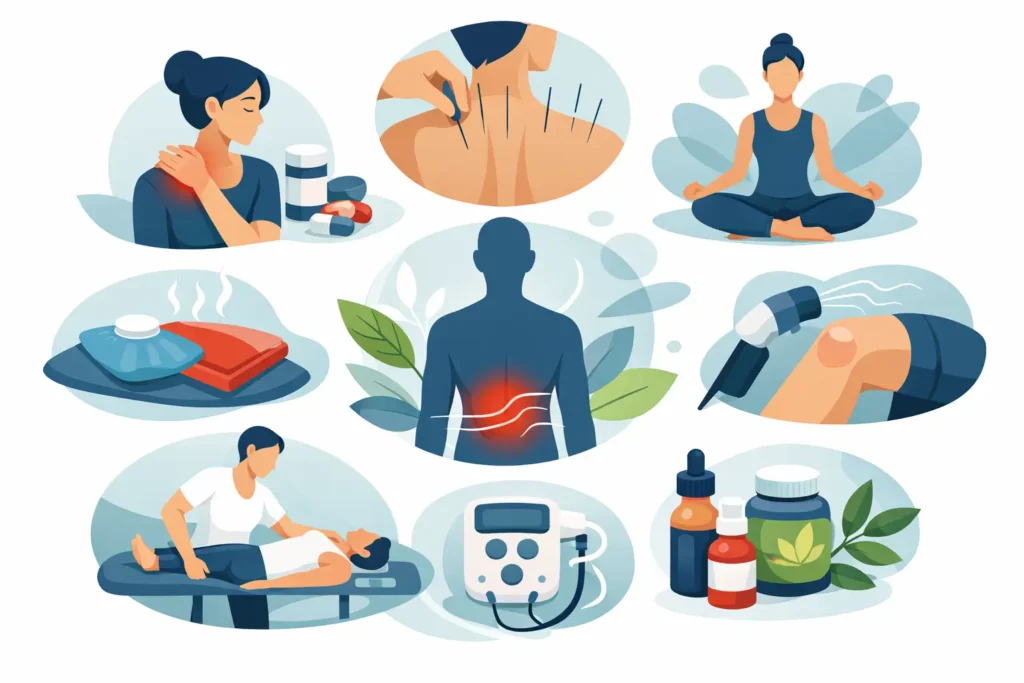
Acupuncture remains one of the most widely used non-drug options for pain because it can help on several levels at once. It may reduce pain signaling, relax muscle tension, improve circulation, and support the body’s own pain-modulating systems.
For patients with neck pain, back pain, sciatica, knee pain, headaches, or lingering injury symptoms, acupuncture is often a practical starting point because it is low risk and does not involve medication. Some people feel relief quickly. Others improve gradually over a series of visits, especially when pain has been present for months or years.
Electroacupuncture can add another layer. By applying gentle electrical stimulation through acupuncture points, it may help with stubborn pain patterns, muscle spasms, or nerve-related symptoms. It is not necessary for every case, but it can be useful when standard treatment needs more intensity.
Shockwave therapy for stubborn injuries
When pain comes from tendons, fascia, scar tissue, or slow-healing soft tissue injuries, shockwave therapy can be a strong option. This treatment uses acoustic waves to stimulate healing in damaged areas that have not fully recovered on their own.
It is often used for plantar fasciitis, tennis elbow, shoulder tendon pain, Achilles problems, and chronic muscle tightness tied to old injuries. Patients usually consider it when rest, stretching, and basic care have not been enough.
The advantage here is that shockwave therapy is trying to move healing forward, not simply numb symptoms. The trade-off is that it may cause temporary soreness after treatment, and it often works best as part of a bigger plan that includes movement therapy and follow-up care.
Physical rehabilitation and corrective exercise
A lot of pain is mechanical. If a joint is not moving well, a muscle group is weak, or posture and movement patterns are putting stress on the same area every day, pain tends to keep returning.
That is where rehabilitation matters. Guided stretching, strength work, mobility training, and corrective exercise can reduce strain on painful tissues and improve how the body handles everyday demands. This is especially important after auto injuries, workplace injuries, sports injuries, and episodes of back or neck pain that flare up repeatedly.
Rehab is not the fastest fix, but it is one of the most important for long-term results. If you only reduce pain and never rebuild function, the problem often comes back.
Manual therapy and soft tissue care
Hands-on treatment still has an important place in non-opioid pain care. Soft tissue work, cupping, myofascial techniques, and joint-focused treatment can help reduce tension, improve circulation, and make movement less painful.
These treatments are often most helpful when muscles are guarding an injured area or when stiffness is limiting recovery. For example, after a car accident, a patient may have neck tightness, upper back spasm, and reduced range of motion. Manual care can make it easier to turn the head, sleep more comfortably, and tolerate rehab exercises better.
Cupping can be useful for some patients with tight, overworked muscle groups or lingering inflammation. It is not a cure-all, but in the right case it can complement acupuncture and rehab well.
Anti-inflammatory strategies that do not rely on opioids
Pain is often tied to inflammation, especially after injury or with overuse conditions. Non-opioid treatment may include practical anti-inflammatory strategies such as guided activity modification, ice or heat at the right stage of healing, topical treatments, and in some cases non-opioid medications recommended by a physician.
This category is broad because inflammation has many causes. An acute ankle sprain is different from arthritic knee pain, and both are different from nerve pain after a disc issue. What matters is choosing treatment based on the source of pain instead of using the same solution for every problem.
Lifestyle factors also matter more than many people expect. Poor sleep, stress, inactivity, and repeated strain at work can all keep the nervous system irritated and make pain feel worse.
Interventional and physician-guided non-opioid care
Some patients need more than holistic treatment alone. That does not mean opioids are the next step. Physician-guided pain management may include non-opioid medication strategies, diagnostic evaluation, image review, and coordinated care that helps rule out more serious problems.
This is especially valuable when pain is severe, radiating, or not responding as expected. A medically supervised clinic can help patients avoid bouncing between urgent care, pain pills, and unanswered questions. It also helps when a patient has both pain concerns and a history of opioid dependence or misuse, because treatment decisions need extra care and structure.
That integrative model is where many patients do best. Instead of being pushed into an all-natural or all-medication approach, they get a plan built around what is safest and most likely to work.
Regenerative-focused options for healing support
Some newer therapies are used to encourage tissue repair and recovery in chronic injuries. Shockwave therapy falls into this conversation, but the broader point is that certain treatments are designed to stimulate healing rather than just reduce symptoms for a few hours.
These options are not right for every diagnosis, and they should not replace a proper exam. Still, for patients with chronic tendon pain, overuse injuries, or soft tissue damage that has been slow to improve, regenerative-focused treatment can be worth discussing.
The top non opioid pain treatments often work best together
This is the part many people miss. Pain treatment is not always about choosing one winner from a list of options. It is often about combining the right therapies in the right order.
A patient with sciatica might benefit from acupuncture to calm pain, rehab to improve spinal support, and physician-guided care to monitor nerve symptoms. Someone with shoulder pain may need shockwave therapy for the tendon, soft tissue work for muscle restriction, and corrective exercise to keep the problem from returning.
That layered approach is often what gets people to the outcome they actually want – less pain, better movement, fewer medications, and a clearer path forward.
When to seek help sooner
Non-opioid treatment is highly effective for many common pain conditions, but there are times when you should not wait. New weakness, numbness that is spreading, loss of bladder or bowel control, major trauma, fever with severe pain, or unexplained weight loss need prompt medical evaluation.
For everything else, waiting too long can still make recovery harder. Acute pain can become chronic when inflammation, compensation, and nervous system irritation are left unchecked. Early treatment often means fewer setbacks and a better chance of avoiding stronger medication later.
If you are in the Marietta or greater Atlanta area and trying to figure out what care makes sense for your pain, the best next step is not guessing between trends online. It is getting a treatment plan that matches the injury, the pain pattern, and your goals. Relief is better when it is built on the right diagnosis, the right combination of therapies, and a team that wants you pain free without pills.
Leave a reply