That sharp, burning pain that starts in your low back and shoots down your leg can make ordinary things feel like a problem. Sitting in the car, walking through the grocery store, even trying to sleep can become frustrating fast. If you have been searching for how acupuncture helps sciatica, the short answer is this: it can calm irritated nerves, reduce muscle tension, improve circulation, and help your body move with less pain.
Sciatica is not a condition by itself as much as a symptom pattern. It usually happens when the sciatic nerve is irritated or compressed, often because of a herniated disc, spinal wear and tear, inflammation, or tight muscles deep in the hip such as the piriformis. That is why treatment has to be more thoughtful than simply covering up pain. When the goal is real relief, the best approach is often one that addresses both the pain and the reason it keeps getting triggered.
How acupuncture helps sciatica
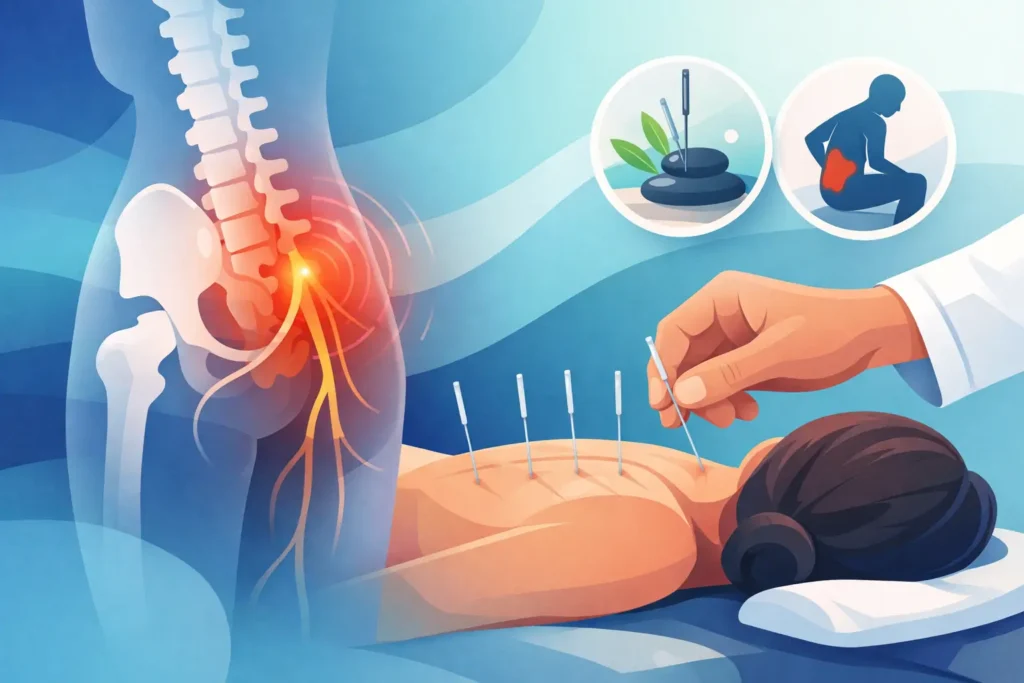
Acupuncture works by placing very thin needles at specific points to influence pain signaling, circulation, muscle tension, and the body’s natural healing response. From a modern medical perspective, acupuncture may stimulate the nervous system, encourage the release of endorphins, and reduce inflammatory activity in painful tissues. For someone with sciatica, that matters because the nerve is often being aggravated by swelling, tight structures, or a pain cycle that keeps the area irritated.
Many patients notice that the pain does not always disappear in one visit, and that is a realistic expectation to have. Sciatica can be stubborn, especially if it has been present for weeks or months. What acupuncture often does first is reduce the intensity and frequency of flare-ups. Pain may travel less intensely down the leg, numbness may ease, and movements like standing up or getting out of bed may feel less restricted.
There is also a muscle component that should not be overlooked. When pain runs through the low back, hip, and leg, the body tends to guard. Muscles tighten to protect the area, but that guarding can add more pressure and discomfort. Acupuncture can help interrupt that pattern, allowing muscles to relax so the nerve has less surrounding tension working against it.
Why sciatica responds differently from person to person
Not all sciatica is the same, and that is one reason results vary. If your pain is coming mainly from a muscle entrapment issue, acupuncture may help fairly quickly because reducing tension can take pressure off the nerve. If the cause is a larger disc problem or significant spinal degeneration, acupuncture can still be useful, but it may be one part of a broader treatment plan rather than the only answer.
Severity matters too. Mild intermittent symptoms usually respond faster than severe pain with weakness, major numbness, or longstanding nerve irritation. Timing also plays a role. Early treatment may help calm inflammation before the pain pattern becomes more entrenched.
This is why a clinically grounded plan is important. A good provider is not just asking where it hurts. They are paying attention to how the pain travels, what movements trigger it, whether there is tingling or weakness, how long it has been going on, and whether imaging or further medical evaluation might be needed.
What happens in the body during treatment
When acupuncture is used for sciatica, needles may be placed near the low back, hip, or leg, as well as in points farther away that still influence pain pathways and muscle function. The treatment itself is usually much gentler than people expect. Most patients feel little more than a quick sensation at insertion, followed by heaviness, warmth, tingling, or a dull ache that fades.
Those sensations are not the goal by themselves. What matters is the physiologic response. Acupuncture can increase local blood flow, which may help tissues recover in areas that have been inflamed or chronically tight. It can also affect the central nervous system, changing the way the brain and spinal cord process pain. In practical terms, that can mean less sharp radiating pain and a lower level of overall irritation.
For some patients, electroacupuncture may be recommended. This uses a mild electrical current between certain needles to provide more stimulation. It is often used in pain management settings because it can enhance the treatment effect, especially when nerve pain or deep muscular tension is involved. For sciatica, that can be a good fit when standard treatment alone is not enough.
What acupuncture can and cannot do
Acupuncture can be a strong option for managing sciatic pain, but it should be presented honestly. It can help reduce pain, improve mobility, ease muscle spasm, and support healing. It may also help patients rely less on pain medication, which is a major benefit for people who want relief without building their routine around pills.
What it cannot do is magically erase every structural problem in the spine. If there is severe nerve compression, progressive weakness, loss of bowel or bladder control, or signs of a more serious neurologic issue, urgent medical evaluation comes first. Acupuncture belongs in responsible pain care, not in place of it.
That balanced view is important because patients deserve treatment that is both hopeful and realistic. The best results usually happen when acupuncture is used as part of a plan tailored to the actual cause of the pain.
When a combined treatment plan makes more sense
Sciatica often improves best with a combination approach. Acupuncture may calm pain and reduce guarding, while other therapies address tissue healing, movement dysfunction, or injury-related inflammation. In a medically supervised integrative setting, treatment can be adjusted based on how your symptoms behave rather than forcing you into a one-size-fits-all model.
For example, if sciatica developed after an auto accident or lifting injury, the surrounding soft tissues may need attention too. If inflammation is persistent or there is chronic muscle dysfunction, therapies such as shockwave treatment, targeted rehab strategies, or supportive injury care may help the area recover more fully. The advantage of integrated care is simple: you are not stuck choosing between natural treatment and medical oversight.
This also matters for patients who are trying to avoid long-term dependence on pain medication. Reducing pain without increasing pill use is not just a preference for many people. It is part of protecting long-term function, energy, and quality of life.
What to expect after your first few visits
Some people feel looser and more comfortable right away. Others notice change over several visits, especially if the pain has been present for a long time. A common early pattern is that the pain becomes less constant, then less intense, and then less disruptive to sleep, work, and movement.
Mild soreness after treatment can happen, but it usually passes quickly. What matters more is the trend over time. Are you walking with less pain? Sitting longer without symptoms shooting down the leg? Needing fewer pain relievers? These functional changes are often the clearest signs that treatment is working.
Consistency matters. Sciatica that has built up over time usually needs a series of treatments rather than a single appointment. That does not mean endless care. It means giving the body enough support to settle the inflammation and break the pain cycle.
Is acupuncture a good option for your sciatica?
If your goal is to manage sciatic pain without jumping straight to stronger medication or invasive procedures, acupuncture is worth serious consideration. It is especially appealing for people who want a conservative treatment that supports the body’s own pain-control systems while still fitting into a medically responsible care plan.
It may be a particularly good option if your symptoms include low back pain that radiates into the buttock or leg, muscle tightness that makes movement harder, flare-ups with sitting or standing, or pain that keeps returning despite rest and home remedies. In the Marietta area, clinics such as Acupuncture & Injury often use this kind of integrative model to help patients get relief while keeping the focus on function, recovery, and fewer pills.
The key is not to wait until the pain has taken over your routine. Sciatica has a way of shrinking your day one movement at a time. Getting the right treatment early can make it easier to stay active, sleep better, and get back to the parts of life pain has been interrupting.
If you are dealing with sciatica now, the most helpful next step is not guessing whether you should just tough it out. It is getting evaluated, understanding what is driving the pain, and choosing treatment that gives you a real chance to move forward.
Leave a reply