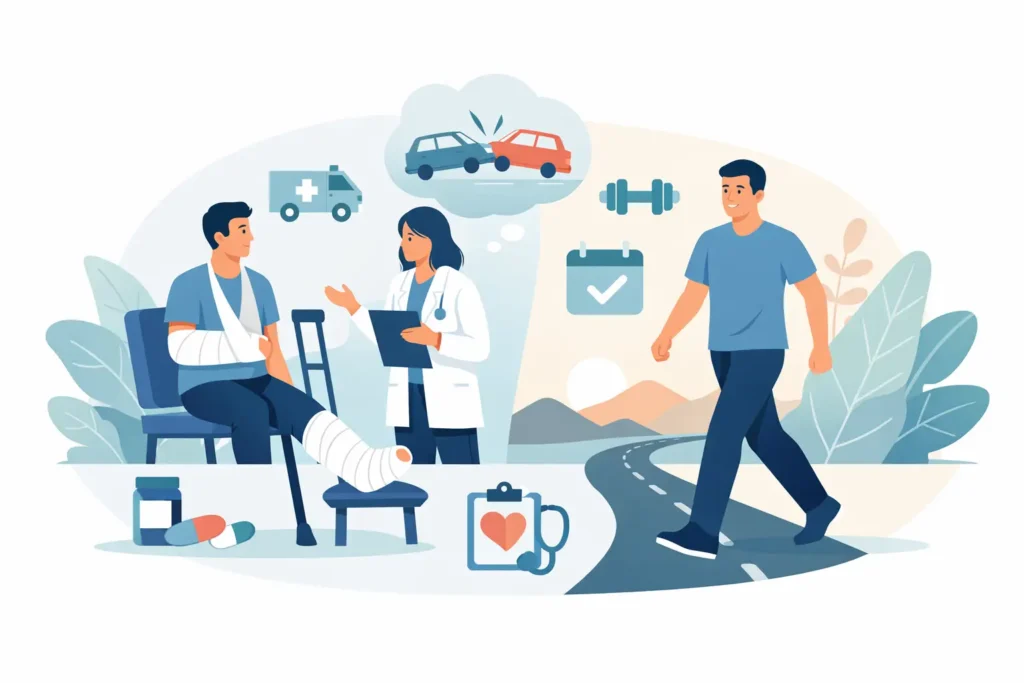
The days after a car accident can be more confusing than the accident itself. You may walk away thinking you are lucky, only to wake up the next morning with neck stiffness, headaches, back pain, or a shoulder that suddenly will not move the way it should. A good guide to post accident recovery starts with one simple truth: symptoms do not always show up right away, and early care can make a real difference.
Post-accident recovery is not just about waiting for pain to fade. It is about protecting your body while inflammation is rising, identifying injuries before they become chronic, and choosing treatment that helps you heal without relying only on pain pills. For many people, the best results come from a plan that combines medical oversight with hands-on, drug-reducing care.
What post-accident recovery usually looks like
After an accident, the body often enters a stress response. Adrenaline can mask pain for hours or even days. That is one reason people delay treatment. They assume they are fine, then later develop whiplash symptoms, muscle spasms, low back pain, nerve irritation, jaw pain, or sleep problems.
Soft tissue injuries are especially common after an auto accident. Muscles, ligaments, tendons, and fascia can be strained even when X-rays do not show a fracture. That does not mean the pain is minor. In fact, untreated soft tissue injuries can lead to lingering inflammation, reduced range of motion, compensation patterns, and recurring pain months later.
A realistic guide to post accident recovery also has to account for the fact that no two patients heal the same way. A younger person with a mild strain may improve quickly. Someone with prior back issues, arthritis, repetitive work demands, or a more forceful collision may need a longer and more structured recovery plan.
The first priorities after an accident
The earliest stage of recovery is about safety, evaluation, and documentation. If symptoms are severe, worsening, or include red flags such as loss of consciousness, chest pain, shortness of breath, major weakness, confusion, or numbness that spreads, emergency care comes first.
If the injury seems less dramatic, it is still wise to get evaluated promptly. Delaying care can make recovery harder and can also make it more difficult to connect your symptoms to the accident later. Early assessment helps identify whether you are dealing with whiplash, a shoulder strain, low back injury, joint inflammation, or nerve involvement.
In the first several days, the goal is usually to calm irritated tissue and prevent more strain. That may mean modifying activity, improving sleep support, addressing pain and inflammation, and beginning treatment that encourages circulation and tissue repair. Complete bed rest is rarely the answer for long. Gentle, supervised movement is often better than doing nothing, but timing matters.
Why pain can get worse before it gets better
Many patients are surprised when symptoms intensify 24 to 72 hours after the crash. That pattern is common. Inflammation builds, muscle guarding sets in, and injured tissue begins reacting to the force it absorbed. You may also start moving differently to avoid pain, which puts stress on nearby areas.
For example, a neck injury can trigger headaches and upper back tightness. A low back strain can shift the way you walk and create hip pain. A bruised shoulder can lead to arm weakness and poor sleep. Recovery is not always linear, and that does not automatically mean something is going wrong. It does mean persistent symptoms deserve attention.
Treatment options that support healing
The right treatment plan depends on the injuries involved, your pain level, your medical history, and how your body responds in the early phase. Some patients need a relatively short course of care. Others benefit from a combination of therapies over several weeks.
Acupuncture is often used in post-accident care to help reduce pain, calm muscle tension, and support the body’s natural healing response. Many patients choose it because it offers relief without adding more medication. When used appropriately, it can be especially helpful for whiplash, back pain, tension headaches, and soft tissue irritation.
Shockwave therapy may be considered when deeper soft tissue injuries are slow to improve. This treatment uses acoustic energy to stimulate circulation and healing in damaged tissue. It is not the right fit for every case, but for stubborn pain in tendons, muscles, and connective tissue, it can be a valuable part of a broader recovery plan.
Other supportive options may include cupping, electroacupuncture, and guided injury care that focuses on restoring motion and function. The advantage of an integrative setting is that treatment is not forced into one lane. If a patient needs physician-guided evaluation plus natural pain relief strategies, both can work together.
Medication has a place, but it should not be the whole plan
Pain medication can be useful in some situations, especially in the short term, but it comes with trade-offs. Some medicines reduce symptoms without doing much to improve tissue healing or movement patterns. Others may cause drowsiness, stomach irritation, or dependence risks if used too long.
That is why many injured patients are looking for options that help them become functional again without building their whole recovery around pills. A medically supervised, integrative approach can help reduce that burden. The point is not to reject medicine. It is to use it thoughtfully while also treating the cause of pain where possible.
This matters even more for people with a history of opioid use or concerns about dependence. After an accident, pain treatment should provide relief without creating a second problem. For those patients, physician oversight and nonjudgmental care are especially important.
How to know if recovery is off track
Some soreness after an accident is expected. What should raise concern is pain that keeps spreading, interferes with normal activity, or does not improve with time and proper care. Headaches that continue, dizziness, numbness, sleep disruption, and reduced range of motion can all signal that the injury needs more attention.
Another warning sign is when pain changes your daily habits. If you cannot turn your head while driving, sit at work without severe discomfort, lift your child, or sleep through the night, your body is telling you recovery is incomplete. Waiting it out may sound reasonable, but in many cases it only allows inflammation and compensation to become more established.
Building a recovery plan that fits real life
A strong post-accident plan should match your actual schedule and demands. A warehouse worker, office employee, parent of young children, and retired adult will not all need the same pace of treatment. Compliance matters. If a plan is too complicated, too expensive, or impossible to fit into your week, even a good treatment idea may fail in practice.
This is where local, accessible care has real value. Patients in Marietta and the greater Atlanta area often want one place where they can be evaluated, treated, and monitored without unnecessary delays. That convenience is not just about scheduling. It can improve outcomes by making it easier to stay consistent through the recovery window.
The best plans also leave room for adjustment. If one therapy helps quickly, care may taper sooner. If pain is more stubborn than expected, treatment can shift. Recovery should be monitored, not guessed at.
What patients often overlook in the recovery process
One common mistake is treating only the loudest symptom. A patient may focus on neck pain and ignore the shoulder, jaw, or upper back involvement that is keeping the whole pattern active. Another mistake is stopping care the moment pain drops slightly, before function has fully returned.
Sleep, stress, and activity level also matter more than people think. When sleep is poor, healing tends to slow down. When stress stays high, muscle tension often does too. And when patients go straight back to lifting, long commutes, or hard workouts without guidance, setbacks are common.
A better approach is steady progress. Reduce inflammation, improve mobility, rebuild tolerance for movement, and keep an eye on how your body responds at each stage.
A guide to post accident recovery should be practical
If there is one thing to remember, it is this: do not judge the severity of an accident only by what you felt in the first hour. Your recovery depends on what happened to your body, how quickly injuries are addressed, and whether your treatment supports healing as well as pain relief.
At Acupuncture & Injury, that means looking beyond short-term symptom masking and helping patients move toward real recovery with physician-guided, non-surgical care. The goal is simple – less pain, better function, and fewer reasons to depend on medication.
If you have been in an accident and something still feels off, trust that instinct. Early, focused care can change the course of recovery, and your body usually does better when it does not have to fight through pain alone.
Leave a reply