Pain rarely stays in one lane. A back injury can affect sleep, work, mood, and mobility. Lingering neck pain after a car accident can turn into headaches, stiffness, and missed days on the job. For many people, an integrative pain management clinic makes sense because pain is not just one problem, and treatment should not be limited to one tool.
That is the core difference. Instead of forcing patients to choose between holistic care and conventional medicine, an integrative approach combines both when appropriate. The goal is practical relief – less pain, better function, and a real path forward that does not depend on surgery or long-term reliance on pills whenever avoidable.
What makes an integrative pain management clinic different?
A traditional pain model often centers on medication, injections, referrals, or brief visits that address symptoms one piece at a time. That can help in some cases, but it does not always answer the full problem. Pain may involve inflammation, muscle tension, nerve irritation, restricted movement, poor healing, stress, or dependence on medication after months or years of trying to cope.
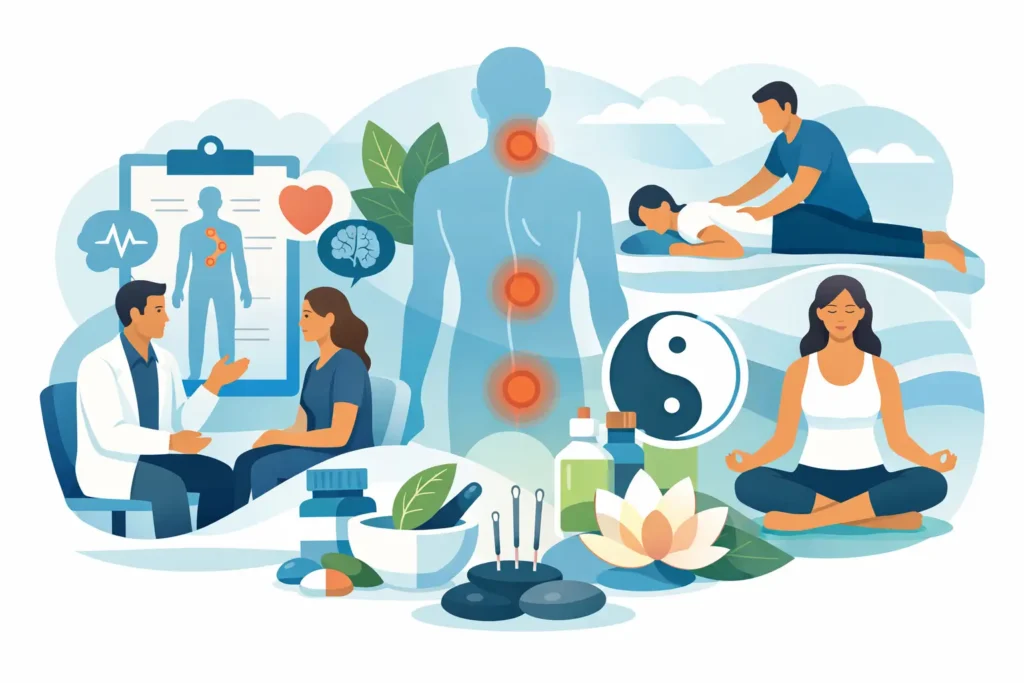
An integrative pain management clinic looks at those layers together. Treatment may include acupuncture, electroacupuncture, cupping, shockwave therapy, injury care, and physician-guided medical management. If someone is recovering from an auto accident, for example, they may need pain relief, soft tissue healing, mobility support, and a plan that helps them return to work safely. If someone is struggling with chronic pain and opioid dependence, they may need non-drug pain therapies alongside medically assisted treatment under supervision.
This model is not about replacing every conventional treatment with a natural one. It is about using the right combination for the patient in front of you.
How treatment usually works
Most patients do not need a complicated explanation. They want to know two things: what is causing the pain, and what can be done about it.
A good clinic starts with evaluation, not assumptions. That means understanding where the pain started, what makes it worse, how long it has lasted, what treatments have already been tried, and whether there are signs of nerve involvement, inflammation, injury, or medication-related concerns. From there, care is tailored instead of copied from a standard template.
Some patients need short-term care for an acute injury. Others need a longer plan because the pain has become chronic, movement patterns have changed, or healing has stalled. In either case, the treatment plan should be clear, realistic, and focused on measurable improvement.
Acupuncture as part of a pain plan
Acupuncture is one of the most recognized tools in integrative care, but many patients still are not sure what to expect. In a clinical setting, it is used to help reduce pain, calm muscle tension, improve circulation, and support the body’s healing response. It is commonly used for back pain, neck pain, joint pain, headaches, sciatica, and post-injury discomfort.
For some people, acupuncture brings quick relief. For others, it works best as a series, especially when pain has been present for a long time. That is one of the trade-offs patients should understand. Natural therapies can be highly effective, but they may require consistency rather than a one-visit fix.
Electroacupuncture adds gentle electrical stimulation to acupuncture points and can be especially useful when pain is stubborn or muscles are not releasing well. Cupping may also be used to improve blood flow and reduce tightness in overworked areas.
Why shockwave therapy is getting attention
When pain is tied to damaged soft tissue, chronic inflammation, or slow healing, shockwave therapy can be a strong option. This treatment uses acoustic waves to stimulate repair in targeted areas. Patients often seek it for tendon pain, plantar fasciitis, shoulder issues, and other conditions that have not responded well to rest alone.
The reason it fits well in an integrative clinic is simple. Some pain needs more than symptom control. It needs healing support. Shockwave therapy is not right for every condition, but when the issue involves tissue that has become chronically irritated or under-healed, it can help move recovery along.
That said, it is not magic. Results depend on the diagnosis, the severity of the condition, and whether the patient follows the broader plan. If someone continues the same aggravating movement every day without modification, progress may be slower.
Injury care should be more than temporary relief
Acute injuries and auto accident injuries often get underestimated. A patient may walk away from the accident, go home, and assume the soreness will pass. Then, over the next few days, the pain builds. The neck tightens. The low back starts spasming. Sleep gets worse. Driving becomes uncomfortable.
This is where early treatment matters. An integrative clinic can address inflammation, muscle guarding, restricted range of motion, and pain before those issues become harder to unwind. Acupuncture and soft tissue-focused treatments may help calm the pain response, while a medical evaluation helps identify when a more serious issue needs additional attention.
The practical advantage is coordination. Patients do not have to bounce between disconnected offices for every part of their care. When treatment is under one roof, the plan is often simpler to follow.
Pain management without overreliance on pills
A lot of patients are not against medication. They are against feeling stuck on it.
That distinction matters. There are times when medication has a role, especially in acute phases or more complex cases. But many adults with chronic pain are looking for a way to reduce dependence on pain pills, avoid escalating doses, and feel more in control of their treatment. An integrative clinic supports that goal by offering therapies that address pain from different angles.
Instead of asking whether care should be natural or medical, the better question is what combination gives the safest and most effective outcome. For one patient, that may mean acupuncture and shockwave therapy. For another, it may mean injury treatment plus physician oversight and a structured medication plan. The best care is not ideological. It is responsive.
When pain and opioid dependence overlap
One of the most important roles of an integrative pain management clinic is helping patients who live at the intersection of pain and opioid dependence. This group is often underserved. They may feel judged in traditional settings, or they may be offered addiction treatment without meaningful help for the pain that contributed to the problem in the first place.
A medically supervised clinic can address both. Medication-assisted treatment with buprenorphine-based options may help reduce cravings, withdrawal, and the daily instability that keeps recovery out of reach. At the same time, non-drug therapies such as acupuncture can support pain relief, stress reduction, and physical recovery.
This matters because recovery is hard to sustain when untreated pain is still running the show. It also matters because not every patient wants the structure of a daily methadone clinic. Office-based treatment can offer more privacy, more flexibility, and a more dignified experience.
Who benefits most from this kind of clinic?
People with chronic back or neck pain often benefit, especially if they have tried medication, rest, or basic therapy without enough improvement. Patients with sports injuries, work injuries, and auto accident injuries are also strong candidates. Those dealing with inflammation, tendon pain, sciatica, headaches, or muscle tension may do well when treatment is matched to the root cause instead of just the pain level.
This model also helps patients who are tired of fragmented care. If you want acupuncture but also want physician involvement, or if you need addiction treatment without giving up on pain relief, an integrative setting can be a better fit than clinics that only offer one side of the equation.
In Marietta and the greater Atlanta area, that matters for busy adults who need practical care. They want appointments they can keep, treatment plans they understand, and a clear sense that progress is being monitored.
What to look for in an integrative pain management clinic
Not every clinic that uses the word integrative delivers the same level of care. Look for a setting that explains treatments clearly, evaluates your condition before recommending a plan, and adjusts care based on how you respond. If addiction treatment is part of the services, physician oversight and a nonjudgmental approach are essential.
It also helps to choose a clinic that understands function, not just pain scores. Relief matters, but so does getting back to work, sleeping through the night, standing longer, driving comfortably, and returning to normal routines. Those are the outcomes patients actually feel.
At Acupuncture & Injury, that approach is centered on helping people become pain free without pills whenever possible, while still offering medically grounded care for patients who need more support.
The right clinic will not promise the same result for everyone. Some conditions improve quickly. Others take time, repetition, and a combination of therapies. But if your pain has been pulling your life off course, a treatment plan that brings holistic care and medical oversight together may be the first approach that finally makes sense.
Leave a reply