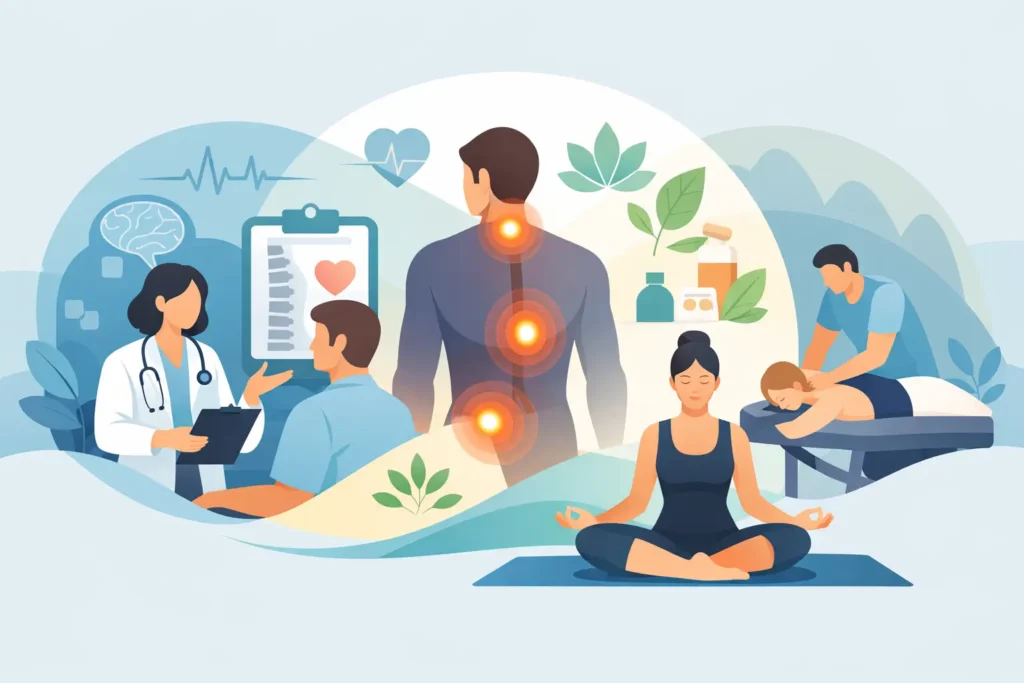
A painful back, stiff shoulder, or lingering injury rarely affects just one part of life. It can disrupt work, sleep, exercise, family time, and mood. Understanding how integrated pain care works can help you move beyond short-term symptom relief and toward a plan that addresses pain, function, healing, and the factors keeping you stuck.
Integrated pain care brings multiple evidence-informed treatments together under one coordinated plan. Rather than asking you to choose between natural therapies and conventional medical care, it uses the right combination for your condition, goals, health history, and comfort level. For many patients, that means a path toward meaningful relief with less dependence on pain medication.
How Integrated Pain Care Works in Real Life
Pain is not always a simple signal that something is wrong in one spot. An auto accident can create neck pain, headaches, muscle guarding, poor sleep, and anxiety about movement. Knee pain may lead you to walk differently, which can strain the hip or lower back. Chronic pain can make the nervous system more sensitive over time, so discomfort lasts even after an initial injury begins to heal.
An integrated approach looks at this full picture. It starts with a clinical evaluation to identify possible injury patterns, inflammation, mobility limits, nerve-related symptoms, medication concerns, and red flags that may require additional medical attention. From there, the care plan is built around practical goals: sleeping through the night, returning to work, walking without a limp, lifting safely, or getting through the day with fewer pain pills.
Treatment is adjusted as your body responds. Some patients need focused care after a recent injury. Others need a longer-term strategy for arthritis, old sports injuries, nerve pain, or pain that has persisted for months or years. The plan should not be one-size-fits-all, and it should not promise instant results when the condition calls for steady rehabilitation.
A Care Plan Begins With the Right Assessment
Before recommending treatment, a qualified provider should listen closely to what happened, where symptoms began, what makes them worse, and how pain affects daily life. This conversation matters. The location of pain is not always the source of the problem.
A hands-on assessment may evaluate range of motion, tenderness, muscle tension, posture, strength, balance, and signs of nerve irritation. Medical history is equally important, especially if you have diabetes, bleeding concerns, a pacemaker or implanted device, a history of surgery, or take prescription medications. Imaging or referral may be appropriate when symptoms suggest a fracture, serious neurologic issue, infection, or another condition that needs specialized evaluation.
This assessment also creates a baseline. Pain scores matter, but function often tells the more useful story. Can you turn your head while driving? Climb stairs? Sit through a work meeting? Put on your shoes without bracing yourself? Progress is easier to see when it is tied to the activities you want back.
Treatments Work Together, Not in Competition
Integrated pain care combines therapies because each may address a different part of the recovery process. The goal is not to schedule every available treatment. It is to select approaches that make sense for the patient in front of the provider.
Acupuncture and Electroacupuncture
Acupuncture uses very thin, sterile needles placed at specific points to support the body’s pain-modulating systems. Many patients describe a sense of relaxation during treatment, while others notice gradual improvements in muscle tightness, mobility, sleep, or pain levels over several visits.
Electroacupuncture adds a mild electrical current between selected needles. It may be used when a provider is working on persistent muscle tension, painful areas, or certain nerve-related symptoms. The treatment is tailored to tolerance, and patients should always tell their provider if a sensation feels uncomfortable.
Cupping for Muscle Tension and Mobility
Cupping uses suction to lift tissue rather than compress it. It is often used for tight muscles, restricted movement, and soreness after injury or overuse. Temporary circular marks can occur, especially with stronger suction, and they are not the same as bruises caused by trauma.
For someone whose upper back and shoulders are constantly tight from desk work, driving, or guarding after an accident, cupping may help make movement-based recovery and other treatments more comfortable. It is a supportive therapy, not a substitute for evaluating the cause of severe or unexplained pain.
StemWave Shockwave Therapy
StemWave therapy uses acoustic waves to stimulate the body’s healing response in targeted tissue. Depending on the condition, it may be considered for chronic tendon problems, joint pain, soft-tissue injury, or areas that have not improved with rest alone. Patients may feel pulsing or tapping during the session, and treatment intensity is adjusted to a tolerable level.
Shockwave therapy is not right for every diagnosis. The location of the problem, the stage of healing, medical history, and the presence of certain conditions or implants can affect whether it is appropriate. A careful screening process protects patients from receiving a treatment that does not fit their situation.
Medical Pain Management and Medication Review
Medication can have a role in pain care, particularly when symptoms are severe or function is limited. Integrated care does not treat medication as a failure, nor does it assume every patient can or should stop it immediately. Instead, medical oversight helps determine whether current medications are helping, causing side effects, creating safety concerns, or masking a problem that needs different treatment.
For patients worried about long-term opioid use, the focus may be on safer pain strategies, gradual changes directed by a qualified medical provider, and treatments that reduce the need for medication over time. Never stop opioids, benzodiazepines, or other prescription medicines abruptly without medical guidance.
Coordination Makes the Difference
The word “integrated” matters because treatment works best when providers understand what else is happening in your care. If acupuncture reduces pain enough for you to move more comfortably, that may make recovery exercises and daily activity easier. If shockwave therapy addresses a stubborn tissue problem, acupuncture or cupping may help manage surrounding muscle tension. If medication-assisted treatment is part of recovery from opioid dependence, pain treatment should be coordinated with that plan rather than handled separately.
At Acupuncture & Injury, this model brings non-surgical therapies and physician-guided care into one setting. That can reduce the frustration of repeating your story at multiple offices and make it easier to build a consistent plan around recovery, not just another prescription.
What a Typical Course of Care May Look Like
A treatment plan often begins with more frequent visits while pain is active and mobility is limited. As symptoms improve, visits may become less frequent and shift toward maintaining gains, preventing flare-ups, and supporting independent movement. The timeline depends on the injury, how long pain has been present, your activity demands, and how consistently you can follow the plan.
Between visits, small changes can matter. A provider may recommend gentle movement, hydration, sleep adjustments, pacing strategies, heat or cold when appropriate, or avoiding activities that repeatedly aggravate the injury. The goal is not to tell you to “push through” serious pain. It is to help you rebuild capacity without repeatedly setting recovery back.
Progress is rarely perfectly linear. A busy workweek, poor sleep, stress, or an unexpected physical demand can cause a flare-up. That does not always mean treatment has failed. It may mean the plan needs to be adjusted, activity needs to be paced differently, or another contributing factor needs attention.
Who May Benefit From Integrated Care?
Integrated pain care may be helpful for adults dealing with back or neck pain, joint pain, sports injuries, repetitive strain, sciatica-like symptoms, headaches associated with muscle tension, and discomfort after an auto accident. It can also support people with chronic pain who want a carefully supervised approach that does not rely only on daily pain medication.
The best candidates are not limited to people who already believe in acupuncture or holistic care. Many patients begin because they want clear answers, respectful treatment, and options. They may be skeptical at first, and that is reasonable. A good provider explains what each therapy is intended to do, what it cannot do, and how results will be measured.
Severe pain after a major accident, chest pain, sudden weakness, loss of bowel or bladder control, fever with back pain, or rapidly worsening numbness require urgent medical evaluation. Integrated care complements appropriate medical treatment. It does not replace emergency care or necessary specialist referral.
Pain can make life feel smaller one compromised movement at a time. The right care plan gives you a practical place to start: identify what is driving the pain, choose treatments that fit your needs, and keep working toward the activities that make your life feel like your own again.
Leave a reply