A sore shoulder that will not settle down, heel pain that greets you on the first step of the morning, or a knee injury that makes work harder can leave you searching for relief without another prescription. This guide to regenerative shockwave therapy explains how this non-surgical treatment may support pain relief and tissue recovery, what an appointment is like, and when it may or may not be the right next step.
What Is Regenerative Shockwave Therapy?
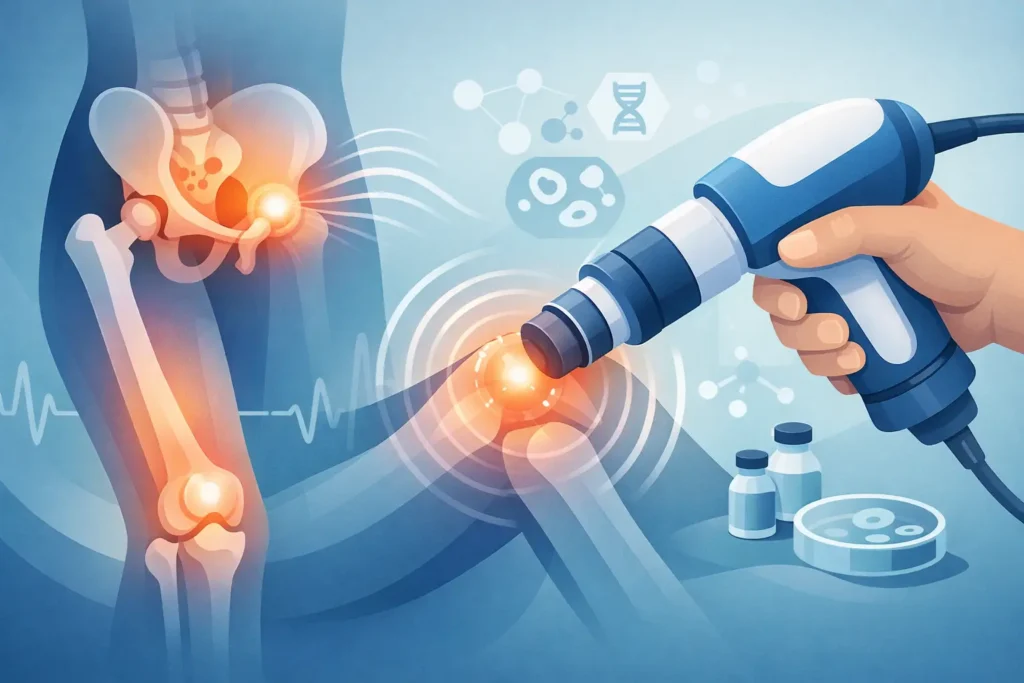
Regenerative shockwave therapy is a noninvasive treatment that uses acoustic waves delivered through the skin to a painful or injured area. In many clinics, including those using StemWave technology, a handheld device sends targeted sound waves into soft tissue. These waves are intended to stimulate the body’s healing response, improve local circulation, and influence pain signaling.
Despite the name, shockwave therapy is not electrical shock treatment, surgery, or an injection. It is also not stem cell therapy. The term “regenerative” describes the goal of encouraging the body’s own repair processes. Results vary by condition, the severity and age of the injury, overall health, and whether the treatment is paired with appropriate movement, rehabilitation, or other care.
There are different forms of shockwave treatment. Focused shockwave therapy concentrates energy deeper in a smaller target area. Radial pressure wave therapy spreads energy across a broader, more superficial area. The best option depends on the tissue involved and the treatment plan, not simply on which device sounds more powerful.
How Shockwave Therapy May Help Painful Tissue
Persistent pain often involves more than one problem. A tendon can be overloaded, surrounding muscles may tighten to protect the area, and reduced movement can gradually lead to weakness and stiffness. With chronic tendon pain, the body may not be mounting an effective healing response on its own.
Shockwave therapy applies controlled mechanical stimulation to the area. Research and clinical use suggest it may help promote blood flow, support cellular activity associated with tissue repair, and reduce pain sensitivity over time. For some patients, that change creates a better opportunity to return to normal movement and strengthening.
It is not a quick fix for every type of pain. A torn tendon, unstable joint, fracture, severe nerve compression, or pain caused by a serious underlying medical condition needs a proper medical evaluation. Shockwave therapy may be one piece of care, but it should not replace diagnosis or urgent treatment when those are needed.
Conditions That May Be Considered for Treatment
Shockwave therapy is commonly considered for certain musculoskeletal conditions that have not improved enough with rest, activity changes, home care, or conservative treatment. It may be helpful for chronic plantar fasciitis, Achilles tendon pain, tennis elbow, golfer’s elbow, rotator cuff-related shoulder pain, patellar tendon pain, and some hip or knee soft-tissue complaints.
It can also be considered after an auto injury or work injury when muscle and connective-tissue pain continues to limit function. In these situations, the goal is not only to lower pain. It is to help you move more comfortably, sleep better, return to daily tasks, and participate in the recovery plan your body needs.
The word “chronic” matters. Some conditions respond best after symptoms have lasted for weeks or months and simpler measures have not provided enough improvement. On the other hand, a fresh injury with significant swelling, deformity, inability to bear weight, or sudden loss of strength should be assessed before any shockwave session is considered.
What Happens During a Shockwave Appointment?
Your visit should begin with a conversation about your symptoms, medical history, injury mechanism, medications, and goals. A clinician will examine the painful area and may assess range of motion, strength, tenderness, and how the problem affects walking, lifting, work, exercise, or sleep. This step helps determine whether shockwave therapy fits the clinical picture.
If treatment is appropriate, gel is placed on the skin and the treatment head is moved over the targeted area. Sessions are usually brief. You may feel rhythmic tapping, pressure, or a sharp but tolerable sensation in tender tissue. Intensity can be adjusted based on your response. Treatment should be challenging enough to reach the area of concern without pushing you beyond what you can reasonably tolerate.
Many patients return to normal daily activity after treatment. Temporary soreness, redness, or sensitivity in the treated area can occur, especially after the first session. Some people notice change quickly, while others experience gradual improvement over several weeks as they complete treatment and resume healthier movement patterns.
How Many Sessions Will You Need?
There is no honest one-size-fits-all answer. A treatment plan often involves a series of visits, commonly spaced about a week apart, but the number and timing depend on the condition, how long symptoms have been present, and how you respond. A person with longstanding heel pain may need a different plan than someone with recent shoulder overuse.
Progress should be measured by more than pain on the treatment table. Useful markers include whether you can walk farther, climb stairs with less discomfort, sleep through the night, grip objects more easily, or return to work with fewer limitations. If treatment is not producing meaningful progress, the plan should be reassessed rather than continued automatically.
For best results, shockwave therapy is often paired with practical recovery steps. This can include targeted stretching, progressive strengthening, posture or ergonomic changes, acupuncture for pain modulation, and guidance on how to safely modify activity. Doing too much too soon can aggravate irritated tissue, but complete inactivity can also slow recovery. The right balance is individual.
Safety and When Shockwave Therapy May Not Be Appropriate
Shockwave therapy is generally well tolerated when provided after a proper assessment, but every treatment has limits. Your clinician needs to know about pregnancy, bleeding disorders, blood-thinning medications, active cancer, infection, impaired sensation, implanted medical devices, prior surgery, and any suspected fracture. Treatment is usually avoided directly over certain sensitive areas or where there is an active medical concern.
Pain that travels down an arm or leg, new numbness, worsening weakness, fever, unexplained weight loss, loss of bladder or bowel control, or severe pain after major trauma deserves prompt medical attention. These symptoms are not situations to self-treat with any wellness service.
A medically guided clinic can help distinguish musculoskeletal pain that may respond to conservative care from symptoms that need imaging, referral, medication management, or urgent evaluation. That distinction protects both your recovery and your time.
Questions to Ask Before Starting
Before agreeing to care, ask what diagnosis or working diagnosis is being treated and why shockwave therapy is recommended for it. Ask what type of shockwave device will be used, how many sessions are anticipated, what discomfort or side effects are expected, and what you should do between visits.
It is also reasonable to ask how progress will be tracked and what happens if your symptoms do not improve. A good plan includes clear expectations, not promises of a cure. It should account for your job, activity level, previous treatments, and desire to reduce reliance on pain medication when possible.
At Acupuncture & Injury, treatment planning can combine shockwave therapy with acupuncture, injury care, and physician-guided options when appropriate. The purpose is not to force every patient into the same treatment path. It is to identify a practical path toward less pain, better function, and more control over daily life.
A Practical Next Step for Persistent Pain
If pain has kept you from exercising, working comfortably, enjoying family time, or sleeping well, a focused evaluation can clarify whether regenerative shockwave therapy belongs in your recovery plan. Bring details about when the problem started, what makes it worse or better, treatments you have already tried, and the activities you want to get back to. The right care plan begins with a clear picture of what your body is telling you and a realistic way forward.
Leave a reply