A sore shoulder that changes your golf swing, a hamstring strain that will not settle down, or knee pain that makes stairs difficult can quickly turn an active routine into a daily frustration. Sports injury acupuncture is one option for reducing pain, calming irritated tissue, and helping the body return to comfortable movement without relying solely on pain medication.
At Acupuncture & Injury, treatment is not about simply covering up symptoms so you can push through another workout. The goal is to understand what is limiting your movement, address the pain response, and create a practical recovery plan that fits the injury and your life.
What Sports Injury Acupuncture Can Help Treat
Athletic injuries are not limited to competitive athletes. Weekend runners, gym members, golfers, tennis players, construction workers, and people who stay active with their families can all develop injuries from sudden impact, repetitive movement, poor mechanics, or doing too much before the body is ready.
Acupuncture may be included in care for common concerns such as muscle strains, tendon irritation, sprains, shoulder pain, runner’s knee, plantar heel pain, shin discomfort, low back pain, neck stiffness, and hip pain. It can also be useful when an old injury continues to flare up during activity.
The right treatment depends on the diagnosis. A mild overuse injury calls for a different approach than a torn ligament, fracture, dislocation, infection, or significant nerve injury. Acupuncture can support recovery, but it should not delay appropriate medical evaluation when an injury is severe.
How Acupuncture Supports Injury Recovery
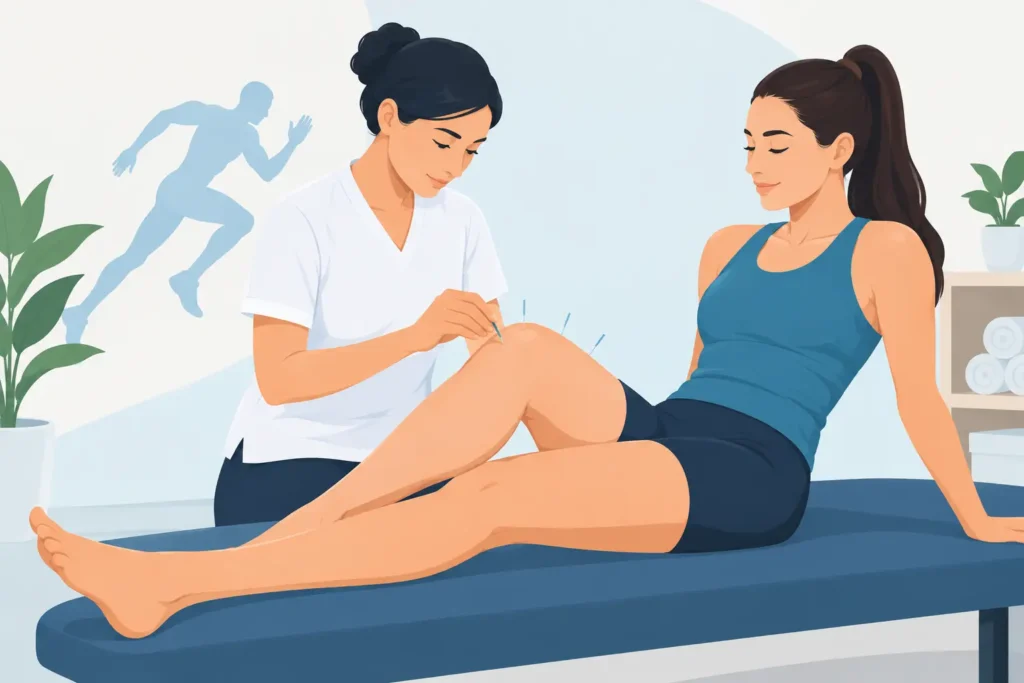
Acupuncture uses very thin, sterile needles placed at specific points in the body. For an injury, those points may be near the painful area, in surrounding muscles that are compensating, or in locations that help regulate the nervous system’s response to pain.
Many patients describe a dull, heavy, warm, or relaxed feeling during treatment. The needles are typically left in place for a short period while you rest. Treatment may also include electroacupuncture, which uses a gentle electrical current between selected needles to stimulate muscles and tissues. The sensation should be comfortable and adjusted to your tolerance.
Research suggests acupuncture may help modulate pain signaling, encourage local circulation, and reduce muscle guarding. In practical terms, that can mean less stiffness, easier movement, and a better ability to participate in rehabilitation. It is not a magic fix, and results vary based on the injury, how long it has been present, your activity level, sleep, stress, and whether you follow the rest of the recovery plan.
Pain is also not always a reliable measure of healing. Feeling better after treatment does not automatically mean a damaged tissue is ready for sprinting, heavy lifting, or a full game. A good plan balances symptom relief with a gradual return to load.
Why muscle guarding matters
After an injury, the body often tightens the muscles around the painful area to protect it. This response can be helpful at first, but prolonged guarding may limit range of motion and place extra strain on nearby joints and muscles. A runner with calf tightness may alter their stride. A person with shoulder pain may start overusing the neck.
Acupuncture can be used alongside hands-on injury care, mobility work, and targeted exercises to reduce that protective tension. When movement becomes more comfortable, it is easier to rebuild strength and coordination safely.
Sports Injury Acupuncture Works Best as Part of a Plan
For some patients, acupuncture is the primary conservative treatment. For others, it works best as one part of an integrated plan that may include an injury evaluation, activity modification, rehabilitation exercises, cupping, electroacupuncture, or StemWave shockwave therapy when appropriate.
Shockwave therapy is often considered for certain chronic soft-tissue conditions, particularly when pain has lingered despite rest and basic home care. It is not right for every injury, just as acupuncture is not right for every condition. A treatment recommendation should be based on your symptoms, examination findings, health history, and recovery goals rather than a one-size-fits-all protocol.
Medication also has a place in some situations. The purpose of a drug-reducing approach is not to tell patients to ignore serious pain or stop prescribed medication without medical guidance. It is to offer additional tools that may reduce the need for ongoing pain pills and help patients pursue function-focused recovery under appropriate clinical care.
What to Expect at Your First Visit
A productive first visit starts with the details that athletes and active adults sometimes overlook. Your provider will want to know how the injury happened, what movements trigger symptoms, whether the pain is getting better or worse, and what you have already tried. Be honest about prior surgeries, medications, medical conditions, and whether you have recently changed your training volume, footwear, work demands, or equipment.
The exam may include checking range of motion, strength, posture, tender areas, and movement patterns. From there, your care plan may include acupuncture that day or may begin with a referral for imaging, urgent orthopedic assessment, or another medical service if the findings raise concern.
Most patients want to know how many sessions they will need. Acute injuries may respond within a few visits, particularly when treatment begins early and the injury is minor. Longstanding tendon pain, repeated flare-ups, and injuries complicated by compensation patterns often require a longer course. Your response after the first few appointments helps guide the frequency and next steps.
After treatment, some people feel immediate relief while others notice gradual improvement over the next day or two. Mild soreness, temporary fatigue, or a small bruise at a needle site can occur. Plan to hydrate, avoid a hard workout immediately afterward unless your provider advises otherwise, and pay attention to how your body responds.
When to Seek Urgent Medical Care First
Do not try to treat a potentially serious injury with acupuncture alone. Seek prompt medical assessment for a visible deformity, inability to bear weight, severe swelling after trauma, uncontrolled pain, a joint that feels unstable, sudden weakness, numbness, loss of bowel or bladder control, fever, or signs of infection.
The same is true for a possible concussion. Headache after a hit, confusion, vomiting, worsening dizziness, loss of consciousness, or unusual behavior requires immediate medical attention. Returning to play too soon after a head injury can be dangerous.
If you have a history of bleeding disorders, use blood thinners, are pregnant, have a pacemaker, or have certain medical implants, tell your provider before treatment. These factors do not always prevent acupuncture, but they can affect the safest treatment approach, especially when electroacupuncture is being considered.
A Smarter Return to Activity
The urge to test an injury is understandable. When pain eases, many people go straight back to the same mileage, weight, or intensity that caused the problem. That is one reason injuries recur.
A more useful approach is to build back in stages. Restore comfortable daily movement first. Then work on mobility and basic strength. Next, add sport-specific drills before returning to full intensity. The pace should reflect your injury and sport. A recreational golfer may progress differently than a warehouse worker who lifts all day, and both may need a plan that respects the demands placed on their bodies.
Sleep, protein intake, hydration, and recovery days matter as much as the treatment room. They are not glamorous, but they affect tissue repair, energy, and pain sensitivity. If an injury keeps returning, it is worth looking beyond the painful spot to training volume, technique, footwear, workstation demands, and recovery habits.
You do not have to choose between ignoring pain and depending on pills to get through the day. With a thoughtful evaluation and the right mix of care, sports injury acupuncture can be a practical part of getting back to the activities that make you feel like yourself.
Leave a reply