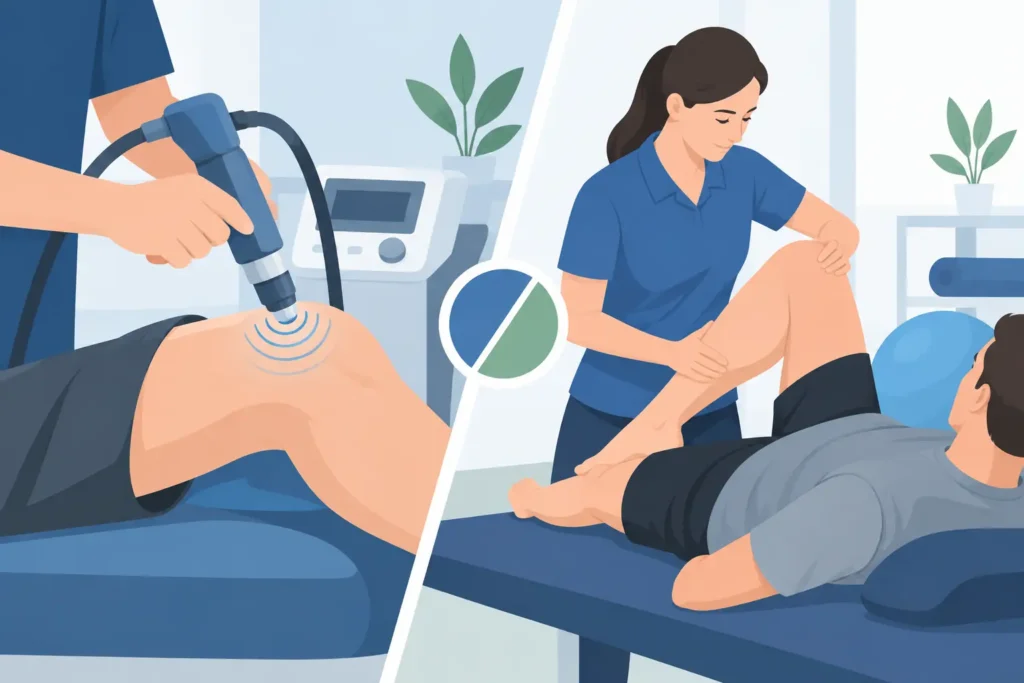
A painful heel, stubborn tennis elbow, or aching shoulder can make a simple question feel urgent: shockwave versus physical therapy, which is more likely to help? The honest answer is that they do different jobs. One may reduce pain and stimulate the healing response in a targeted area, while the other rebuilds movement, strength, and confidence in how your body works.
For many patients, the best choice is not an either-or decision. It is a treatment plan based on the source of your pain, how long it has been present, your activity demands, and any medical factors that affect recovery.
What Shockwave Therapy Is Designed to Do
Shockwave therapy uses acoustic waves delivered to an area of injured or painful tissue. At Acupuncture & Injury, StemWave therapy is used as a non-invasive option for certain musculoskeletal conditions. The treatment is applied externally, with no surgery, injections, or recovery time required after the visit.
The goal is not simply to cover up symptoms. The mechanical stimulation may encourage circulation and support the body’s natural repair processes in tissues that have been slow to recover. It can also influence how pain signals are processed in the treated area. Patients often seek shockwave therapy for chronic tendon-related pain, including plantar fasciitis, Achilles tendon pain, tennis elbow, golfer’s elbow, shoulder tendinopathy, and some knee or hip tendon conditions.
A session is usually brief. You may feel tapping, pressure, or discomfort directly over the sensitive tissue, especially during early treatments. That does not mean the treatment should be unbearable. Your provider can adjust the intensity based on your tolerance and the body part being treated.
Shockwave is often most useful when there is a clear, localized problem. For example, a runner with persistent heel pain at the plantar fascia attachment may be a stronger candidate than someone whose foot pain is primarily caused by poor balance, nerve irritation, or a recent fracture.
What Physical Therapy Is Designed to Do
Physical therapy is a rehabilitation approach built around movement. It may include guided exercise, stretching, manual therapy, balance training, posture correction, activity modification, and education about how to safely return to work, sports, or daily tasks.
Its central purpose is to improve function. If your shoulder hurts because it is weak, stiff, poorly coordinated, or compensating for a neck problem, physical therapy can address those contributing factors. The same is true after an auto accident, surgery, sprain, strain, or period of reduced activity.
Progress usually depends on consistency. Some care happens in the clinic, but the home program matters because tissues and movement patterns change through repeated practice. That can feel slower than a passive treatment, yet it is often what helps protect the gains you make once pain starts to decrease.
Physical therapy is particularly valuable when pain affects multiple areas, limits range of motion, causes weakness, or changes how you walk, lift, reach, or exercise. It can also help identify when symptoms do not fit a simple muscle or tendon injury and may need further medical evaluation.
Shockwave Versus Physical Therapy: The Key Differences
The clearest distinction is focus. Shockwave therapy is targeted to a painful tissue area. Physical therapy looks at the larger movement system around that area.
Shockwave may be appealing if pain has lingered despite rest, basic stretching, or other conservative care. It requires little time per visit and does not depend on you performing exercises during the treatment itself. However, it is not a universal answer for every source of pain, and it is rarely the full solution when poor mechanics, weakness, or joint stiffness are driving the problem.
Physical therapy demands more active participation. It may take several weeks to see meaningful functional change, particularly after an injury or long period of pain. In return, it can teach you how to load tissues gradually, restore range of motion, and reduce the risk of returning to the same aggravating pattern.
Neither option should be chosen only because it sounds faster. A treatment that matches the diagnosis is more valuable than a treatment that is simply convenient.
When Shockwave May Be the Better Starting Point
Shockwave therapy may be worth considering when pain is localized and chronic, especially when tendon or fascia tissue is suspected. A common example is plantar fasciitis that causes sharp first-step heel pain each morning and has not improved with supportive shoes, stretching, and modified activity.
It may also fit a patient who cannot tolerate anti-inflammatory medications, wants to avoid injections when appropriate, or is looking for non-surgical pain management. Because it is non-invasive, many people can return to normal daily activity soon after a session, although a provider may recommend temporarily limiting high-impact exercise.
Still, chronic pain should not be assumed to be a tendon problem. Sudden swelling, inability to bear weight, significant weakness, numbness, fever, unexplained weight loss, or pain after a major accident requires prompt medical assessment rather than self-selecting a treatment.
When Physical Therapy May Be the Better Starting Point
Physical therapy is often the stronger first step after an acute injury, a car accident, surgery, or a loss of mobility. It is also useful when your pain changes with posture or movement, when you have weakness after avoiding activity, or when one injury has caused compensation elsewhere in the body.
Consider someone with knee pain after a twist at work. The painful spot may matter, but so do hip strength, ankle mobility, balance, and the ability to squat or climb stairs without the knee collapsing inward. A structured rehabilitation plan can address all of those pieces.
For neck and back pain, physical therapy may help improve tolerance for sitting, lifting, reaching, and walking. But a careful evaluation is essential. Back pain with bowel or bladder changes, saddle numbness, progressive leg weakness, or severe symptoms after trauma needs urgent medical attention.
Why Combining Treatments Can Make Sense
For the right patient, shockwave and rehabilitation can complement each other. Shockwave may help reduce a painful barrier that has made movement difficult. Physical therapy can then use that window to build capacity through controlled loading and better mechanics.
Take chronic Achilles pain as an example. Shockwave may be used to support the healing response in the painful tendon. A rehabilitation plan can add progressive calf strengthening, ankle mobility work, and guidance on returning to walking, running, or court sports without overloading the tendon again.
The sequence matters. Some people need pain control first so they can participate in exercise. Others need to begin gentle movement immediately and add shockwave only if symptoms remain stubborn. Your plan should account for your diagnosis, symptom irritability, job requirements, medications, medical history, and goals.
What About Acupuncture for Pain and Recovery?
Acupuncture can also have a place in an integrative treatment plan. For some patients, it helps reduce pain, muscle tension, and stress around an injury, making it easier to sleep and move more comfortably. Electroacupuncture or cupping may be considered depending on the condition and clinical assessment.
This does not mean every therapy must be used at once. Good care is not about stacking treatments. It is about choosing the few approaches that have a clear purpose for your situation and monitoring whether they are helping.
How to Choose the Right Plan
Before deciding on shockwave therapy or physical therapy, start with an evaluation that asks more than, “Where does it hurt?” A useful assessment considers when symptoms began, whether there was trauma, what movements trigger pain, what has already been tried, and whether there are signs of a condition that needs imaging, medication, or specialist care.
Ask practical questions during your visit: What tissue or condition are we treating? What result should I reasonably expect? How many visits are recommended before we reassess? What should I do between appointments? What would tell us this plan is not working?
At Acupuncture & Injury in Marietta, treatment planning can combine non-drug options with physician-guided care when needed. The goal is not to push one philosophy. It is to help you reduce pain, restore function, and make decisions that fit your life.
The right next step is a clear diagnosis and a plan you can follow. When pain begins to ease, use that opportunity to rebuild the movement and strength that help keep you doing the work, exercise, and daily activities that matter to you.
Leave a reply