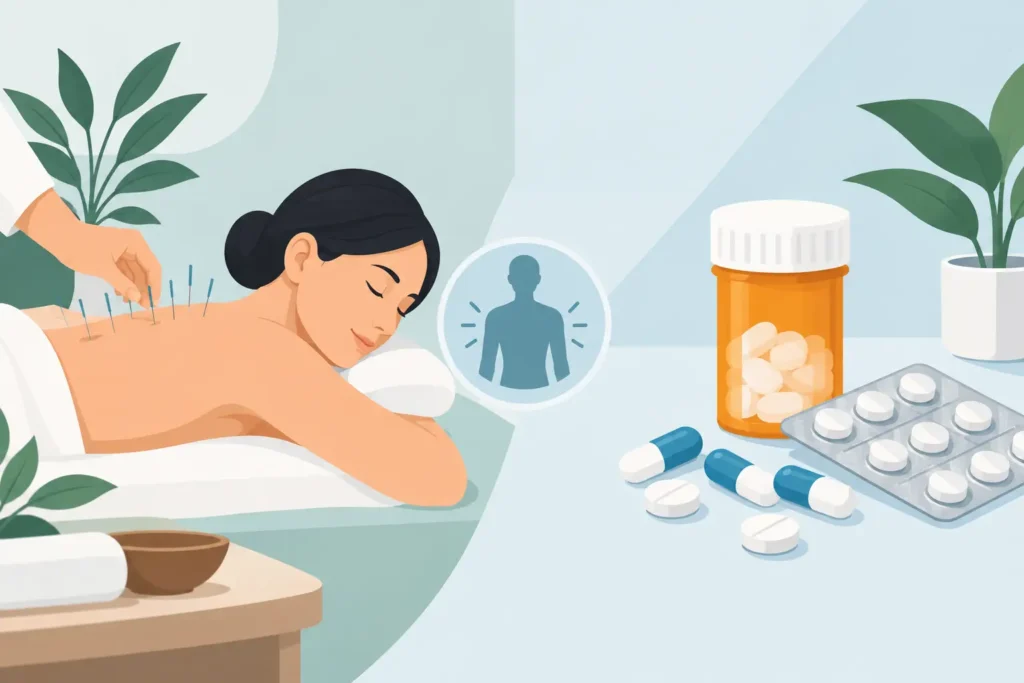
A pain flare can make the fastest option feel like the only option. That is why the choice of acupuncture versus pain medication deserves more than a simple answer. Medication can be appropriate, necessary, and effective in certain situations. Acupuncture can reduce pain and improve function without adding another pill to your routine. For many people, the most useful plan is not an either-or decision, but the right combination of care for the cause and severity of their pain.
Acupuncture Versus Pain Medication: The Key Difference
Pain medication primarily works through chemical pathways that change how the body produces, transmits, or perceives pain. Depending on the medication, it may reduce inflammation, relax muscles, calm nerve activity, or alter pain signals in the brain. It can be especially helpful when pain is sudden, severe, or preventing sleep and basic movement.
Acupuncture takes a different approach. Very thin, sterile needles are placed at specific points to stimulate the nervous system and local tissues. This stimulation may influence pain signaling, blood flow, muscle tension, and the release of the body’s own pain-relieving chemicals. Some patients notice relief quickly, while others improve gradually over a series of treatments.
The practical difference is that medication may suppress symptoms while acupuncture is often used to address pain patterns such as muscle guarding, stiffness, reduced circulation, and persistent sensitivity in the nervous system. Neither option replaces a proper diagnosis. Pain after a car accident, a fall, surgery, or a new injury should be evaluated so serious conditions are not missed.
When Pain Medication May Be the Right Choice
Medication is not a failure, and patients should not feel pressured to endure severe pain without appropriate medical care. Nonsteroidal anti-inflammatory drugs, acetaminophen, topical medications, nerve pain medicines, muscle relaxants, and other prescriptions can all have a role depending on the condition.
For example, short-term medication may help someone sleep after an acute back strain or tolerate movement while beginning physical recovery. Anti-inflammatory medication may be useful when swelling is a significant contributor to pain. Certain nerve-related conditions may need physician-guided medication alongside rehabilitation and other therapies.
The trade-off is that medications have risks. Anti-inflammatory medicines can affect the stomach, kidneys, blood pressure, or bleeding risk. Acetaminophen can injure the liver when taken in excessive amounts or combined with certain products. Muscle relaxants may cause sedation. Opioid pain medications can be appropriate in limited circumstances, but they carry risks of constipation, impaired driving, tolerance, dependence, overdose, and addiction.
The safest medication plan uses the lowest effective dose for the shortest reasonable time, with guidance from a qualified clinician. Never stop a prescribed opioid, benzodiazepine, or other medication that can cause withdrawal without speaking with the prescriber.
Where Acupuncture Can Fit Into Pain Care
Acupuncture is commonly used for chronic low back pain, neck pain, headaches, knee discomfort, shoulder pain, sciatica symptoms, arthritis-related pain, and muscle tightness. It may also support recovery after an injury by helping patients move more comfortably and participate more fully in rehabilitation.
Treatment is not usually a one-visit fix. A care plan may include several sessions close together at first, then less frequent visits as symptoms improve. Your provider should reassess progress based on meaningful changes: Can you sit through work with less discomfort? Are you sleeping better? Can you turn your neck more freely, walk farther, or return to exercise safely?
Many people choose acupuncture because they want pain relief without the drowsiness, stomach upset, or dependence concerns associated with some medications. That does not mean acupuncture is risk-free or right for every person. Mild soreness, small bruises, or brief lightheadedness can occur. A licensed, properly trained provider should review your health history, including pregnancy, bleeding disorders, pacemaker use, blood thinners, and active infection.
Why the Best Answer Is Often Both, Not Either
A patient with severe acute pain may need medication while also benefiting from acupuncture, injury care, and targeted rehabilitation. Someone with long-standing back pain may use acupuncture to reduce the frequency or dose of medication under their prescriber’s supervision. A person recovering from an auto injury may need a coordinated plan that addresses inflammation, soft-tissue tension, mobility limits, and the practical demands of returning to work.
This is where integrative pain management can be valuable. Rather than treating every pain problem with the same tool, care is matched to the person and the underlying issue. Acupuncture may be paired with modalities such as cupping, electroacupuncture, shockwave therapy, movement guidance, or physician-directed medication management when appropriate.
At Acupuncture & Injury, the goal is not to tell patients that every medication is bad or that every needle treatment is enough on its own. It is to help patients pursue meaningful relief, improved function, and a path toward being pain free without unnecessary pills.
Pain Medication and Opioid Dependence Need Extra Care
Opioids deserve special consideration because relief can become tangled with physical dependence. A person may begin taking opioids after surgery, an injury, or chronic pain treatment and later find it difficult to reduce or stop them. This is a medical issue, not a moral failing.
For people with opioid use disorder, medication-assisted treatment can be lifesaving. Physician-managed options such as buprenorphine formulations may reduce withdrawal symptoms and cravings while supporting recovery. Acupuncture may be used as supportive care for pain, stress, sleep, and overall well-being, but it is not a substitute for evidence-based addiction treatment when opioid dependence is present.
If you are taking opioids and want to reduce them, ask for a structured plan. The right plan may include a slow taper, non-opioid medication options, acupuncture or other non-drug therapies, behavioral health support, and addiction treatment when needed. Trying to manage withdrawal or severe pain alone can put recovery at risk.
Questions to Ask Before Choosing a Treatment Plan
A useful pain plan starts with clear questions. What is causing the pain, and are there warning signs that require imaging, urgent care, or a specialist? Is the goal immediate symptom control, long-term function, reduced medication use, or all three? What treatments have helped before, and what side effects or risks need to be avoided?
Be direct about your daily limitations. Tell your provider if pain is affecting sleep, work, driving, caregiving, exercise, or mood. Also discuss every medication and supplement you take. This information helps determine whether acupuncture, medication, injury therapy, or a combined plan is the safer next step.
Seek urgent medical evaluation for chest pain, sudden weakness or numbness, loss of bowel or bladder control, difficulty breathing, fever with severe back pain, a serious accident, or pain that is rapidly worsening. These symptoms should not be managed with home remedies or delayed treatment.
Measuring Progress Beyond the Pain Scale
Pain scores matter, but they are not the only measure of recovery. A treatment is working when it helps you do more of what pain has taken away. That may mean getting through a full shift, picking up your child, sleeping through the night, returning to the gym, or simply getting out of a chair without bracing yourself first.
Give any reasonable treatment plan enough time to show a pattern, but do not continue indefinitely without reassessment. If symptoms are not improving, the diagnosis or approach may need to change. If they are improving, your care team can help you build on that progress while avoiding unnecessary reliance on medication.
The right next step is the one that respects your pain, protects your safety, and gives you a realistic way to get your life moving again.
Leave a reply