A low back flare-up can make ordinary tasks feel impossible. Getting out of the car, sitting through a workday, lifting groceries, or sleeping comfortably may all become difficult. So, does cupping help lower back pain? For many patients, it can be a useful part of a conservative pain-relief plan, particularly when muscle tightness, overuse, or an injury is contributing to the discomfort.
Cupping is not a cure for every cause of back pain, and it should not replace an evaluation when symptoms are severe or unexplained. But when used appropriately alongside treatments such as acupuncture, injury care, guided movement, or other physician-directed options, it may help reduce muscle tension and support recovery without relying solely on pain medication.
How Cupping May Help Lower Back Pain
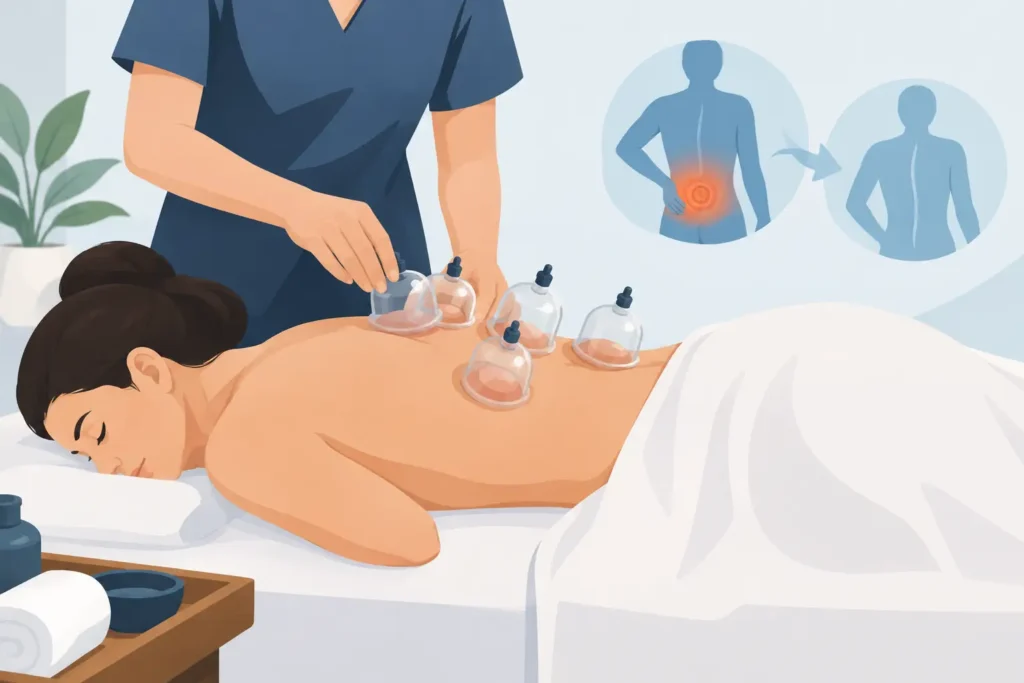
Cupping therapy uses specialized cups to create gentle suction on the skin. Rather than pressing down into a tight muscle as massage does, the suction lifts the skin and superficial tissue. This can increase local circulation, create a pulling sensation through restricted tissue, and help the nervous system relax protective muscle guarding.
Lower back pain is often more than a single painful spot. A strained back muscle, prolonged sitting, repetitive lifting, a car accident, or an old injury can cause the body to compensate. Muscles around the hips, glutes, mid-back, and low back may become tight as they try to protect the area. Cupping can be applied to these surrounding regions to address tension patterns that may be contributing to pain and reduced movement.
Patients commonly report that the area feels looser, warmer, and easier to move after treatment. That can make it easier to return to walking, stretching, rehabilitation exercises, and daily activity. For someone trying to manage pain without increasing use of anti-inflammatory medication, muscle relaxers, or opioids, that short-term relief can be meaningful.
What Research and Clinical Experience Tell Us
Research on cupping for low back pain is promising but still developing. Some studies suggest cupping may reduce pain and improve function for certain people with chronic nonspecific low back pain. “Nonspecific” means the pain does not appear to come from a clearly identifiable serious condition such as a fracture, infection, or tumor.
The challenge is that back pain has many causes, and cupping studies use different treatment methods, schedules, and comparison groups. That makes it difficult to say that cupping will work the same way for every person. It is best understood as one tool within an individualized treatment plan, not a stand-alone answer for all back problems.
Clinical results also depend on the source of pain. Cupping may be more helpful for muscular stiffness, trigger points, overuse, and movement-related discomfort than for pain caused by significant nerve compression or an unstable spinal injury. A qualified provider should assess your symptoms, health history, movement limitations, and any recent trauma before recommending care.
What a Cupping Session for Back Pain Feels Like
During a typical session, cups are placed on the low back and sometimes the hips, glutes, or upper back. The provider creates controlled suction and leaves the cups in place for a short period. In some cases, cups may be moved slowly across lubricated skin to address broader areas of tension.
The sensation is usually described as a firm pulling or stretching feeling, not sharp pain. If the pressure is too intense, it should be adjusted. Treatment should feel therapeutic and tolerable, not like something you have to endure.
Cupping often leaves circular red, purple, or brown marks. These marks are not bruises from blunt-force trauma, though they can look similar. They occur because suction brings blood closer to the surface of the skin. The marks are typically painless or mildly tender and commonly fade over several days to two weeks, depending on your skin and the intensity of treatment.
Many people notice improvement after one session, especially when tight muscles are the main issue. Others need a series of visits to see more consistent changes. A provider may also recommend acupuncture, electroacupuncture, shockwave therapy, or structured injury treatment based on the nature of your pain and your goals.
When Cupping Is Most Likely to Be Useful
Cupping may be worth considering if your low back pain is accompanied by tight, sore muscles; stiffness after sitting or driving; discomfort after physical work or exercise; or lingering tension after an auto accident or other injury. It can also be useful when pain has caused you to move less and your muscles have become more guarded as a result.
It may fit well for patients who want a non-surgical, drug-reducing approach. Relief from cupping can create a window for more active recovery, including gentle mobility work, core strengthening, posture changes, and gradual return to normal activity. Those steps matter because lasting improvement usually requires more than temporarily calming a painful muscle.
At Acupuncture & Injury, treatment decisions are based on the person in front of us, not a one-size-fits-all protocol. Some patients respond best to acupuncture and cupping. Others may need a more focused injury evaluation, shockwave therapy, medical pain management, or referral for imaging and specialty care.
When Cupping May Not Be the Right First Step
Back pain should be taken seriously when it follows a major accident, gets progressively worse, or includes symptoms beyond muscle soreness. Cupping should not delay medical assessment if you have any of the following:
- New weakness, numbness, or tingling that travels down a leg
- Loss of bowel or bladder control
- Numbness in the groin or inner thigh area
- Fever, unexplained weight loss, or a history of cancer
- Severe pain after a fall, collision, or other significant trauma
These symptoms can point to conditions that need prompt medical attention. The same is true if your pain is constant at night, does not change with movement, or continues to worsen despite rest and conservative care.
Cupping may also need to be modified or avoided for people with certain skin conditions, active infection, bleeding disorders, very fragile skin, or use of blood-thinning medication. Pregnancy, recent surgery, and significant circulation issues are additional reasons to discuss treatment carefully with a qualified clinician. A safe plan starts with an honest health history.
Getting Better Results From Cupping
The best results usually come from combining passive relief with active recovery. After a cupping session, light walking and gentle movement are often more helpful than staying in bed all day. Hydration, adequate sleep, and avoiding the activity that triggered the flare-up can also support recovery.
If your work requires sitting, driving, bending, or lifting, small changes can reduce repeated irritation. Taking brief movement breaks, adjusting your workstation, using sound lifting mechanics, and gradually building hip and core strength may help prevent the same pain pattern from returning. Your provider can help you identify what to protect, what to mobilize, and when to progress activity.
It is also reasonable to set realistic expectations. Cupping may reduce tension and pain, but it cannot erase every structural issue or solve a demanding work setup overnight. If relief lasts only a day or two, that does not necessarily mean treatment failed. It may mean the underlying movement pattern, inflammation, or injury still needs more targeted attention.
A Practical Next Step for Persistent Low Back Pain
If low back pain is keeping you from work, exercise, sleep, or time with family, you do not have to choose between ignoring it and depending on pills. A proper assessment can help determine whether cupping is appropriate and what other treatments may give you the best chance of lasting relief.
The goal is not simply to make your back feel better for an afternoon. It is to help you move with more confidence, return to the activities that matter to you, and build a recovery plan that respects both your symptoms and your long-term health.
Leave a reply