A StemWave review should answer more than whether the treatment is comfortable or popular. If pain is limiting your sleep, work, exercise, or ability to enjoy daily life, the real question is whether this non-invasive therapy fits the cause of your pain and your recovery plan. StemWave may be a useful option for some people with musculoskeletal pain, but it is not a replacement for a careful diagnosis or a one-size-fits-all cure.
StemWave is a form of extracorporeal shockwave therapy. It uses acoustic waves delivered through the skin to stimulate tissue in the area being treated. Despite the name, it does not involve surgery, injections, or electrical shocks. At Acupuncture & Injury, it may be considered alongside acupuncture, injury care, and physician-guided pain management when a patient needs a plan focused on function and relief rather than relying only on medication.
StemWave Review: What the Treatment Is Designed to Do
StemWave therapy delivers focused acoustic energy to painful or injured soft tissue. The goal is to encourage the body’s healing response, improve local circulation, and address sensitivity in the affected area. Providers commonly use shockwave-based therapies for chronic tendon and soft-tissue conditions, particularly when pain has persisted despite rest, home care, or other conservative approaches.
Patients often ask whether StemWave can “regenerate” tissue. That language can make the treatment sound more certain than it is. Research on shockwave therapy supports its use for certain conditions, but results vary based on the diagnosis, severity, duration of symptoms, overall health, and consistency with the treatment plan. A responsible review should make room for that reality.
For the right patient, the practical benefit may be a gradual reduction in pain, better movement, and an easier return to normal activities. For another patient, it may provide only partial relief or need to be paired with other care. The purpose is not to promise instant results. It is to create a non-surgical option that may help the body respond more effectively to an injury or chronic irritation.
Who May Be a Good Candidate for StemWave?
StemWave is often considered for adults dealing with persistent musculoskeletal pain. This can include heel pain related to plantar fasciitis, tennis elbow, shoulder tendon irritation, knee pain involving certain soft-tissue structures, hip discomfort, and chronic pain after an injury. It may also be useful when tight, tender tissue is contributing to reduced mobility.
The best candidates usually have a clear pain pattern that can be evaluated in an exam. For example, a person with pain at the bottom of the heel that is worst with the first steps in the morning may need a different plan than someone whose foot pain began suddenly after a fall. The symptoms may sound similar, but the underlying problem may not be.
An in-person assessment matters even more after a car accident, workplace injury, or sports injury. Pain after trauma can involve joints, muscles, nerves, ligaments, or more serious structural damage. Shockwave therapy may be one part of care, but it should not delay imaging, medical evaluation, or referral when those are needed.
StemWave may not be appropriate for everyone. Your provider should review factors such as pregnancy, active infection, suspected fracture, blood-clotting concerns, implanted devices, cancer in the treatment area, significant nerve symptoms, and use of certain medications. This is one reason medically supervised care is valuable: the treatment decision should be based on your health history, not simply on a painful spot.
What a StemWave Session Feels Like
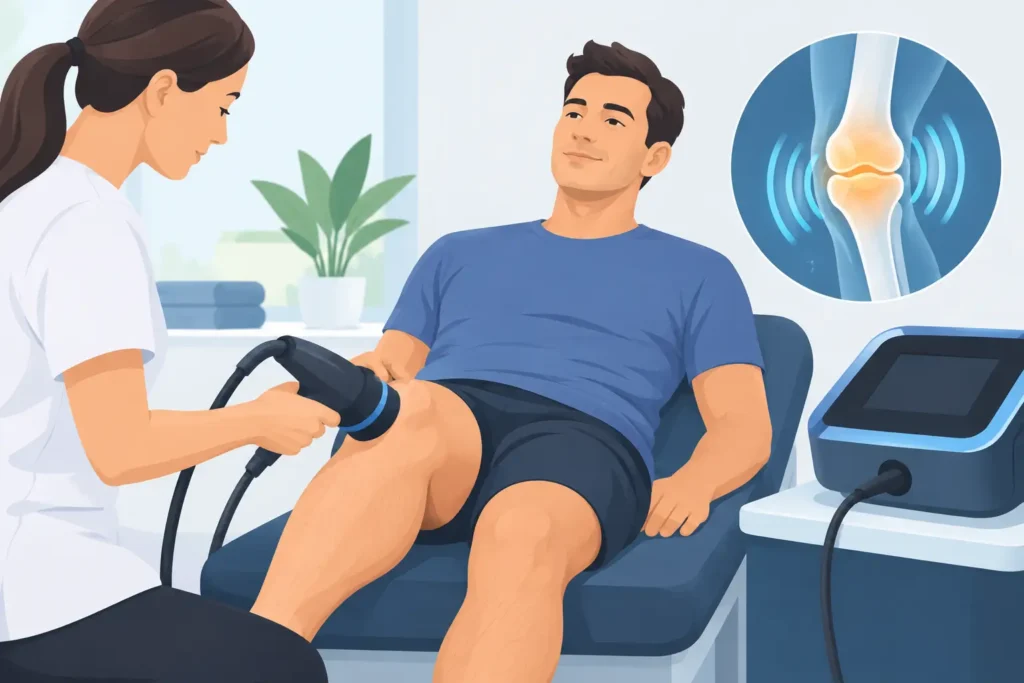
A session typically begins with locating the most tender or clinically relevant area. Gel is applied to the skin, and the treatment handpiece is moved over the target tissue. You may feel tapping, pulsing, or a deep pressure-like sensation. Areas that are already irritated can be more sensitive at first.
Comfort is not a test of whether the therapy is working. A good provider adjusts the intensity based on your tolerance and the area being treated. Most patients can return to normal daily activities afterward, although mild soreness, temporary redness, or sensitivity can occur. Your provider may advise you to avoid overloading the treated area for a short period, especially if the pain is related to tendon irritation or a recent injury.
People sometimes expect dramatic relief after one visit. While some notice a change quickly, many treatment plans involve a series of visits over several weeks. Tissue recovery is rarely linear. You may have a better day, then feel sore after doing too much, then gradually find that stairs, walking, reaching, or standing are less difficult.
Benefits and Limits to Consider
The appeal of StemWave is straightforward. It is non-invasive, does not require anesthesia, and may help some patients reduce their dependence on pain medication while working toward improved movement. For people who want to avoid surgery when appropriate, that can be meaningful.
Still, it has limits. StemWave cannot correct every cause of pain. It does not repair a complete tear, replace stabilization for an unstable joint, treat a fracture, or resolve pain caused primarily by a condition outside the musculoskeletal system. It also cannot overcome repeated strain if the activity, footwear, posture, training load, or workplace demands causing the irritation are never addressed.
The strongest treatment plans usually combine targeted therapy with practical changes. That might mean guided movement, rest from aggravating activity, ergonomic changes, acupuncture for pain modulation, or a physician evaluation when symptoms point to a more complex issue. For chronic pain, the most useful question is often not “What single treatment will fix this?” but “What combination will help me regain function safely?”
How Long Does It Take to See Results?
There is no guaranteed timeline. Some patients report improvement after the first few sessions, while others notice changes only after completing a treatment series. Chronic conditions that have been present for months or years may take longer to respond than a recent, uncomplicated soft-tissue injury.
Progress should be measured in real-life terms, not just a pain score. Are you sleeping with fewer interruptions? Can you walk farther? Are you getting through a work shift with less discomfort? Can you turn your neck, lift your arm, or get up from a chair more easily? These details help determine whether care is moving in the right direction.
If symptoms are worsening, spreading, causing numbness or weakness, or accompanied by unexplained swelling, fever, chest pain, severe headache, or loss of bladder or bowel control, seek prompt medical attention. Those symptoms require more than a routine pain treatment visit.
Questions to Ask Before Starting StemWave
Before scheduling treatment, ask what diagnosis is being treated and why StemWave is being recommended for it. Ask how many sessions are expected, what the total cost may be, what other therapies are included in the plan, and how progress will be evaluated. A clear answer should include both potential benefits and the possibility that another approach may be needed.
It is also reasonable to ask about the provider’s experience with your specific condition. The device is only one part of the equation. Proper assessment, treatment placement, intensity adjustments, and follow-up guidance all affect the patient experience.
For patients who have been using pain medication regularly, a non-drug treatment can be an important part of a broader plan. It should not be viewed as a reason to abruptly stop prescribed medication without medical guidance. Safe medication changes require a conversation with the prescribing clinician, especially for opioids or other medications that can cause withdrawal or complications when stopped suddenly.
A thoughtful StemWave review comes down to fit. The therapy may be worth considering when you have a well-evaluated musculoskeletal condition, want a non-surgical option, and are willing to follow a plan that supports healing beyond the treatment room. The next helpful step is a clinical evaluation that treats your pain as a real problem while giving you clear, practical options for moving forward.
Leave a reply