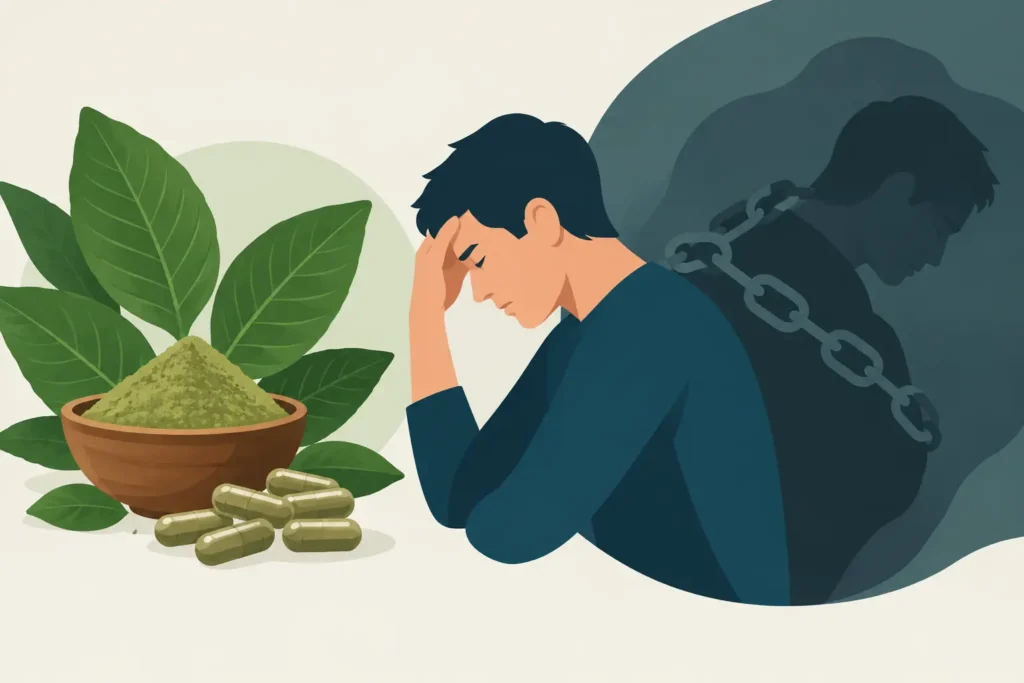
A product sold as a “natural” answer to pain, anxiety, or opioid withdrawal can feel like a safer choice than prescription medication. That perception is one reason the dangers of kratom use can be easy to miss. Kratom is a plant-based substance, but natural does not automatically mean predictable, non-addictive, or safe – especially when it is used daily, in high doses, or alongside other substances.
For people living with chronic pain, an injury, or a history of opioid use, kratom may initially seem helpful. It can produce stimulating effects at lower amounts and more opioid-like, sedating effects at higher amounts. But relief that requires repeated dosing can gradually become dependence, and an unregulated product can create risks that are difficult to see from the label.
What Kratom Is and Why Its Effects Can Change
Kratom comes from the leaves of the Mitragyna speciosa tree, native to Southeast Asia. It is sold in powders, capsules, teas, extracts, gummies, and concentrated shots. Its main active compounds interact with some of the same receptors involved in opioid effects, though kratom is not the same as a prescription opioid.
That distinction matters, but it should not create false reassurance. A person may use kratom for pain relief, energy, mood, sleep, or to manage opioid withdrawal symptoms. The experience can vary substantially depending on the product, the dose, the person’s health, and whether other medications or substances are involved.
Unlike FDA-approved medications, kratom products do not go through a consistent approval process for safety, dose accuracy, or effectiveness. One package may not contain the same amount of active compounds as another, even if the branding appears similar. Extracts and enhanced products may carry a particularly high risk because they can be far more concentrated than plain leaf powder.
The Most Serious Dangers of Kratom Use
Kratom does not affect every person the same way, and some individuals may report short-term benefits. The concern is not that every use leads to a crisis. The concern is that the risks rise with frequent use, escalating doses, concentrated products, and mixing substances.
Dependence Can Build Gradually
One of the clearest risks is physical dependence. A person may begin with a small amount to get through a painful workday or sleep after an injury. Over time, the same amount may not feel as effective. They may take larger doses, dose more often, or feel uneasy when their supply runs low.
Dependence is not a character flaw. It is a biological response that can happen when the brain adapts to a substance. Still, it can affect work, relationships, finances, sleep, and a person’s ability to manage pain without repeated dosing.
Signs that kratom use may be becoming a problem include using more than intended, unsuccessful efforts to cut down, planning the day around doses, continuing despite negative effects, or using kratom mainly to avoid feeling sick or emotionally distressed.
Withdrawal Can Be Uncomfortable and Disruptive
People who use kratom regularly may experience withdrawal when they stop suddenly or sharply reduce their dose. Symptoms can include anxiety, irritability, restlessness, low mood, insomnia, body aches, muscle tension, sweating, nausea, diarrhea, and strong cravings.
The severity varies. Some people experience mild symptoms, while others find withdrawal difficult enough that they return to use quickly. A history of opioid dependence, high-dose kratom use, mental health concerns, and other substance use can complicate the process.
Trying to manage withdrawal alone can be especially challenging when someone is also dealing with untreated pain. The goal should not simply be to endure symptoms. A better plan addresses dependence, pain, sleep, stress, and relapse risk together.
Mixing Kratom With Other Substances Raises the Risk
Kratom can become much more dangerous when combined with alcohol, opioids, benzodiazepines, sleep medications, muscle relaxers, or other sedating substances. These combinations may increase drowsiness, confusion, impaired coordination, breathing problems, and overdose risk.
Stimulants can also be risky. Combining kratom with high amounts of caffeine, illicit stimulants, or certain medications may increase strain on the heart and worsen anxiety, agitation, or blood pressure problems.
A person should never assume a product is safe to combine just because it is sold over the counter or labeled herbal. If you take prescription medications, particularly medications for pain, mood, sleep, seizures, or heart conditions, a clinician should review potential interactions.
Product Quality Is Not Guaranteed
Contamination and inaccurate labeling are major concerns with unregulated supplements. Products may contain more or less kratom than expected. Some may contain heavy metals, bacteria, or undisclosed ingredients. Others may be adulterated with substances that change the expected effects and risks.
This uncertainty makes self-dosing difficult. Someone may believe they are taking the same amount they used before, but the actual strength could be very different. Concentrated extracts, liquid shots, and products marketed as enhanced can make this problem worse.
Serious Medical Effects Can Occur
Reported adverse effects associated with kratom include nausea, constipation, dizziness, dry mouth, sweating, increased heart rate, high blood pressure, sedation, confusion, and seizures. Some people may also experience liver injury, which can present with symptoms such as yellowing of the skin or eyes, dark urine, severe fatigue, abdominal pain, or persistent nausea.
Although severe outcomes are less common than mild side effects, they can occur. The risk may be higher for people with liver disease, heart conditions, seizure disorders, respiratory problems, or a history of substance use disorder. Pregnancy and breastfeeding are also times to avoid kratom because safety has not been established.
When Kratom Becomes a Substitute for Care
Kratom often enters the picture when someone feels they have run out of options. They may be waiting for an injury to heal, trying to keep working through back pain, or worried about returning to opioid medication. Those concerns are understandable.
However, kratom can delay a proper evaluation of the condition causing the pain. Severe pain after a car accident, worsening numbness or weakness, persistent headaches, chest pain, or pain that is interfering with daily function deserves medical attention. Covering symptoms with an unregulated substance may allow an underlying injury or condition to worsen.
For people in opioid recovery, kratom can also become an unstable form of self-treatment. It may seem like a way to avoid opioids, but dependence on kratom can still keep a person caught in a cycle of cravings, withdrawal, and daily dosing. Evidence-based addiction treatment offers more predictable dosing, monitoring, and support than attempting to manage withdrawal with products of unknown strength.
When to Seek Urgent Help
Call 911 or seek emergency care right away for trouble breathing, blue or gray lips, inability to stay awake, severe confusion, chest pain, fainting, a seizure, or thoughts of self-harm. These symptoms can signal a medical emergency, particularly if kratom was combined with alcohol, opioids, sedatives, or other drugs.
Prompt medical evaluation is also appropriate for jaundice, severe or persistent vomiting, extreme agitation, or a rapid or irregular heartbeat. Be honest about what was taken and when. Medical teams need that information to provide safe care, not to judge you.
A Safer Path Forward for Pain or Dependence
If kratom use is becoming difficult to control, you do not have to wait for a crisis to ask for help. A clinician can help assess your use, other medications, pain condition, mental health, and withdrawal risk. The best approach depends on the person. Some may need a gradual, supervised reduction plan, while others may benefit from structured addiction treatment and medication-assisted treatment.
At Acupuncture & Injury, patients can discuss both pain and substance-use concerns in a nonjudgmental setting. Physician-guided options for opioid dependence, including buprenorphine-based treatment when appropriate, can be paired with practical pain therapies such as acupuncture, electroacupuncture, cupping, and shockwave therapy. The purpose is not to force every patient into one approach. It is to create a safer plan that supports function, comfort, and long-term recovery.
If kratom started as an attempt to feel better, that intention deserves respect. The next step is finding care that does not leave you dependent on an unpredictable product to get through the day.
Leave a reply