
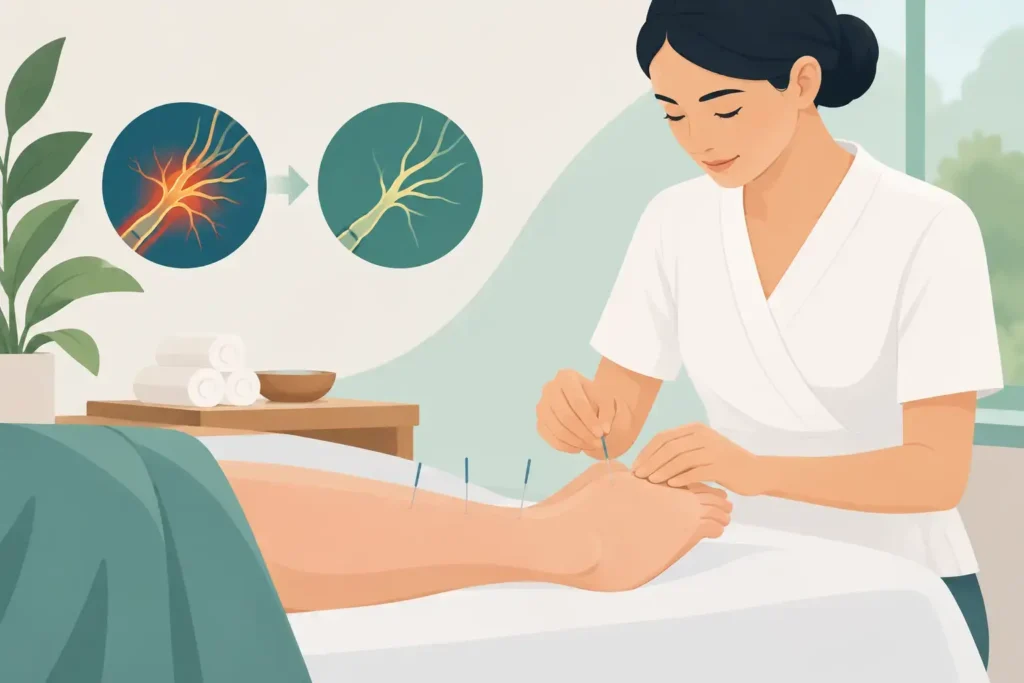
Burning feet at night, a pins-and-needles sensation in your hands, or pain from a light touch can make ordinary routines feel exhausting. A guide to acupuncture for neuropathy should start with a realistic goal: acupuncture may help reduce symptoms and improve day-to-day comfort for some people, but it is not a substitute for identifying and treating the cause of nerve damage.
Neuropathy can be related to diabetes, chemotherapy, spinal problems, injuries, vitamin deficiencies, alcohol use, autoimmune conditions, certain medications, and other health concerns. That is why a treatment plan should begin with a clear medical picture, especially when symptoms are new, worsening, one-sided, or affecting balance and strength.
What neuropathy feels like and why it can be difficult to treat
Peripheral neuropathy occurs when nerves outside the brain and spinal cord are damaged or irritated. Symptoms often begin in the feet or hands and may include numbness, tingling, burning, electric-shock sensations, sensitivity to touch, cramps, weakness, or reduced balance. Some people have severe pain despite little visible injury. Others are numb enough that they do not notice a cut, blister, or change in temperature.
Medication can be appropriate for neuropathic pain, particularly when symptoms are severe or sleep is disrupted. But many patients do not get complete relief, or they experience side effects that make daily life harder. Acupuncture is often considered as part of a broader, drug-reducing pain management plan because it can address pain without surgery and without adding another daily medication.
The right approach depends on the cause of your symptoms. For example, diabetes-related neuropathy requires ongoing blood sugar management, while nerve pain after an auto injury may also require evaluation of the neck, back, joints, and soft tissue. Acupuncture can support symptom relief, but the underlying condition still deserves careful attention.
How acupuncture for neuropathy may help
Acupuncture uses very thin, sterile needles placed at specific points on the body. In a clinical setting, treatment is designed to influence pain signaling, circulation, muscle tension, and the nervous system’s response to discomfort. Research on acupuncture for neuropathy is still developing, and results vary by diagnosis and individual. However, some patients report less burning, tingling, and pain, along with better sleep, mobility, and tolerance for standing or walking.
Treatment does not “repair” every damaged nerve. That distinction matters. When nerve injury is advanced or an ongoing medical condition is not well controlled, expectations should be cautious. Still, reducing pain intensity, easing muscle guarding, and helping you move with greater confidence can be meaningful improvements.
A practitioner may treat points near the painful area as well as points farther away on the arms, legs, or torso. This is normal. Acupuncture treatment plans are based on the pattern of symptoms, your health history, and what is safe for you, not simply on where the pain is felt.
Electroacupuncture and supportive therapies
For certain patients, electroacupuncture may be recommended. This treatment uses a mild electrical current between selected acupuncture needles. The sensation is usually a gentle pulsing or tapping, not a painful shock. It may be useful when neuropathy is accompanied by persistent pain, muscle tightness, or reduced function.
Depending on the source of your symptoms, a provider may also recommend complementary care such as cupping, injury rehabilitation, or shockwave therapy for related soft-tissue pain. These therapies are not interchangeable, and they are not appropriate for every type of nerve problem. A good plan uses the least invasive options that fit your diagnosis and goals.
What to expect at your first appointment
Your first visit should be more than a quick needle treatment. A thorough consultation generally includes questions about when symptoms started, where they occur, what makes them better or worse, medications, prior injuries, chronic conditions, and previous treatments. Your provider may ask about sleep, balance, work demands, activity level, and whether pain is affecting your mood.
Be ready to discuss any diagnosis of diabetes, cancer treatment, circulation problems, bleeding disorders, implanted devices, pregnancy, or use of blood thinners. Bring a current medication list if possible. These details help your care team decide whether acupuncture is appropriate and how treatment should be modified.
During treatment, most people rest comfortably on a treatment table. Needle insertion is often described as a brief pinch, pressure, warmth, heaviness, or mild tingling. The needles may remain in place for 15 to 30 minutes. Some people feel relaxed afterward, while others notice gradual changes over several sessions rather than immediate relief.
It is reasonable to ask how many visits may be recommended before you begin. There is no universal number. Recent symptoms may respond differently than longstanding diabetic or chemotherapy-related neuropathy. Your provider should explain the plan, track your response, and adjust care rather than asking you to continue indefinitely without measurable goals.
Who may be a good candidate?
Acupuncture may be worth discussing if neuropathy pain is interfering with sleep, work, walking, exercise, or recovery from an injury, especially when you want options beyond medication alone. It can also be a practical addition for people who are trying to reduce reliance on pain pills under medical guidance.
It may not be the first step when symptoms have not been evaluated. Sudden weakness, loss of bowel or bladder control, facial drooping, severe new back pain, rapidly spreading numbness, a cold or discolored limb, or an infected foot wound require urgent medical assessment. Do not wait for an acupuncture appointment if these warning signs are present.
People with reduced sensation in their feet should also inspect them regularly. Numbness can hide injuries that become serious without prompt care. Supportive shoes, routine foot checks, blood sugar management when applicable, movement within your ability, and follow-up with your primary or specialty provider remain part of protecting nerve health.
Questions to ask before starting acupuncture
You should feel comfortable asking about the practitioner’s training, sterilization practices, experience with neuropathy, and how treatment will be coordinated with your other care. It is also helpful to ask what outcomes are realistic for your situation. Pain relief, better sleep, and improved walking tolerance are clear goals. Promises to cure nerve damage quickly are not.
Ask how progress will be measured. A useful plan may track pain levels, nighttime symptoms, medication use, balance, distance walked, ability to work, or the activities you have been avoiding. These measures make it easier to tell whether treatment is providing real value.
Cost and scheduling matter, too. Neuropathy treatment often requires consistency, so choose a plan you can realistically attend. If time, transportation, or budget is a concern, discuss it early. The best plan is one that fits your medical needs and your life.
Building a plan for lasting relief
Acupuncture works best when it is part of coordinated care, not a stand-alone promise. That may mean working with your physician to manage diabetes or medication side effects, addressing a spinal or injury-related source of nerve irritation, improving sleep, and using targeted therapies to restore movement.
At Acupuncture & Injury, the focus is on practical, physician-guided options that help patients pursue pain relief without being pushed toward a single treatment philosophy. For neuropathy, that starts with listening closely, identifying what may be driving the symptoms, and creating a treatment plan that respects both safety and your goal of getting back to daily life.
If nerve pain has narrowed your routine, you do not have to simply accept it as your new normal. A careful evaluation can help determine whether acupuncture belongs in your recovery plan and what progress could realistically look like for you.
Leave a reply