
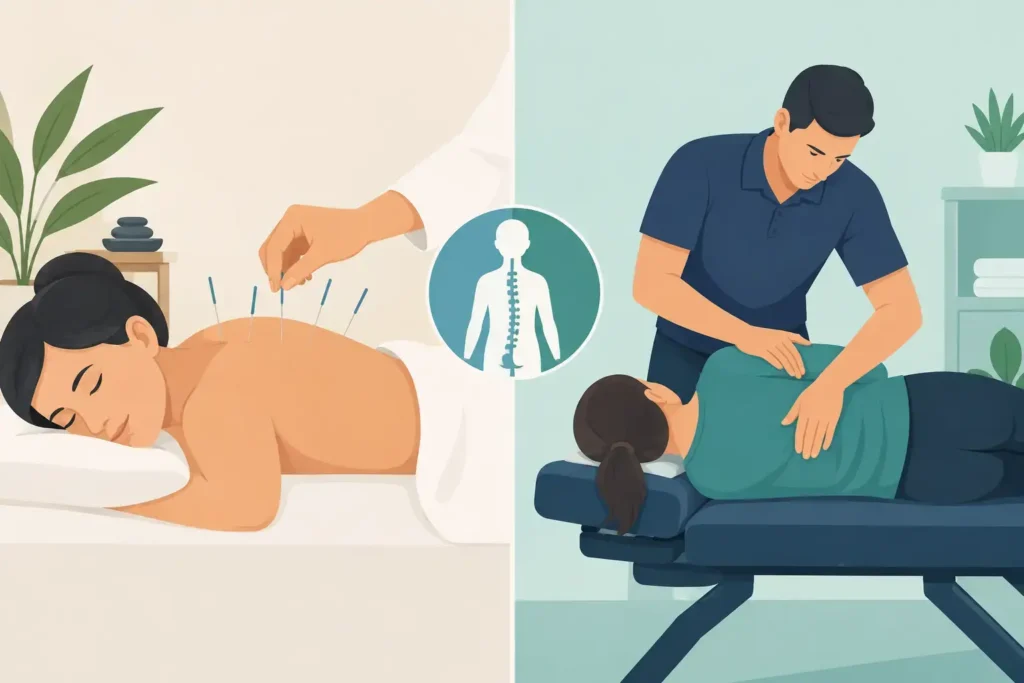
A stiff neck after a car accident, low back pain that flares after work, or headaches that begin at the base of the skull can make everyday tasks feel harder than they should. When medication is not providing enough relief, or you want to reduce reliance on it, acupuncture versus chiropractic care is a common decision point. Both approaches may help certain pain conditions, but they work differently and may fit different bodies, injuries, and recovery goals.
The best choice is not always one or the other. A thoughtful treatment plan starts with the cause of your pain, your medical history, the severity of your symptoms, and what helps you return to normal movement safely.
Acupuncture Versus Chiropractic Care: The Core Difference
Acupuncture uses very thin, sterile needles placed at specific points on the body. The goal is to influence the nervous system, local circulation, muscle tension, and the body’s pain-response pathways. Some treatment plans also use electroacupuncture, in which a gentle electrical current is applied between selected needles.
Chiropractic care is centered on evaluating the musculoskeletal system, especially the spine and joints. Chiropractors may use spinal manipulation or manual adjustments, along with stretching, soft-tissue work, posture guidance, and exercises. The aim is typically to improve joint movement and reduce mechanical stress that may be contributing to pain.
Neither treatment should be presented as a one-size-fits-all cure. Acupuncture often focuses on calming pain sensitivity and muscle guarding, while chiropractic care often focuses on movement restrictions and joint mechanics. For many people, the better question is not which treatment is “best,” but which treatment addresses the main driver of their symptoms.
When Acupuncture May Be the Better Fit
Acupuncture can be a practical option when pain is accompanied by muscle tightness, inflammation, stress-related tension, or sensitivity that lingers after an injury. It is commonly used as part of care for low back pain, neck pain, shoulder pain, knee discomfort, headaches, and chronic pain conditions.
People often consider acupuncture when they have tried rest, over-the-counter medication, massage, or physical therapy but still feel limited. It may also appeal to patients who want a non-drug approach to symptom management. Because the needles are very fine, most patients describe the sensation as brief and mild rather than painful. Some notice a heavy, warm, tingling, or relaxed feeling around treated areas.
Acupuncture may be especially useful when an injury has left the surrounding muscles in a protective spasm. For example, after a rear-end collision, a patient may have neck stiffness, headaches, and upper-back tension even when imaging does not show a fracture. Reducing muscular guarding and helping the nervous system settle may make it easier to tolerate movement and rehabilitation.
Results vary. Some patients feel a change after one session, while chronic or more complex pain often requires a series of treatments. A qualified provider should explain what is realistic for your condition, reassess your response, and adjust the plan when needed.
Acupuncture safety considerations
Acupuncture is generally well tolerated when performed with sterile, single-use needles by a properly trained clinician. Mild bruising, temporary soreness, lightheadedness, or minor bleeding can occur. Tell your provider if you take blood thinners, have a bleeding disorder, are pregnant, have a pacemaker, or have an active skin infection near the treatment area.
Electroacupuncture is not appropriate for everyone, particularly patients with certain implanted electrical devices. A medical review before treatment helps ensure the approach matches your needs.
When Chiropractic Care May Be the Better Fit
Chiropractic care may be helpful when pain appears closely tied to restricted motion, posture, repetitive strain, or a joint that feels stiff or “stuck.” It is frequently sought for mechanical low back pain, neck pain, some headache patterns, and certain joint or mobility concerns.
A chiropractor may evaluate how you stand, walk, bend, and move through daily activities. Treatment may include manual adjustments, mobilization, soft-tissue techniques, and home exercises designed to support better movement patterns. For someone whose back pain worsens after long drives, desk work, or lifting, this mechanical focus can be valuable.
Spinal manipulation is not the only method used in chiropractic care, and it is not necessary for every patient. Gentler mobilization, stretching, and exercise-based approaches may be more appropriate depending on age, pain level, injury history, and comfort level. You should never feel pressured into a technique you do not understand or do not want.
Chiropractic safety considerations
Soreness or stiffness for a day or two can occur after manual treatment. Serious complications are uncommon, but spinal manipulation is not appropriate in every situation. Recent fracture, severe osteoporosis, spinal instability, certain vascular conditions, cancer affecting the spine, progressive neurologic symptoms, and some inflammatory conditions require careful medical evaluation.
Neck pain deserves particular attention. If you have sudden severe headache, dizziness, fainting, vision changes, facial drooping, trouble speaking, new weakness, numbness, loss of coordination, or symptoms after significant trauma, seek urgent medical care rather than scheduling a routine adjustment.
Choosing Care After an Injury
After an auto accident, workplace injury, sports injury, or fall, the first priority is ruling out conditions that need urgent medical treatment. Severe pain, deformity, inability to bear weight, loss of bladder or bowel control, worsening weakness, fever, or numbness in the groin area should be evaluated promptly.
Once serious injury has been ruled out, the right therapy depends on what remains. Acupuncture may be useful for widespread muscle tension, lingering pain sensitivity, headaches, sleep disruption, or discomfort that makes movement difficult. Chiropractic care may be useful when limited range of motion and joint stiffness are prominent. Physical rehabilitation may be needed to rebuild strength, stability, and confidence after either type of treatment.
This is why an integrative model can make sense. At Acupuncture & Injury, care can be guided by the full picture rather than forcing a patient into a single treatment philosophy. A plan may include acupuncture, injury-focused evaluation, shockwave therapy when appropriate, movement recommendations, and physician-guided pain care based on the condition being treated.
Can You Use Acupuncture and Chiropractic Care Together?
Yes, some patients use both. The treatments can complement one another when coordinated thoughtfully. For example, acupuncture may help reduce muscle guarding before mobility work, while chiropractic care may help address a movement restriction that continues to place stress on the same region.
The order and frequency matter. If you are very sore after an accident or flare-up, aggressive manual treatment may not be the right starting point. If your pain has improved but you still have poor mobility or recurring strain, active rehabilitation and movement-focused care may become more important. Your response over time should shape the plan.
Using multiple therapies does not automatically mean better care. Each treatment should have a clear purpose, measurable goals, and regular reassessment. If you are not improving, your provider should consider whether further examination, imaging, referral, or a different strategy is needed.
Questions to Ask Before Starting Treatment
A good provider will welcome clear questions. Ask what they believe is causing your symptoms, what treatment they recommend first, how many visits may be reasonable before reassessment, and what changes would suggest you need a different level of care.
Also ask about credentials, expected side effects, costs, insurance or payment options, and what you can do between visits. The goal is not simply short-term relief. It is to help you move more comfortably, perform daily responsibilities, and avoid treatment that is unnecessary or ineffective.
Pain can narrow your choices until every option feels urgent. A careful evaluation can widen them again. Whether acupuncture, chiropractic care, or a coordinated combination is appropriate, choose care that listens to your symptoms, respects your comfort, and gives you a practical path back to function.
Leave a reply