Missing a daily dose can feel like the start of a bad day. For many people recovering from opioid dependence, that pressure alone can make treatment harder than it needs to be. Sublocade injection for addiction treatment was designed to reduce that burden by providing a long-acting form of buprenorphine that stays in the body for a full month.
That monthly schedule is a big reason patients ask about Sublocade. Instead of remembering a film or tablet every day, treatment becomes more structured and, for many people, more private. It can also help reduce the cycle of cravings, withdrawal worries, and day-to-day decision fatigue that often gets in the way of recovery.
What is Sublocade?
Sublocade is a prescription monthly injection that contains buprenorphine, a medication used to treat opioid use disorder. Buprenorphine is a partial opioid agonist, which means it attaches to the same brain receptors as opioids but works differently. It helps reduce cravings and withdrawal symptoms without producing the same level of euphoric effect as full opioids such as heroin, fentanyl, oxycodone, or morphine.
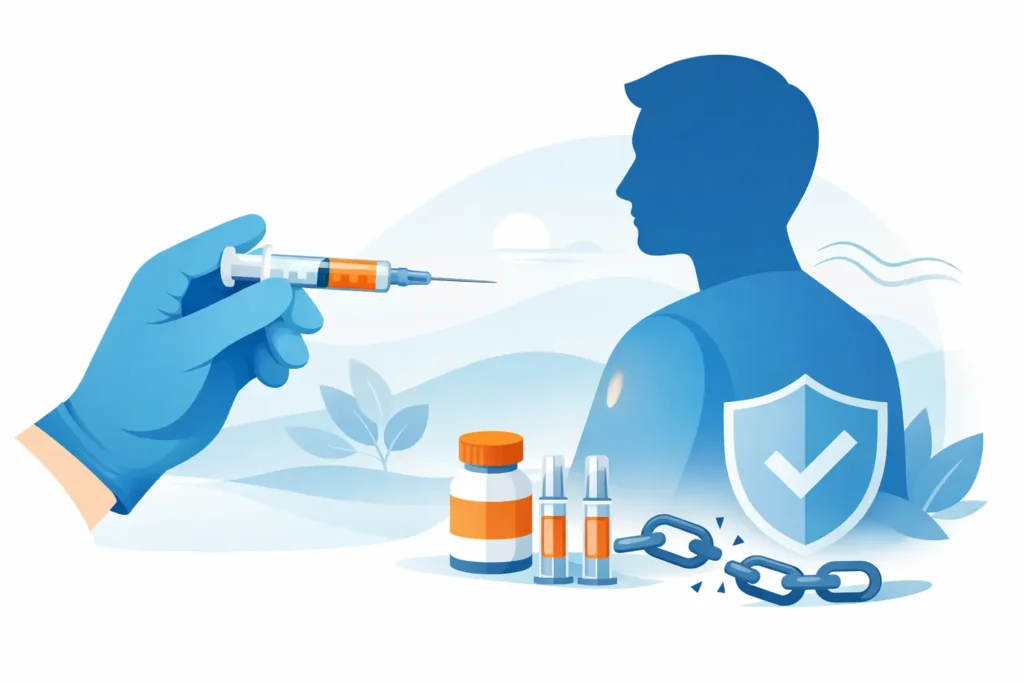
Unlike Suboxone films or tablets that are taken regularly at home, Sublocade is administered by a medical provider as a subcutaneous injection, usually in the abdominal area. After the injection, the medication forms a depot under the skin and releases buprenorphine slowly over time.
This matters because consistency is often one of the hardest parts of treatment. When medication levels stay steadier, many patients feel less of the daily up-and-down pattern that can come with missed doses, stress, or unstable routines.
How Sublocade injection for addiction treatment works
Before a patient starts Sublocade injection for addiction treatment, they are usually stabilized on transmucosal buprenorphine first. In plain terms, that means a provider often starts with a product such as Suboxone or Subutex to make sure buprenorphine is well tolerated and effective.
Once that foundation is in place, the monthly injection may be a good next step. The goal is not simply convenience, although convenience matters. The larger goal is to create a more reliable treatment pattern that supports recovery over time.
Because Sublocade is given in a clinic, there is less room for skipped doses, lost medication, or misuse. That does not mean it is the right fit for everyone. Some patients prefer the flexibility of a daily medication they can adjust with close medical guidance. Others do better with the structure of a monthly appointment.
Who may be a good candidate?
Sublocade can be a strong option for adults with opioid use disorder who want a longer-acting medication under physician supervision. It may be especially helpful for people who have trouble keeping up with daily medication, who want fewer reminders of treatment throughout the week, or who are trying to reduce the risk of relapse triggered by inconsistent dosing.
It may also appeal to patients who want recovery care that fits around work, family, or transportation challenges. For someone balancing a job, childcare, or chronic pain treatment, fewer medication decisions can make recovery feel more manageable.
That said, eligibility depends on medical history, current opioid use, treatment stage, and how a patient has responded to buprenorphine. Pregnancy status, liver health, other medications, and co-occurring mental health conditions can also affect the treatment plan. This is one reason a medically supervised evaluation matters.
Benefits patients often value most
The main benefit of Sublocade is stability. Steady medication levels can help control cravings and withdrawal symptoms in a way that supports everyday function. Many patients describe this as having more mental space to focus on work, sleep, relationships, and counseling instead of constantly managing the next dose.
Another benefit is adherence. A monthly injection removes the need to take medication every day, which can be a relief for patients who struggle with routine or who live in environments where keeping medication at home feels stressful.
There is also a practical safety advantage. Because the medication is administered in the clinic and not dispensed for home use in the same way as daily films, there is less risk of diversion or accidental exposure to others.
Privacy can matter too. Some patients do not want the daily reminder of medication-assisted treatment or the visibility of carrying treatment with them. A monthly office visit can feel more discreet and less disruptive.
Trade-offs and possible downsides
No medication is perfect for every patient. Sublocade offers convenience and structure, but it also reduces day-to-day flexibility. Once the injection is given, the dose cannot be adjusted at home. If a patient is early in treatment and still needs close dose changes, a daily buprenorphine option may make more sense at first.
There can also be side effects. Common ones may include constipation, headache, nausea, fatigue, injection-site discomfort, or sleep changes. Some patients tolerate the medication very well, while others need monitoring and adjustments in the broader treatment plan.
Cost and insurance coverage can also be a factor. Depending on a patient’s plan, prior authorization or other steps may be required. A good clinic will walk patients through those practical issues instead of leaving them to figure it out alone.
Finally, Sublocade is a treatment tool, not a cure by itself. Medication can steady the biology of addiction, but long-term recovery often improves when it is paired with counseling, accountability, and support for the stressors that helped fuel opioid use in the first place.
Sublocade vs daily Suboxone
Patients often ask whether Sublocade is better than Suboxone. The honest answer is that it depends.
Daily Suboxone gives patients more flexibility and can be easier to start. It also allows providers to make more immediate adjustments when someone is stabilizing. For a patient who is doing well with a daily routine and has no trouble taking medication as prescribed, staying on Suboxone may be completely appropriate.
Sublocade, on the other hand, can be useful when consistency is a problem or when a patient wants fewer treatment touchpoints during the month. It may also help patients who feel emotionally tied to the ritual of taking medication every day and want a less consuming recovery routine.
Neither option is morally better. The right choice is the one that improves safety, function, and long-term treatment engagement.
What to expect at a clinic visit
The first step is an evaluation. A provider reviews opioid use history, current medications, prior treatment experience, physical health, and readiness for medication-assisted treatment. If Sublocade is being considered, the provider will usually confirm that the patient has already stabilized on buprenorphine before moving to the injection.
Once approved, the injection is administered in the office. Patients are monitored as needed and given guidance about what to expect afterward, including possible soreness at the injection site and the importance of following the treatment plan closely.
Ongoing visits are not just about receiving the next shot. They are an opportunity to track cravings, withdrawal symptoms, sleep, stress, pain, and relapse risk. In a clinic that understands both pain and addiction, those conversations can be especially valuable because untreated pain is a common relapse trigger.
Why integrated care can make treatment stronger
Many people with opioid dependence did not start with addiction. They started with an injury, surgery, chronic back pain, auto accident trauma, or years of trying to function while hurting. That is why recovery care works better when providers pay attention to the full picture.
At Acupuncture & Injury, that can mean combining physician-guided addiction treatment with non-pill options for pain relief when appropriate. For the right patient, services such as acupuncture or shockwave therapy may support comfort and function while medication-assisted treatment supports opioid recovery. The goal is not to force a holistic approach or a medical approach. It is to use the combination that gives the patient the best chance to feel better and stay stable.
Is Sublocade right for you?
If you are tired of daily medication management, worried about relapse, or trying to build a more stable recovery routine, Sublocade may be worth discussing with a qualified provider. If you are early in treatment, still actively using opioids, or need frequent medication adjustments, another buprenorphine option may be a better starting point.
The most important thing is not choosing the most impressive-sounding treatment. It is choosing the treatment you can realistically stay with. Recovery tends to improve when care is practical, respectful, and built around real life rather than ideal conditions.
If monthly buprenorphine sounds like a better fit than a daily medication, a physician-guided evaluation can help you decide what comes next. The right plan should make life steadier, not more complicated.
Leave a reply