Back pain has a way of taking over ordinary life. It changes how you sleep, how long you can sit, how you work, and even how patient you feel by the end of the day. If you are asking, is acupuncture good for back pain, you are probably not looking for a trend. You are looking for relief that feels real, safe, and worth your time.
The short answer is yes, acupuncture can be a good option for back pain, especially when pain is related to muscle tension, inflammation, overuse, stress, or recovery after an injury. But the better answer is that results depend on the cause of your pain, how long it has been going on, and whether acupuncture is being used as part of a thoughtful treatment plan rather than a one-size-fits-all fix.
Is acupuncture good for back pain or just temporary relief?
For many patients, acupuncture does more than provide a brief sense of relaxation. It may help reduce pain signals, loosen tight muscles, improve circulation, and calm an irritated nervous system. That matters because back pain is often not just about one sore spot. It can involve muscle guarding, inflammation, poor movement patterns, stress, and compensations that keep the area from settling down.
Research on acupuncture for low back pain has been encouraging, particularly for chronic low back pain. Some studies show meaningful pain reduction and improved function compared with usual care alone. That does not mean every person gets dramatic results after one session. It means acupuncture has a reasonable evidence base and, for the right patient, can be a practical part of pain management.
The key is expectations. If you have a mild strain from weekend yard work, you may feel improvement quickly. If you have had years of recurring low back pain, disc irritation, sciatica, or post-accident stiffness, treatment usually takes more than one visit. Good care is less about chasing a miracle and more about creating steady progress.
How acupuncture may help back pain
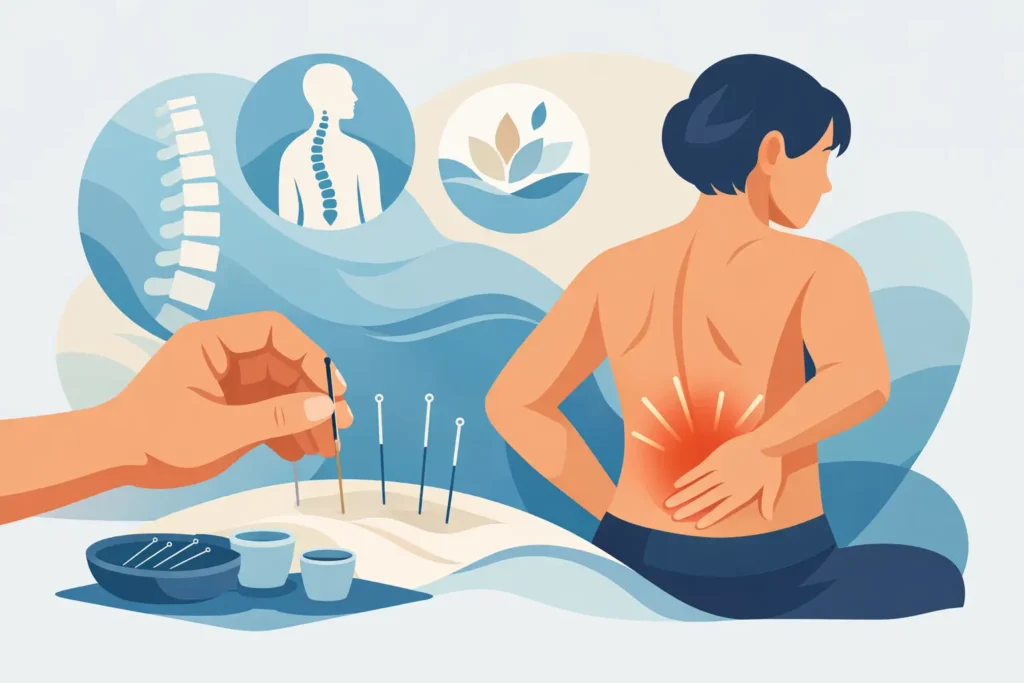
Acupuncture uses very thin needles placed at specific points to influence the body’s pain and healing responses. From a patient perspective, the goal is simple – lower pain, better movement, and less dependence on medication.
One reason it can help is that back pain often involves both local and systemic issues. Locally, the tissues may be tight, inflamed, or not healing efficiently. Systemically, the nervous system may be on high alert, which can amplify pain and keep muscles tense. Acupuncture may address both sides at once by encouraging blood flow in affected areas while also affecting how the brain and spinal cord process pain.
That is one reason some patients feel looser after treatment, while others notice they sleep better or have less flare-up pain the next day. Relief does not always look the same from person to person, but the goal is improved function. If you can stand longer, bend with less fear, or get through work without reaching for pills, that is meaningful progress.
When acupuncture tends to work best
Acupuncture can be helpful for several common types of back pain. It often works well for muscle-driven pain, tension across the upper or lower back, pain after strain or overuse, and stiffness after a car accident or work injury. It may also help as part of a plan for sciatica, disc-related irritation, and chronic low back pain, especially when inflammation and muscle spasm are involved.
Where people get frustrated is when they expect acupuncture to reverse a severe structural problem on its own. If you have major nerve compression, spinal instability, a fracture, loss of bowel or bladder control, or rapidly worsening weakness, that is not an acupuncture-first situation. Those symptoms need prompt medical evaluation.
This is where an integrative clinic model matters. The best approach is not arguing whether care should be natural or medical. It is using the right tool for the situation. Acupuncture can be excellent for many pain conditions, but it works best when your provider also knows when additional evaluation, imaging, or other therapies should be part of the plan.
What a realistic treatment plan looks like
A good first visit should not feel rushed. Your provider should ask where the pain starts, where it travels, what makes it worse, how long it has been there, and whether there are signs of nerve involvement or injury. Back pain is common, but the details matter.
If acupuncture is a good fit, treatment may focus not only on the painful area but also on related muscle groups and points that support pain control, circulation, and nervous system regulation. Some clinics may also use electroacupuncture, which adds a mild electrical stimulation to certain needles. For stubborn pain, that can be useful because it gives a stronger therapeutic signal without medication.
Most patients need a series of visits rather than a single appointment. Acute pain may improve in a handful of treatments. Chronic pain usually takes longer and often responds best to a short period of consistent care followed by reassessment. If you are improving, the plan may taper. If you are not, the provider should adjust the strategy rather than keep repeating the same session indefinitely.
What acupuncture feels like
A lot of first-time patients ask this before anything else. The needles used in acupuncture are much thinner than the needles used for injections or blood draws. Many people feel very little going in. Others notice a brief pinch, pressure, warmth, tingling, or a dull ache that fades quickly.
For back pain, the bigger surprise is often how relaxed the body feels during or after treatment. Some patients get off the table feeling looser right away. Others notice change later that day or the next morning. Mild soreness can happen, especially if the muscles were very tight to begin with, but serious side effects are uncommon when treatment is performed by a qualified professional.
Is acupuncture better than pain medication?
That depends on the goal. Medication may reduce pain fast, and in some cases it has a role. But many patients are looking for something different because they do not want to rely on pills long term, deal with side effects, or keep masking a problem that never fully improves.
Acupuncture is not the same as taking a painkiller. It does not simply cover symptoms for a few hours. It aims to change the pain pattern itself by helping the body regulate inflammation, muscle tension, and pain signaling. That is why it can be especially appealing for people who want a non-surgical, drug-reducing approach.
Still, this is not an all-or-nothing decision. Some people use acupuncture while gradually reducing medication under medical supervision. Others combine it with physical rehab, shockwave therapy, or other treatments based on the source of pain. A balanced plan is often more effective than choosing sides.
When acupuncture is not enough by itself
Back pain can be deceptively complex. If poor lifting mechanics, weak core support, repetitive strain, or old injuries keep feeding the problem, acupuncture may help with pain but not fully solve the cause. That does not mean treatment failed. It means the plan needs to match the problem.
For example, if your back pain started after an auto accident, your tissues may need a broader recovery strategy. If the pain is tied to a tendon or soft tissue injury, another modality such as shockwave therapy may help stimulate healing. If opioid use became part of the picture because pain has gone on too long, medically supervised support may matter just as much as the pain treatment itself.
That is why many patients do best in a setting that can combine hands-on therapies with medical oversight. At Acupuncture & Injury, that integrative model is built around one goal: helping patients move toward pain relief and recovery without pushing them into pills as the default answer.
How to know if it is worth trying
If your back pain has been lingering, keeps returning, or is limiting daily life, acupuncture is often worth considering. It is especially reasonable if you want to avoid surgery when possible, reduce medication use, or try a treatment that supports healing instead of just numbing symptoms.
The best candidates are usually people with mechanical back pain, muscle tension, inflammation, stiffness, and chronic flare-ups that have not responded well enough to rest or basic self-care. You may also be a good candidate if you are recovering from an injury and want help getting moving again.
What matters most is getting evaluated by someone who takes your pain seriously and looks at the whole picture. Back pain should not be brushed off, but it also should not automatically send you toward the most aggressive option. There is a lot of room between doing nothing and jumping straight to medication-heavy care.
If you have been putting off treatment because you are unsure whether acupuncture is legitimate or useful, it may help to think of it less as an alternative and more as one evidence-informed tool in a smart recovery plan. For the right kind of back pain, it can make a real difference – not just in how your back feels, but in how much of your life you get back.
Leave a reply