When pain keeps showing up in the same spot – your shoulder when you reach overhead, your heel when you step out of bed, your knee after a short walk – rest alone often stops being enough. For many people searching for shockwave therapy Marietta GA, the real question is simple: can this treatment help me heal without surgery or more medication?
Shockwave therapy is designed for exactly that kind of problem. It is a non-surgical treatment that uses acoustic waves to target injured or chronically irritated tissue. The goal is not to mask pain for a few hours. The goal is to stimulate the body’s repair process, improve circulation in the treated area, and help reduce the cycle of inflammation and restriction that keeps pain going.
At a clinic that focuses on pain relief without pushing patients toward pills, shockwave therapy fits naturally into a broader recovery plan. It can be useful on its own, and it can also work well alongside therapies like acupuncture, rehab-based injury care, and physician-guided pain management.
What shockwave therapy actually does
Shockwave therapy sends focused acoustic energy into soft tissue. That energy creates a controlled mechanical stimulus in the treatment area. In plain language, it wakes up tissue that has stalled in the healing process.
This matters because many chronic pain conditions are not just about damage. They are also about poor healing. A tendon may be irritated for months. Scarred tissue may limit movement long after the original injury. Blood flow may be reduced in an area that keeps getting re-injured. Shockwave therapy is used to encourage cellular activity, improve local circulation, and support tissue repair.
Patients often ask whether this is the same as ultrasound or electrical stimulation. It is not. The sensation is different, and the purpose is different. Shockwave therapy is more direct in the way it mechanically stimulates damaged tissue.
Who may benefit from shockwave therapy in Marietta GA
The best candidates are usually people dealing with musculoskeletal pain that has not fully responded to rest, stretching, basic physical therapy, or medication. It is commonly used for plantar fasciitis, Achilles tendon pain, tennis elbow, shoulder tendinopathy, patellar tendon pain, hip tightness, and certain chronic muscle trigger points.
It can also be helpful after overuse injuries, sports-related strain, repetitive work injuries, and some lingering pain after an auto accident. In those cases, the issue is not always a dramatic tear or fracture. Sometimes the problem is persistent inflammation, tissue irritation, and a healing response that never quite finishes.
That said, shockwave therapy is not a cure-all. Some pain comes from nerve compression, advanced joint degeneration, major structural injury, or systemic inflammatory disease. In those situations, it may still have a role, but it should be part of a careful evaluation rather than a one-size-fits-all recommendation.
Why patients look at shockwave therapy before surgery
A lot of adults with chronic pain are stuck in the middle. They are not ready for surgery, but they are also tired of living on anti-inflammatories, pain pills, or repeated temporary fixes. That is where shockwave therapy tends to get attention.
It is non-invasive. There is no incision, no anesthesia, and little downtime for most patients. Treatments are typically brief, and many people return to normal activity the same day with a few modifications.
The trade-off is that results are usually progressive, not instant. Some patients notice improvement quickly. Others need several sessions before they feel a meaningful change. If someone expects total relief after one visit, they may be disappointed. Shockwave therapy works best when expectations are realistic and the treatment plan matches the condition.
What a treatment plan usually looks like
A proper plan starts with the right diagnosis. Pain in the same body part can come from very different causes. Heel pain might be plantar fasciitis, a nerve issue, altered gait mechanics, or a combination of all three. Shoulder pain might involve tendon irritation, impingement, referred pain, or restricted movement patterns.
That is why a clinically grounded approach matters. Instead of treating every painful area the same way, the provider evaluates where the pain is coming from, how long it has been going on, what aggravates it, and what has already been tried.
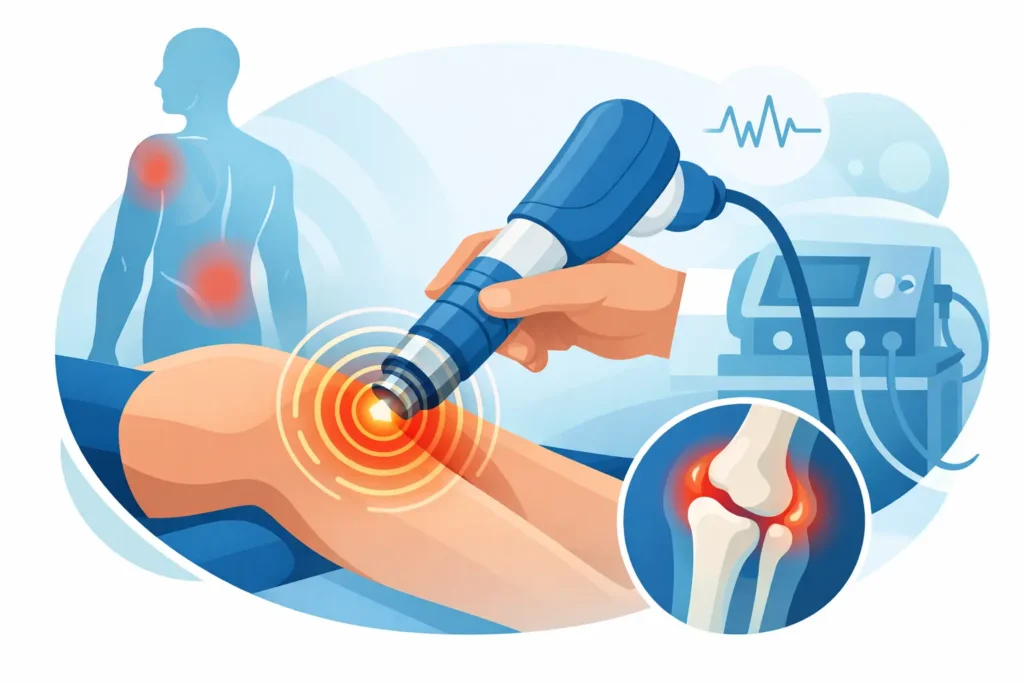
Once shockwave therapy is chosen, treatment usually involves a handheld device applied to the skin over the injured area. Patients often feel a tapping or pulsing sensation. Some areas can be tender during treatment, especially if the tissue is very inflamed or sensitive. Discomfort is usually manageable, and settings can often be adjusted based on tolerance and treatment goals.
Most patients need a series of sessions rather than a single visit. The exact number depends on the condition, severity, duration of symptoms, and how the tissue responds. In many cases, shockwave therapy is more effective when paired with other care such as mobility work, activity modification, acupuncture, or treatment for underlying injury patterns.
Shockwave therapy and chronic pain relief
One reason this treatment stands out is that it aims at healing, not just symptom suppression. For patients who want to reduce reliance on medication, that matters.
Pain medication can absolutely have a role, especially in acute injury or severe flare-ups. But many people in chronic pain know the downside of depending on pills long term. Relief may wear off. Side effects add up. Function does not always improve, even when symptoms are temporarily dulled.
Shockwave therapy takes a different route. It tries to improve the condition of the tissue itself. That does not mean every case resolves completely, and it does not mean medication never belongs in care. It means the treatment is aligned with a bigger goal: helping patients move better, heal better, and need less symptom management over time.
For a practice built around being pain free without pills, that approach is not a slogan. It is a practical treatment philosophy.
How shockwave therapy compares with other options
Compared with injections, shockwave therapy is less invasive and does not rely on steroids. That can be appealing for patients who want to avoid repeated injections or who have only had short-term benefit from them.
Compared with rest alone, it is more active and targeted. Rest may calm symptoms briefly, but it does not always restart healing in chronic tendon or fascia problems.
Compared with surgery, the recovery burden is much lower. But surgery may still be necessary for severe structural issues, instability, or cases that do not respond to conservative care.
Compared with acupuncture, the two treatments are different but can complement each other well. Acupuncture may help reduce pain, calm muscle tension, and support the nervous system’s regulation of pain. Shockwave therapy may be more directly focused on stimulating tissue repair in a stubborn local area. Used together, they can address both the pain experience and the tissue problem underneath it.
Is shockwave therapy safe?
For the right patient, it is generally considered a safe treatment. Like any therapy, it is not appropriate for everyone. Certain medical conditions, implanted devices in some treatment areas, bleeding risks, pregnancy in certain regions of the body, or active infections may require caution or rule it out.
This is another reason medically supervised care matters. A patient should not have to guess whether a treatment is safe for their history. They should be evaluated and guided clearly.
After treatment, it is common to have temporary soreness, redness, or mild tenderness in the area. That does not necessarily mean something is wrong. In many cases, it reflects the tissue response to treatment. Patients usually receive guidance on activity, recovery, and when to expect changes.
What to expect from shockwave therapy in Marietta GA
If you are considering shockwave therapy in Marietta GA, it helps to think beyond the machine itself. The bigger question is whether the clinic is looking at the whole problem.
Good care does not treat pain like an isolated symptom. It looks at injury history, movement patterns, inflammation, recovery barriers, and whether other support is needed. Someone recovering from an accident may need more than one modality. Someone with chronic pain may also need a plan that helps them move away from heavy medication use. Someone dealing with both pain and opioid dependence needs care that is effective, respectful, and medically responsible.
That integrated approach is where clinics like Acupuncture & Injury can offer real value. Instead of forcing patients to choose between holistic care and conventional medicine, treatment can be built around what actually helps the person in front of you.
Shockwave therapy is not about quick hype. It is about giving stubborn pain a real chance to improve when the body needs help moving from irritation into repair. If your pain has been limiting your work, sleep, movement, or recovery, the next step is not to tough it out longer. It is to find out whether the tissue can still heal with the right kind of support.
Leave a reply