A knee can hurt long before an X-ray shows a major problem. It may ache after climbing stairs, feel stiff when you stand after sitting, or send a sharp reminder every time you squat, turn, or get out of the car. For people trying to stay active without relying on pain medication, understanding how shockwave helps knee pain can make the next step feel clearer.
Shockwave therapy is a non-surgical treatment that uses acoustic waves to stimulate the body’s healing response in targeted tissue. It is not an injection, and it does not use electrical current or surgery. At Acupuncture & Injury, shockwave may be part of a broader recovery plan that can also include acupuncture, injury care, movement guidance, and physician-supervised pain management when appropriate.
How shockwave helps knee pain
Knee pain is not one condition. It can come from irritated tendons, overworked muscles, arthritis-related joint changes, a past injury, altered movement after an auto accident, or several issues at once. Shockwave therapy is most often considered when pain involves soft-tissue irritation or a tendon problem around the knee and has not improved enough with rest alone.
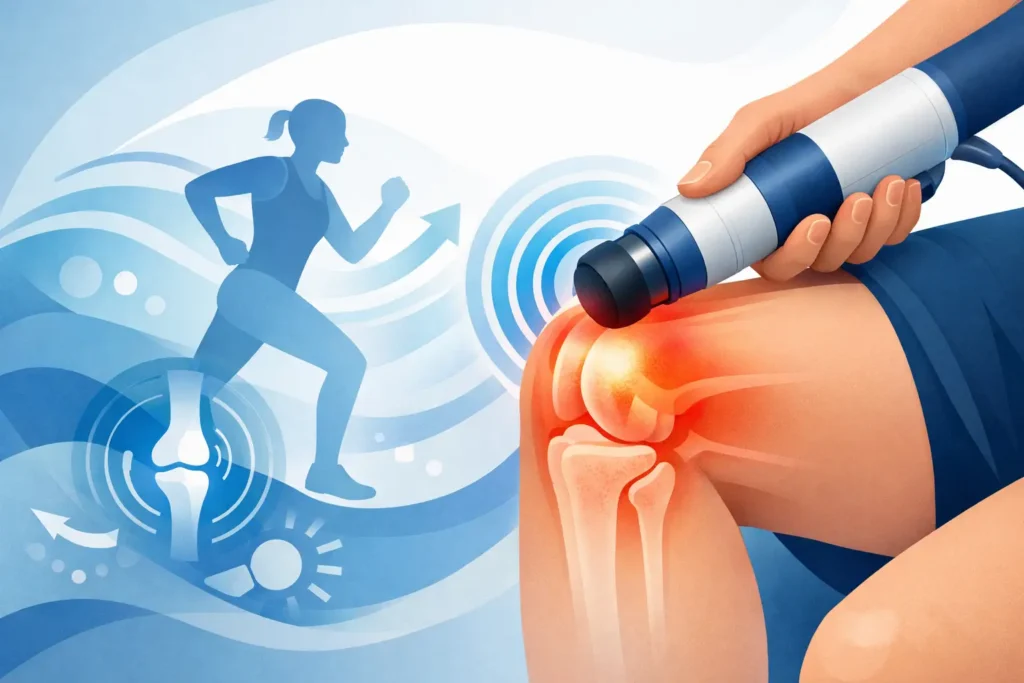
During treatment, a provider places a handheld device over the area being treated. The device sends controlled acoustic waves into the tissue. Patients commonly describe the sensation as tapping, pulsing, or brief pressure. The intensity can be adjusted to keep treatment tolerable.
The goal is not to simply numb pain for a few hours. Shockwave is intended to encourage a local biological response that may improve blood flow, stimulate cellular activity, and support the remodeling of injured or chronically irritated tissue. That matters because tendons and other structures around the knee may have limited circulation and can be slow to recover.
Supporting circulation and tissue repair
Chronic tendon pain often develops when tissue has been overloaded repeatedly without enough time or support to recover. The patellar tendon below the kneecap is a common example, especially for runners, people who do physical work, and adults returning to exercise after a long break.
Shockwave therapy creates mechanical stimulation in the treatment area. This can signal the body to increase local circulation and initiate repair processes. Over a series of visits, that response may help reduce tenderness and make the tissue more capable of handling everyday load. Results are gradual, not instant, because healing tissue takes time to adapt.
Reducing pain sensitivity
Persistent knee pain can make the nervous system more protective. The knee may feel painful with movements that once felt ordinary, even after the original irritation has started to settle. Shockwave may help modulate pain signaling in the treated area while addressing the tissue that is contributing to the problem.
This is one reason many patients notice that stairs, walking, kneeling, or standing from a chair becomes easier over the course of care. The treatment is not designed to cover up a serious injury. It is designed to help create a better environment for recovery while your provider monitors your response.
Improving movement and function
Less pain is meaningful, but function is the real goal. A useful treatment plan should help you walk with more confidence, return to work duties, keep up with family, or resume exercise safely.
Shockwave often works best when it is paired with the right amount of movement. Depending on the cause of knee pain, that may mean strengthening the hips and quadriceps, improving ankle mobility, adjusting training volume, or correcting a movement pattern that keeps irritating the knee. Treating the painful spot without changing the stress that caused the problem may lead to only temporary improvement.
Knee conditions that may respond to shockwave therapy
Shockwave is not a universal solution for every painful knee, but it can be a reasonable conservative option for selected conditions. It is commonly considered for patellar tendinopathy, sometimes called jumper’s knee, as well as tendon irritation around the knee that has become chronic.
Some people with knee osteoarthritis also seek shockwave as part of a non-surgical pain-management plan. Arthritis involves changes inside the joint that shockwave cannot reverse. However, treatment may help certain patients manage pain, improve comfort with activity, and reduce the soft-tissue tension that often develops around an arthritic knee. The degree of benefit depends on the severity of arthritis, alignment, activity demands, weight-bearing tolerance, and other health factors.
Knee pain after an injury or auto accident deserves a careful assessment before treatment. A direct impact, twisting injury, sudden swelling, locking, instability, or inability to bear weight can point to a problem that needs imaging or orthopedic evaluation. Shockwave should never delay appropriate care for a suspected fracture, major ligament injury, or acute meniscus injury.
What a shockwave treatment plan looks like
A good treatment plan starts by identifying why the knee hurts. Your provider should ask when the pain started, what movements make it worse, whether there was trauma, and what treatments you have already tried. A hands-on exam can help distinguish pain from the tendon, joint line, kneecap, surrounding muscles, or another source.
Treatment sessions are usually brief. A conductive gel is applied, and the device is moved over the target area. Mild soreness during treatment or for a day or two afterward is possible, particularly when the tissue is already sensitive. Many people can return to normal daily activity afterward, although a provider may recommend temporarily avoiding high-impact exercise if it is aggravating the knee.
Most patients need a series rather than a single visit. The exact number depends on the diagnosis, how long symptoms have been present, and how the knee responds. Some people feel a change early; others improve more noticeably over several weeks as tissue healing and strengthening progress. A clinic that promises a guaranteed cure after one treatment is not setting realistic expectations.
When shockwave may not be the right choice
Shockwave therapy has a strong safety profile when used appropriately, but it is not right for everyone. A provider should review your medical history, medications, and the exact location of pain before recommending it.
Treatment may need to be avoided or postponed in cases involving a suspected fracture, active infection, a blood clotting concern, certain bleeding disorders, cancer in the treatment area, or significant loss of sensation. Pregnancy and the use of blood-thinning medication should also be discussed during your consultation. If you have a knee replacement, implanted device, or complex medical history, individualized clinical guidance matters.
There is also a practical trade-off: shockwave can support recovery, but it cannot overcome repeated overload. If your job, sport, footwear, or movement pattern continues to stress the irritated area, progress may be slower. A complete plan addresses both the painful tissue and the daily habits that keep the pain active.
A medication-reducing option for knee pain
Pain medication can have a role in care, particularly after an acute injury or during a severe flare. But many patients do not want to depend on pills just to get through work, sleep, or a grocery trip. For people managing chronic pain or concerned about opioid use, non-drug options deserve a serious conversation.
Shockwave therapy can fit into a Pain Free Without Pills approach by giving the knee a targeted, non-invasive treatment option. It may be combined with acupuncture to address pain and muscle tension, while therapeutic movement helps rebuild capacity. When medication is necessary, physician-guided care can help ensure it is used thoughtfully rather than becoming the only plan.
Is it time to have your knee evaluated?
If knee pain has lasted for weeks, keeps returning, or is limiting work and activity, an evaluation can help determine whether shockwave is appropriate. Seek prompt medical attention for severe swelling, fever, deformity, a locked knee, sudden instability, or inability to put weight on the leg.
For the more common pattern of stubborn pain that has slowly narrowed your daily life, the goal is simple: identify what is driving it and build a treatment plan that helps you move forward. The right conservative care can give your knee a better chance to recover while helping you stay in control of how that recovery happens.
Leave a reply