A migraine can turn a workday, family plan, or quiet evening into a search for a dark room. When attacks keep returning, many people want relief that does not mean taking more medication every week. This guide to acupuncture for migraines explains what this treatment can and cannot do, what a visit involves, and how it may fit into a physician-guided migraine care plan.
Why migraines need more than a quick fix
Migraine is more than a bad headache. It is a neurological condition that can involve throbbing head pain, nausea, sensitivity to light or sound, vision changes, dizziness, neck tension, and profound fatigue. Some people experience an aura before an attack. Others have no warning at all.
Treatment depends on the pattern. A person with an occasional migraine may need a different plan than someone who loses several days each month to headache pain. Sleep disruption, dehydration, skipped meals, hormonal shifts, stress, jaw tension, certain foods, neck injuries, and changes in routine can all contribute for some patients. Identifying your own triggers is useful, but it does not mean migraine is your fault or that you can simply eliminate every attack through lifestyle changes.
Acupuncture is often considered by people who want to reduce migraine frequency, lower pain intensity, improve recovery between attacks, or reduce reliance on as-needed pain medicine. It is not a replacement for emergency medical evaluation, and it should not require you to abandon effective conventional care. The best plan is usually one that addresses both immediate relief and long-term prevention.
How acupuncture for migraines may help
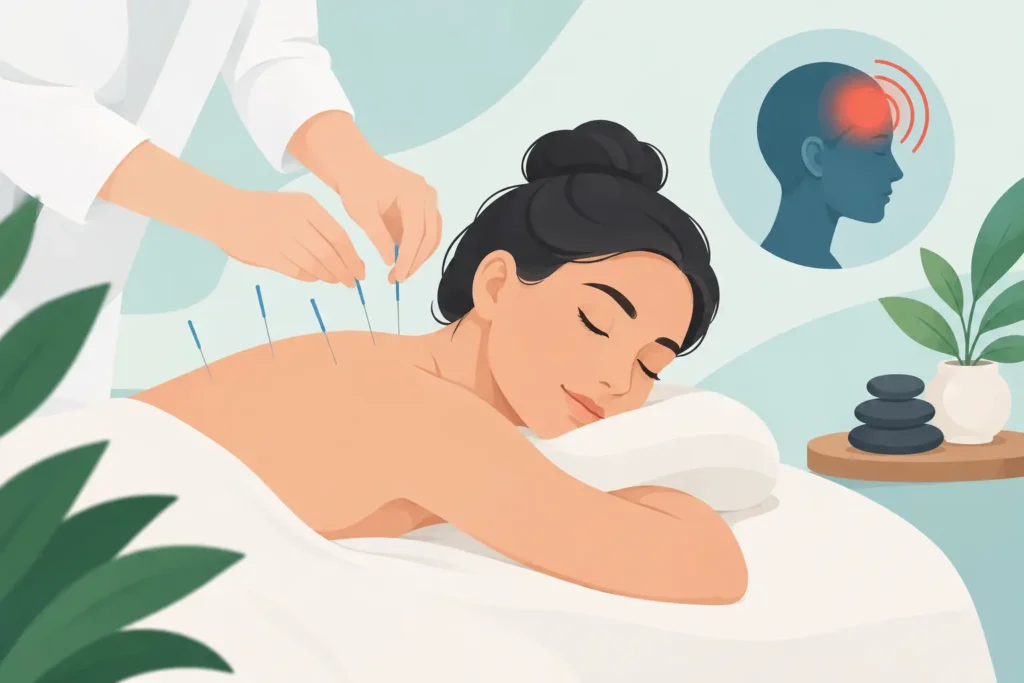
Acupuncture uses very thin, sterile needles placed at specific points on the body. For migraine care, treatment may include points on the scalp, face, hands, feet, arms, legs, shoulders, and upper back. The exact point selection should be based on your symptoms, health history, sleep, stress load, muscle tension, and any injuries that may be affecting your neck or posture.
Researchers continue to study the mechanisms behind acupuncture. Current evidence suggests it may influence pain-processing pathways, nervous system activity, local blood flow, muscle tension, and the body’s release of natural pain-modulating chemicals. For people with frequent migraines, acupuncture has shown potential as a preventive option that can reduce headache days for some patients.
That wording matters: may and some. Acupuncture does not produce the same result for every person. It is generally not a dependable way to stop a severe migraine immediately once it is fully underway, although some patients report less intense symptoms or faster recovery. It tends to make the most sense as part of a consistent preventive plan, especially when migraines are connected with stress, poor sleep, neck pain, jaw clenching, or recurring muscle tightness.
What your first treatment should look like
A quality first visit begins with a conversation, not a needle. Your provider should ask about your migraine history, how often attacks occur, where pain starts, associated symptoms, medications and supplements, prior injuries, sleep, stress, and any changes in your headache pattern. If you track migraines in an app or notebook, bring that information with you.
The treatment itself is usually performed while you rest comfortably. Most people describe needle insertion as a brief pinch, pressure, warmth, tingling, or a dull, heavy sensation around a point. The needles are typically left in place for a period of quiet rest. Depending on the clinical plan, care may also include electroacupuncture, which uses a gentle electrical stimulation between selected needles, or treatment directed at neck and shoulder tension.
You should not feel pressured to tolerate sharp or persistent pain. Tell your provider if you feel anxious, lightheaded, uncomfortable, or unusually sensitive. Treatment can be adjusted. Afterward, some people feel calm or sleepy, while others feel more energized. Mild soreness, small bruises, or temporary tenderness can occur.
How many sessions are usually needed?
Migraine prevention takes time because the goal is to change a recurring pattern, not just cover up a symptom for a few hours. Many patients begin with regular sessions for several weeks, then reassess based on migraine days, severity, medication use, sleep, and daily function. If treatment is helping, visits may become less frequent over time.
There is no honest one-size-fits-all number. Someone whose migraines are closely tied to an acute neck injury may respond differently from someone with chronic migraine, hormonal changes, or years of medication overuse. Your treatment plan should have clear goals and a defined reassessment point. If there is no meaningful improvement after an appropriate trial, your provider should discuss other options rather than simply extending visits indefinitely.
Keeping a simple migraine record can make progress easier to see. Note the date, duration, pain level, symptoms, possible trigger, medication used, and whether you missed work, exercise, or family activities. Fewer headache days is a meaningful result, but so is being able to function better during an attack.
Acupuncture works best as part of a wider plan
A migraine plan may include prescription preventive medication, acute migraine medication, physical therapy, sleep support, hydration and meal routines, stress management, or treatment for contributing neck and jaw pain. For patients trying to reduce use of frequent over-the-counter pain relievers, coordination with a qualified medical provider is especially important. Taking certain headache medicines too often can contribute to medication-overuse headaches.
At Acupuncture & Injury, care is built around the idea that patients should not have to choose between holistic therapies and medically guided treatment. For a migraine patient, that can mean looking beyond the head pain itself to consider muscle tension, injury history, inflammation, medication use, and the practical demands of recovery.
If migraines began or worsened after a car accident, fall, sports injury, or other trauma, do not assume the issue is only stress. Neck strain, concussion-related symptoms, and other injuries need appropriate evaluation. Acupuncture may support pain management and recovery, but the underlying injury deserves careful attention as well.
Safety and when to get medical care
When performed by a properly trained practitioner using sterile, single-use needles, acupuncture is generally considered low risk. Before treatment, share your full medical history. This is particularly important if you are pregnant, have a bleeding disorder, take blood-thinning medication, have an implanted electrical device, have a history of fainting with needles, or have an active skin infection near a treatment area.
Acupuncture should never delay urgent medical care. Seek emergency help for a sudden, severe headache that reaches maximum intensity quickly, a new headache after a head injury, weakness or numbness on one side, trouble speaking, confusion, fainting, seizure, fever with neck stiffness, or a major change in vision. A new or changing headache pattern after age 50 also warrants medical evaluation.
Talk with a physician promptly if migraine attacks are becoming more frequent, your current medications are no longer working, or you are using acute pain medication repeatedly each week. More treatment is not always better. The right care is the care that safely improves your ability to live, work, sleep, and move through the day.
A practical next step for migraine relief
If migraines are controlling your calendar, begin by documenting your symptoms and scheduling a proper evaluation. Ask whether acupuncture is appropriate for your migraine pattern, what outcomes are realistic, and how progress will be measured. A thoughtful plan can give you a path toward fewer disrupted days and more control without making pills your only answer.
Leave a reply