A workplace injury can turn ordinary tasks into painful obstacles. Lifting a box, typing at a desk, driving between job sites, or standing through a shift may suddenly feel impossible. This work injury recovery guide explains how to protect your health, document what happened, and make practical treatment decisions that support a safe return to work without relying only on pain medication.
Start With Medical Care, Not Guesswork
Report the injury to your supervisor as soon as you can, even if the pain seems minor at first. Some injuries, including strains, repetitive-use conditions, whiplash, and joint injuries, may worsen over the next several days. Early reporting creates a record and helps your employer begin the appropriate workers’ compensation process.
Seek medical evaluation promptly, especially after a fall, crush injury, vehicle accident, or sudden pain while lifting. Tell the clinician exactly what you were doing, where you hurt, when symptoms began, and what movements make the pain better or worse. Be direct about numbness, weakness, headaches, dizziness, sleep disruption, or pain that travels down an arm or leg. Those details can affect both diagnosis and treatment.
Emergency care is appropriate for severe bleeding, chest pain, trouble breathing, loss of consciousness, confusion, new bowel or bladder problems, major weakness, or a visibly deformed limb. For less urgent injuries, a focused evaluation can identify whether you need imaging, activity restrictions, rehabilitation, pain management, or specialty care.
Document the Injury and Your Symptoms
Good documentation is not about being adversarial. It helps your care team understand what changed, tracks whether treatment is working, and supports appropriate workplace accommodations.
Write down the date, time, location, task, and equipment involved. If there were witnesses, record their names. Keep copies of incident reports, work restrictions, appointment notes, test results, bills, and communications related to the injury. Follow your employer’s reporting procedures and ask questions if you are unsure which provider or paperwork is required under your claim.
A brief daily symptom log can also be useful. Note your pain level, the activity that triggered it, sleep quality, medication use, and any new symptoms. Pain is personal, but patterns matter. For example, low back pain that improves with gentle walking but spikes after 20 minutes of sitting calls for a different plan than pain that steadily worsens with every movement.
Build a Work Injury Recovery Plan Around Function
Pain relief matters, but recovery is about function. The goal is not simply to get through a shift. It is to restore your ability to move, work, sleep, and handle daily responsibilities with less pain and less risk of reinjury.
Your plan may include a combination of medical assessment, temporary work restrictions, targeted movement, hands-on care, and follow-up visits. The right mix depends on the injury, your job demands, your health history, and how your body responds over time. A warehouse employee with a shoulder strain may need lifting limits and gradual strengthening. An office worker with neck pain may need ergonomic changes, breaks from computer work, and treatment for muscle tension.
Rest has a place immediately after an injury, but prolonged inactivity can lead to stiffness, weakness, and fear of movement. Follow the restrictions given by your clinician, then reintroduce activity in a measured way. Do not push through sharp pain, numbness, worsening weakness, or symptoms that persist long after activity stops.
Consider Non-Drug Options for Pain and Inflammation
Medication can be useful for some patients, particularly during an acute phase of injury. But it should be part of a thoughtful plan, not the entire plan. Some pain medicines carry side effects, interact with other medications, or create concerns when used long term.
Integrative care can offer additional options for musculoskeletal pain. Acupuncture may help reduce pain sensitivity, ease muscle tension, and support relaxation. Electroacupuncture uses gentle electrical stimulation through acupuncture needles and may be considered for certain painful muscle and nerve-related conditions. Cupping may be used to address tight, sore soft tissue in appropriate patients.
Shockwave therapy, including StemWave technology, uses acoustic waves intended to stimulate the body’s healing response in targeted areas. It is sometimes considered for persistent tendon, joint, and soft-tissue pain. It is not appropriate for every injury, and a qualified provider should determine whether it fits your condition.
At Acupuncture & Injury, treatment plans can combine these approaches with physician-guided injury care. That matters when you want non-surgical, drug-reducing options without giving up access to medically supervised assessment and treatment.
Make Your Return to Work Gradual and Specific
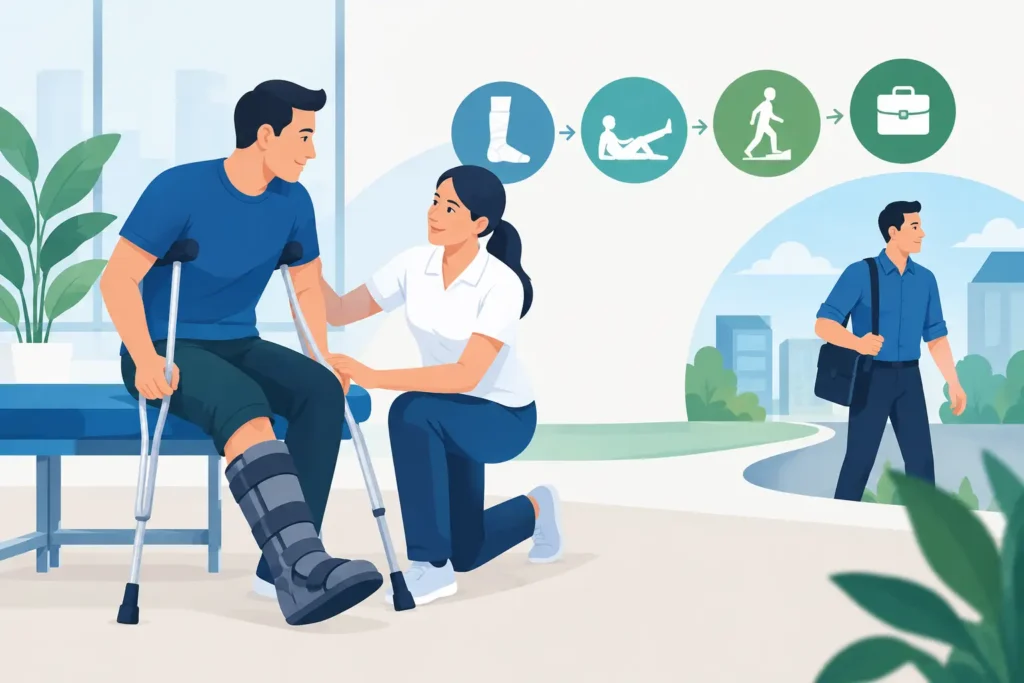
Returning too soon can set recovery back. Waiting until you feel perfectly normal may not always be realistic or necessary. A modified-duty plan often provides a safer middle ground when it is available.
Ask for restrictions that match your actual limitations. These may include limits on lifting, carrying, overhead reaching, climbing, driving, repetitive bending, prolonged standing, or hours worked. Vague restrictions are harder for everyone to follow. Clear guidance gives your employer a better chance to adjust tasks safely.
Before resuming full duty, consider the movements your job truly requires. Can you squat, turn, reach, grip, walk, sit, or stand for the needed duration without a major symptom flare? Can you perform the task with correct body mechanics? If the answer is no, your care team may recommend more treatment, conditioning, or a slower progression.
Ergonomic changes can prevent a repeat injury. Adjusting a chair, monitor, workstation height, lifting technique, footwear, tools, or break schedule may seem small, but small changes can reduce strain over an entire workweek.
Watch for Delayed Symptoms and Recovery Barriers
A work injury does not only affect the body part that hurts. Poor sleep, stress about income, reduced activity, and fear of another injury can all slow progress. Let your provider know if pain is affecting your mood, concentration, or ability to care for yourself at home. These are treatment concerns, not personal failures.
Be cautious with alcohol, sedatives, or opioid pain medication when pain becomes frustrating. If you are worried about dependence, have a history of opioid use disorder, or find yourself taking medication differently than prescribed, ask for help early. Medically supervised treatment, including buprenorphine-based options when clinically appropriate, can support recovery with dignity and without judgment.
Contact your clinician if pain is escalating rather than improving, a new symptom develops, or your current treatment is not helping you function. Recovery is rarely a straight line. A plan may need adjustment as swelling settles, activity increases, or a more specific diagnosis becomes clear.
Questions to Ask at Your Next Appointment
Bring practical questions to your visit: What is the likely source of my pain? Which activities should I avoid, and which are safe? What signs mean I should call sooner? How will we measure progress? What work restrictions are appropriate right now? When should I expect to advance activity?
A good treatment plan gives you more than a temporary reduction in pain. It gives you clear next steps, realistic expectations, and support for getting your life back on track. Take recovery one safe, measurable step at a time – your body and your job both benefit from a return that is built to last.
Leave a reply