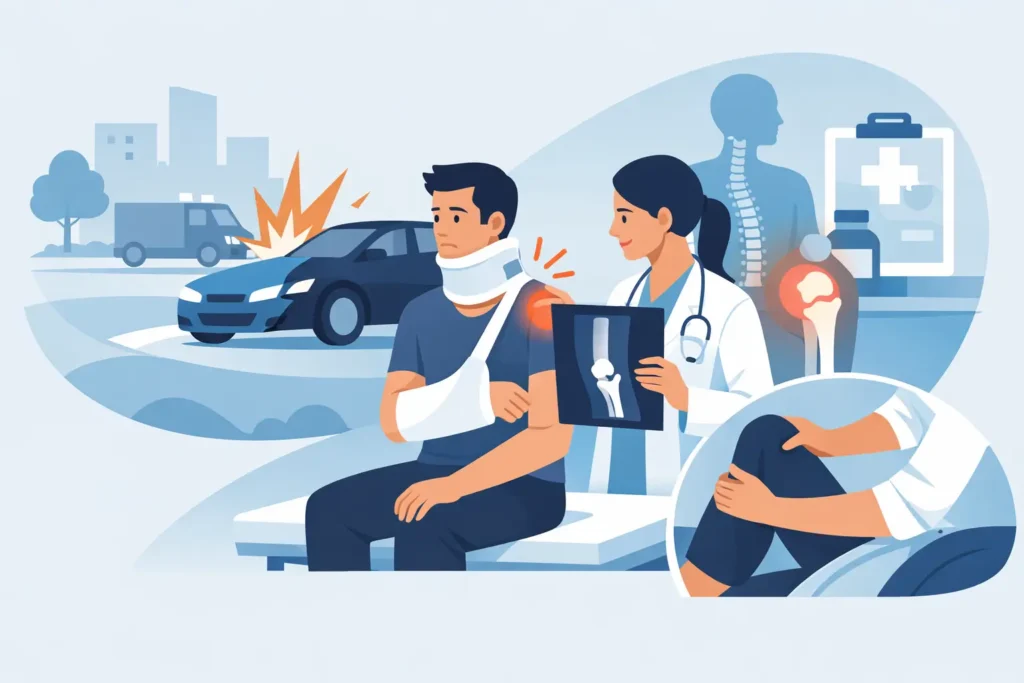
The day after a car crash is often harder than the day of the crash. Adrenaline wears off, your neck tightens, your back starts to spasm, and simple movements suddenly hurt. That is why auto accident injury treatment matters early, even if you walked away from the accident thinking you were fine.
Some injuries show up right away. Others build over 24 to 72 hours as inflammation increases and muscles react to the force of impact. A low-speed collision can still leave you with whiplash, shoulder pain, headaches, nerve irritation, or lower back pain. Waiting too long can make recovery slower and more complicated.
Why auto accident injury treatment should start early
After a crash, the body often goes into protection mode. Muscles tighten to stabilize injured areas, circulation can change, and inflammation begins working around strained or damaged tissue. That response is normal, but it can also create a cycle of pain and stiffness that lingers if it is not treated.
Early care is not just about comfort. It is about function. The sooner swelling, soft tissue irritation, and movement restrictions are addressed, the better your chances of avoiding long-term problems. That can mean fewer headaches, better sleep, easier movement, and less risk of turning an acute injury into chronic pain.
This is especially true with whiplash-related injuries. Many people expect whiplash to mean neck pain only, but it can also cause shoulder tension, jaw discomfort, dizziness, arm tingling, and mid-back pain. The right treatment plan looks beyond the obvious sore spot and evaluates how the whole body responded to the impact.
What injuries are common after a car accident?
Car accidents can affect muscles, ligaments, joints, nerves, and connective tissue all at once. Even when imaging does not show a fracture, you may still be dealing with a painful soft tissue injury that limits how you sit, drive, work, or sleep.
Common post-accident complaints include neck pain, back pain, whiplash, headaches, shoulder strain, hip pain, knee pain from impact, and numbness or tingling in the arms or legs. Some people also develop inflammation around older injuries that were manageable before the crash but suddenly flare up afterward.
Not every injury follows the same timeline. A patient with severe muscle spasm may need pain relief and mobility work right away. Someone else may be able to function through the day but notice worsening stiffness every morning. That is one reason a one-size-fits-all approach rarely works well.
What effective treatment usually looks like
Good auto accident injury treatment should do more than temporarily mask symptoms. It should reduce pain, calm inflammation, improve circulation, support tissue repair, and help restore normal movement. In many cases, the best plan combines therapies rather than relying on a single method.
At an integrative clinic, that may include a medical evaluation along with non-surgical treatment options such as acupuncture, electroacupuncture, shockwave therapy, and targeted injury care. This kind of model helps patients who want real relief without being pushed straight toward long-term pain medication.
That matters because medication can be useful in some situations, but it is not the whole answer. Pain pills may dull symptoms for a few hours, yet they do little to address restricted movement, irritated tissue, or dysfunctional muscle patterns caused by the accident. A treatment-focused plan aims to improve the condition itself, not just make it easier to ignore.
How acupuncture helps after a crash
Acupuncture is often associated with general wellness, but it is also a practical treatment for injury recovery. After an auto accident, acupuncture can help reduce pain, ease muscle guarding, improve circulation, and support the body’s healing response.
For patients with whiplash, back strain, or post-traumatic headaches, acupuncture is often helpful because it addresses both pain and tension. When muscles remain tight for days or weeks after impact, they can keep pulling on nearby joints and nerves. Acupuncture can calm that pattern and make movement feel less restricted.
Electroacupuncture may be recommended in some cases. This treatment adds a gentle electrical stimulation to specific acupuncture points, which can be useful for stubborn pain, muscle spasm, or nerve-related symptoms. It is not right for every patient, but when used appropriately, it can be an effective part of a recovery plan.
Where shockwave therapy fits in
Shockwave therapy is another option that can be valuable in auto injury care, especially when pain is linked to deeper soft tissue dysfunction. This treatment uses acoustic waves to stimulate healing in damaged or inflamed tissue. It is often used when an area feels stuck – not improving the way it should after the initial injury.
For some patients, shockwave therapy helps with lingering shoulder pain, hip pain, tendon irritation, or areas of chronic tightness that developed after the accident. It can encourage circulation and tissue repair in a way that complements acupuncture and hands-on injury treatment.
The trade-off is that not every fresh injury should be treated the same way. Timing matters. Very acute injuries may need a different starting point than more persistent pain that has settled in over several weeks. That is why a proper assessment matters before choosing any single therapy.
Why physician-guided, non-pill care matters
After a collision, many patients want two things at once. They want strong medical guidance, and they want alternatives to living on pain pills. Those goals are not in conflict. In fact, they often work best together.
A medically supervised clinic can evaluate symptoms, monitor progress, and recommend the right combination of treatments while staying focused on function and healing. That kind of oversight is especially important if your pain is severe, your symptoms are changing, or you have a history of medication dependence and want safer pain management options.
For some people, a drug-reducing approach is not just a preference. It is personal. If you are in recovery, concerned about opioid use, or simply trying to avoid medications that interfere with work and daily life, treatment should respect that. You deserve care that is serious about pain relief without treating pills as the only path.
What to expect from a treatment plan
A strong treatment plan starts with listening. The details of the accident matter, but so do the details of your pain. Where does it hurt? When did symptoms begin? What movements trigger them? Are you waking up stiff, getting headaches, or feeling tingling down an arm?
From there, treatment should be tailored to your condition, not copied from a standard checklist. Some patients need more help with inflammation and muscle tension in the first phase. Others need a greater focus on restoring range of motion, reducing nerve irritation, or supporting tissue healing after the pain has become more persistent.
Recovery is rarely perfectly linear. You may feel better after a few visits, then notice soreness after returning to work or spending longer in the car. That does not always mean something is wrong. It often means your body is still healing and needs the treatment plan adjusted as your activity increases.
Patients in Marietta and the greater Atlanta area often delay care because they hope symptoms will fade on their own. Sometimes they do. But when pain starts interfering with sleep, driving, concentration, or daily tasks, waiting usually makes life harder than it needs to be.
When not to wait
Some post-accident symptoms deserve prompt medical attention. Severe headache, chest pain, shortness of breath, significant weakness, worsening numbness, confusion, or loss of bladder or bowel control should never be brushed off. Those symptoms need immediate evaluation.
Even less dramatic symptoms should not be ignored if they are persistent. Neck stiffness that keeps getting worse, back pain that limits walking, or headaches that began after the crash are all good reasons to get checked. Pain does not have to be unbearable to be worth treating.
At Acupuncture & Injury, the goal is simple – help patients heal, regain function, and move toward being pain free without pills. That may involve acupuncture, shockwave therapy, or a broader injury care plan under medical supervision, depending on what your body actually needs.
If you have been in a car accident and something still feels off, trust that signal. The right treatment can make the difference between dragging an injury through the next few months and giving your body a real chance to recover.
Leave a reply