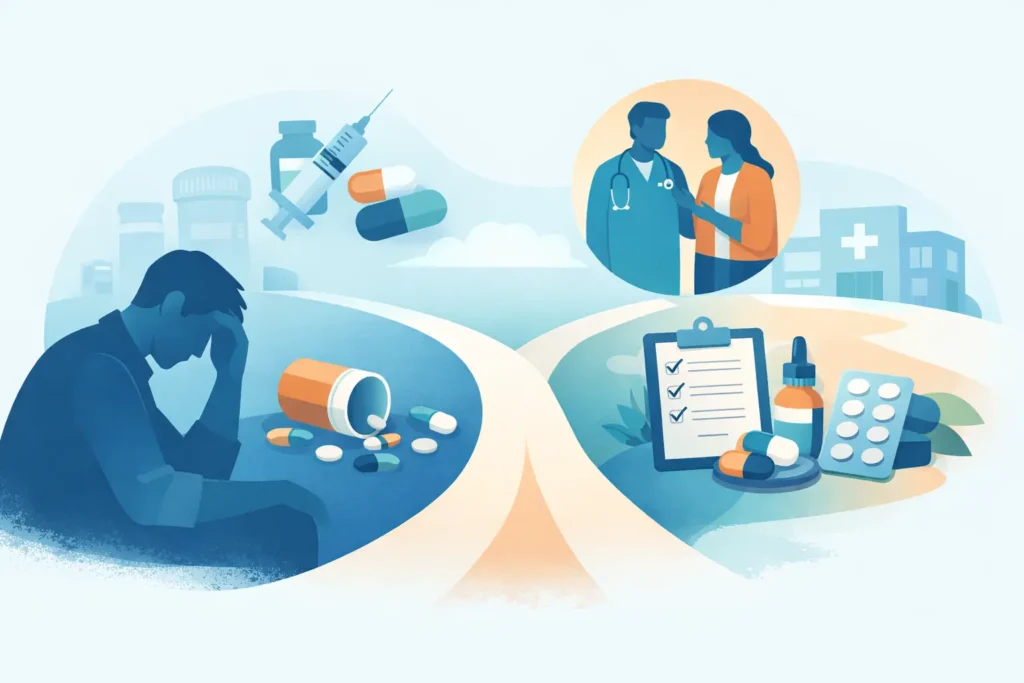
A lot of people start looking for help after a moment that feels smaller than it should. Maybe pain pills are running out early. Maybe stopping for a day brings on sweating, nausea, anxiety, and a level of restlessness that makes sleep impossible. Maybe the original reason for taking opioids was real pain, but now the medication itself seems to be running the day. That is usually when questions about opioid dependence treatment options become urgent, practical, and deeply personal.
The good news is that treatment is not one-size-fits-all. The better news is that effective care does exist, and it does not have to look like punishment or shame. The right plan depends on what opioids a person is using, how long use has been going on, whether chronic pain is still part of the picture, and what kind of support is realistic day to day.
What opioid dependence treatment options actually include
When people hear the word treatment, they often picture detox alone. Detox can be part of care, but it is rarely enough by itself. Opioid dependence changes brain chemistry, stress response, and tolerance. That is why treatment usually works best when it addresses both the physical dependence and the habits, triggers, and pain patterns around it.
For many adults, the main opioid dependence treatment options include medication-assisted treatment, counseling or behavioral support, physician monitoring, and a plan for pain management that does not push the person back toward the same cycle. Some people need a higher level of care at the beginning, such as inpatient detox or residential treatment. Others can be treated safely in an outpatient setting with regular follow-up.
The best approach is often the one a patient can actually stay with. A treatment plan is only useful if it fits real life well enough to be followed consistently.
Medication-assisted treatment is often the foundation
Medication-assisted treatment, often called MAT, is one of the most effective tools for opioid dependence. It helps reduce withdrawal symptoms, lowers cravings, and gives the brain and body time to stabilize. That stability matters because people make better decisions when they are not constantly fighting withdrawal.
Buprenorphine is one of the most widely used medications in this category. It is a partial opioid agonist, which means it activates opioid receptors enough to reduce withdrawal and cravings, but with a lower risk profile than full opioids. It also has a ceiling effect, which helps reduce the chance of misuse and overdose compared with stronger opioid medications.
Suboxone is a common form of buprenorphine combined with naloxone. Subutex contains buprenorphine without naloxone and may be used in specific situations. There are also long-acting injectable options such as Sublocade and Brixadi. These can be a strong fit for patients who want fewer daily decisions around medication or who struggle with remembering doses, inconsistent schedules, or the mental burden of taking a film or tablet every day.
Methadone is another evidence-based option, especially for people with severe or long-standing dependence. For some patients, it is the right choice. The trade-off is that it often requires visits to a specialized clinic, particularly at the beginning. That structure helps some people and creates barriers for others.
Naltrexone is different from buprenorphine and methadone. It blocks opioid receptors rather than activating them. It can be effective, but patients must first be fully off opioids before starting it, which makes the transition harder for many people.
Which medication is best? It depends
There is no single best medication for every patient. If someone has a strong history of relapse after trying to quit cold turkey, buprenorphine may offer the stability they need. If daily clinic visits would make keeping a job or managing family life harder, an office-based buprenorphine plan may be more practical than methadone. If a patient wants a longer-acting option with less day-to-day maintenance, monthly injections may be worth discussing.
Pain also matters here. Many people with opioid dependence still have legitimate back pain, neck pain, joint pain, injury-related pain, or post-surgical pain. If that underlying issue is ignored, treatment gets harder. Cravings often rise when pain is poorly controlled. That is one reason integrated care can make a real difference.
Counseling and recovery support still matter
Medication helps many people feel normal enough to function again, but recovery usually needs more than symptom control. Counseling can help patients identify triggers, repair routines, manage stress, and build a plan for situations that used to lead straight back to use.
This does not always mean intense therapy several times a week forever. For some people, structured one-on-one counseling is appropriate. For others, a combination of medical follow-up, accountability, and practical behavioral support is enough to create momentum. The right level depends on the severity of dependence, mental health history, home stability, and relapse risk.
Patients with anxiety, depression, trauma, or unstable housing often need more support, not because they are failing treatment, but because recovery has more obstacles in those settings. Good care accounts for that reality instead of pretending motivation alone solves everything.
Treating pain without feeding dependence
This is where many recovery plans succeed or fall apart. If opioids started as part of pain treatment, then stopping them without replacing the pain strategy can leave a patient feeling trapped. They may be sober, technically, but still unable to work, sleep, or move comfortably. That is not a durable plan.
Non-opioid pain care can include several approaches. Acupuncture is often used to reduce pain, calm the nervous system, and help with stress and muscle tension. Shockwave therapy can support healing in certain musculoskeletal injuries and chronic pain conditions. Injury-focused care may include evaluation of inflammation, movement problems, soft tissue injury, and recovery setbacks after auto accidents or overuse.
For patients who want to be pain free without pills, these options are not just add-ons. They can be part of what makes recovery sustainable. When pain decreases, sleep improves, stress becomes easier to manage, and the urge to return to opioids may lose some of its power.
Outpatient care can be a strong fit for many adults
A common fear is that treatment will completely disrupt work, parenting, or daily responsibilities. In reality, many people do well with outpatient treatment under medical supervision. This allows them to start medication, attend follow-up visits, receive support, and continue living at home.
Outpatient care is not right for everyone. If someone has repeated overdoses, unstable medical issues, heavy use of multiple substances, or an unsafe home environment, a higher level of care may be necessary first. But for many working adults in Marietta, Atlanta, and surrounding areas, office-based treatment offers a practical balance of structure, privacy, and consistency.
What to expect when starting treatment
The first step is usually an evaluation. That should cover current opioid use, past treatment attempts, withdrawal symptoms, pain history, medical conditions, mental health concerns, and treatment goals. A good provider is not just checking boxes. They are trying to understand what will actually work for this particular patient.
If buprenorphine is prescribed, timing matters. Starting too soon after using full opioids can trigger precipitated withdrawal, which feels miserable and can discourage people from trying again. That is why physician guidance matters. Done correctly, induction can make the transition far more tolerable.
After that, the focus shifts to stabilization. Cravings should decrease. Withdrawal should settle. Follow-up visits help adjust dosing, monitor progress, and deal with any setbacks early rather than after a full relapse.
How to judge whether a treatment program is right for you
Look for care that is medically supervised, clear about expectations, and realistic about recovery. A strong program should explain medication options plainly, monitor progress closely, and treat patients with dignity. It should also take pain seriously when pain is part of the story.
Be cautious of programs that oversimplify things. If a clinic acts like medication alone fixes everything, that is incomplete. If it acts like people should just have enough willpower to quit without medical help, that is also incomplete. The strongest treatment plans usually combine medical treatment with practical recovery support and a better strategy for managing pain, sleep, stress, and function.
At Acupuncture & Injury, that integrative model is a big part of the value for patients who do not want to choose between physician-guided addiction care and non-drug pain relief.
Recovery often starts with one honest decision: getting help before the situation gets worse. If you are weighing treatment, you do not need to have every answer today. You just need a plan that reduces harm, restores stability, and gives you a real chance to feel like yourself again.
Leave a reply