For many people, opioid cravings do not feel like a bad habit or a weak moment. They feel physical, urgent, and hard to outthink. That is why understanding how buprenorphine reduces opioid cravings matters so much. This medication is not about trading one problem for another. It is about helping the brain and body settle down enough for real recovery to become possible.
Why cravings can feel impossible to ignore
Opioids change the reward and survival systems of the brain. Over time, the brain starts treating opioid use like something necessary, not optional. When the medication or drug wears off, people often feel a combination of withdrawal, anxiety, body aches, agitation, and mental obsession. What many call a craving is often a mix of all of those things happening at once.
That is why cravings are not only psychological. They are biological. A person may want to stop, may fully understand the risks, and may still feel pulled back toward opioids because the nervous system has adapted to expect them.
How buprenorphine works in the brain
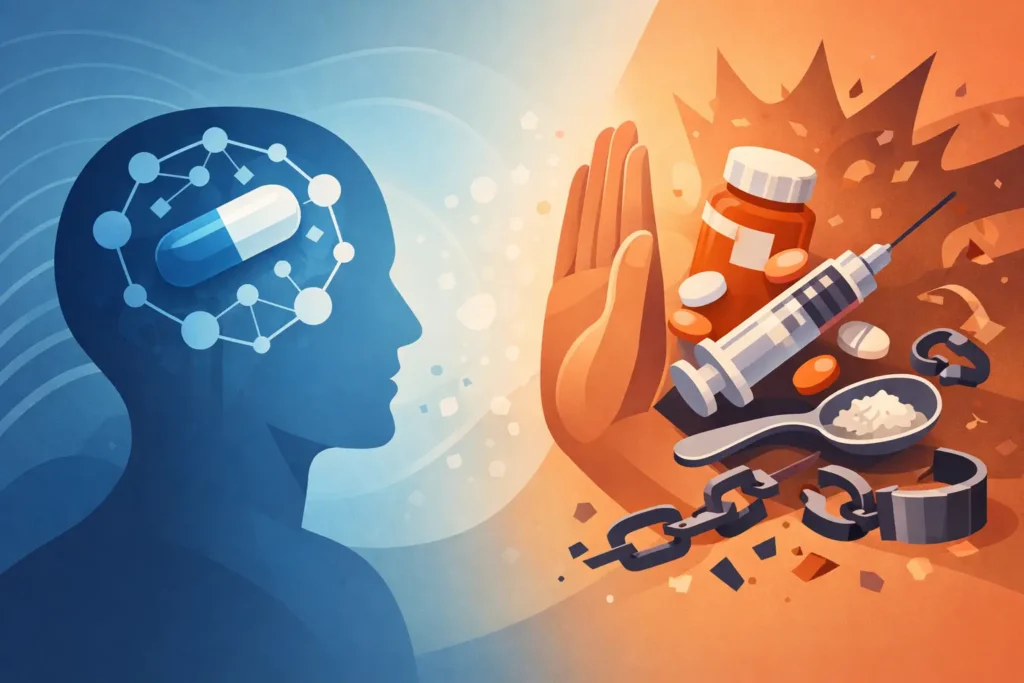
Buprenorphine attaches to the same opioid receptors that drugs like oxycodone, hydrocodone, heroin, and fentanyl affect. The key difference is that it is a partial opioid agonist. That means it activates the receptor, but not to the same intensity as full opioids.
This matters because the brain still receives enough receptor activity to reduce withdrawal and cravings, but without creating the same level of euphoria or respiratory suppression seen with stronger opioids. In practical terms, buprenorphine helps take the edge off the physical drive to use while lowering the risk profile compared with ongoing misuse of full opioids.
It also binds very tightly to those receptors. Because of that strong binding, other opioids have a harder time attaching and producing the same effect. For some patients, this receptor stability is a major reason cravings become more manageable over time.
How buprenorphine reduces opioid cravings day to day
When patients ask how buprenorphine reduces opioid cravings, the clearest answer is that it creates stability. Instead of repeated cycles of using, wearing off, withdrawing, and chasing relief, the brain gets a steadier level of opioid receptor activation.
That stability helps in several ways. First, it reduces withdrawal symptoms that often trigger relapse. If a person is no longer waking up sick, sweating, restless, and desperate to feel normal, the pressure to use usually drops.
Second, it lowers the reward response to outside opioids. If someone uses a full opioid while taking buprenorphine correctly, they often do not get the same effect they expect. That can reduce the reinforcing cycle that keeps addiction going.
Third, it gives people room to function. Many patients say the biggest change is not feeling high. It is feeling normal enough to work, sleep, parent, drive, think clearly, and make decisions without cravings running the day.
It treats more than withdrawal
A common misconception is that buprenorphine only helps during detox. In reality, cravings often last much longer than the first few days of withdrawal. Stress, pain flares, sleep problems, grief, conflict, and even certain places or people can reactivate the urge to use.
Buprenorphine helps by lowering that baseline vulnerability. It does not erase every trigger. It does not make recovery automatic. But it can turn overwhelming cravings into manageable thoughts, and that difference can be the reason someone stays on track.
For patients with chronic pain and opioid dependence, this is especially important. Pain itself can be a relapse trigger. A medically supervised plan that addresses both pain and dependence can be more effective than treating them as separate problems.
Why buprenorphine feels different from opioids people misuse
People are often nervous about medication-assisted treatment because they assume all opioid-related medications work the same way. They do not. Buprenorphine has what is called a ceiling effect for certain opioid effects, especially respiratory depression. That does not mean it is risk-free, but it does mean the medication behaves differently than full opioids.
Most patients taking the right dose as prescribed are not looking for a rush. They are looking for relief from constant preoccupation, withdrawal, and relapse risk. When treatment is going well, the result is usually steadiness, not intoxication.
This is one reason physician oversight matters. The dose, timing, formulation, and the patient’s opioid history all affect how comfortable and effective treatment will be.
The role of Suboxone, Subutex, Sublocade, and Brixadi
Buprenorphine comes in more than one form, and that can make treatment more flexible. Some patients do well with a daily medication taken under the tongue, while others prefer a long-acting injection that removes the need to remember a dose every day.
Suboxone combines buprenorphine with naloxone and is widely used in outpatient treatment. Subutex contains buprenorphine without naloxone and may be used in select cases. Sublocade and Brixadi are extended-release injectable forms that deliver buprenorphine over time.
The best option depends on the patient. Work schedule, transportation, home environment, history of relapse, pregnancy status, and personal preference can all matter. There is no single format that fits everyone.
How long does it take to help cravings?
Some patients feel relief fairly quickly once they are started correctly. Others need dose adjustments or more time for their nervous system to stabilize. The early phase is important because starting too soon after recent opioid use can trigger precipitated withdrawal in some situations, especially depending on the opioid involved.
That is another reason medically supervised treatment is safer than trying to manage the process alone. The type of opioid used, the amount, and the time since last use all affect when and how buprenorphine should begin.
Once patients are on a stable regimen, many notice that cravings become less intense, less frequent, and less disruptive. The medication may not remove every thought about opioids, especially early on, but it often reduces the urgency that drives impulsive use.
Medication helps, but support still matters
Buprenorphine is highly effective, but recovery usually goes better when medication is part of a broader plan. Some patients need counseling. Some need trauma support, sleep care, or help rebuilding daily routines. Others need treatment for pain, because untreated pain can keep pushing them back toward pills.
This is where an integrative clinic model can make a real difference. A patient dealing with injury, chronic pain, and opioid dependence may need more than one tool. Medical treatment for cravings can work alongside non-drug therapies that address pain, inflammation, stress, and function.
That approach is often more practical than asking patients to choose between holistic care and evidence-based medicine. In real life, many people benefit from both.
What buprenorphine does not do
It is helpful to be clear about limits. Buprenorphine does not cure addiction in a single visit. It does not remove every emotional trigger. It does not guarantee someone will never relapse.
It also is not the right fit for every person in every situation. Some patients may need a different level of care, more structure, or another medication approach. The right plan depends on medical history, substance use history, mental health, pain needs, and readiness for treatment.
Still, for many adults trying to stop opioids safely and stay off them, buprenorphine is one of the most effective tools available. It works because it addresses the biology behind cravings, not just the behavior.
When to consider treatment
If cravings are making it hard to stop, if withdrawal keeps pulling you back, or if you are using just to avoid feeling sick, it may be time to talk with a qualified medical provider. You do not need to wait until life gets worse. Early treatment can reduce risk and make recovery more achievable.
For people in Marietta, Atlanta, and nearby communities, care that combines addiction treatment with pain-focused therapies can be especially valuable when opioid use started with an injury, surgery, or chronic pain condition. A clinic like Acupuncture & Injury can evaluate the full picture instead of treating cravings in isolation.
The most helpful next step is often the simplest one – talk to a provider who will listen without judgment and explain your options clearly. Relief starts when your body is no longer fighting for opioids every hour of the day.
Leave a reply