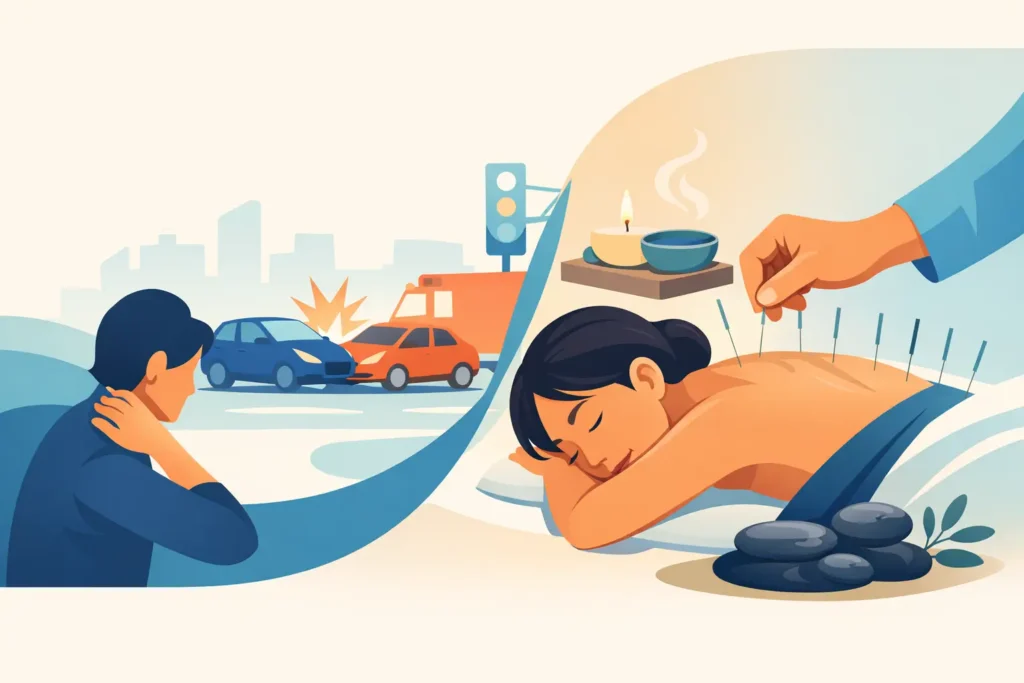
The pain after a car accident does not always show up at the scene. You may feel shaken but functional, then wake up the next morning with a stiff neck, low back pain, headaches, sore shoulders, or pain that makes work and sleep difficult. This guide to acupuncture after car accidents explains where acupuncture may fit into a safe recovery plan, what treatment feels like, and when a medical evaluation needs to come first.
Start With a Proper Injury Evaluation
Acupuncture can be a valuable part of recovery after a collision, but it is not a substitute for urgent medical care. A crash can cause injuries that are not obvious right away, including concussion, fractures, internal injuries, disc problems, and ligament damage. Even a low-speed impact can strain the neck and back because the body is suddenly forced beyond its normal range of motion.
Seek prompt medical attention if you have worsening headache, confusion, fainting, vomiting, chest pain, severe abdominal pain, weakness, numbness, trouble walking, loss of bladder or bowel control, or significant swelling. These symptoms require medical assessment, not a wait-and-see approach.
Once serious injuries have been ruled out or are being appropriately managed, acupuncture may be used alongside conventional injury care. The goal is not to ignore the cause of pain. It is to help reduce pain sensitivity, muscle guarding, inflammation-related discomfort, and the stress response that can make recovery feel harder.
Why Pain Can Build After a Collision
During an accident, your body reacts quickly. Muscles tighten to protect you, while the impact may strain soft tissue in the neck, shoulders, back, hips, wrists, or knees. Adrenaline can temporarily mask symptoms. That is why many people feel worse 24 to 72 hours later.
Whiplash is one common example. It can cause neck pain, reduced range of motion, upper back tightness, headaches, dizziness, jaw tension, and pain that travels into the shoulder or arm. Low back pain may also develop when the pelvis and spine absorb force from the seat, seat belt, or sudden braking.
Pain after an accident is rarely just one issue. A patient may have irritated joints, tight muscles, poor sleep, anxiety about driving, and reduced movement all at once. A treatment plan should account for that full picture rather than treating one sore spot in isolation.
How Acupuncture May Help After a Car Accident
Acupuncture uses very thin, sterile needles placed at specific points on the body. For many injury patients, treatment is used to calm overactive pain signals, release muscle tension, support circulation, and improve comfortable movement. Some people notice relief after the first session. Others improve more gradually as inflammation settles and the body starts moving more normally again.
The response depends on the injury, how soon care begins, your overall health, and whether there are ongoing aggravating factors such as physical work, poor sleep, or a long commute. Acupuncture is often most useful as part of a coordinated plan that may also include physician-guided injury care, activity modification, gentle mobility work, and other non-surgical treatments.
For patients trying to avoid relying on pain medication, this approach can offer a practical option. Acupuncture is not a promise of instant relief, and it should not require you to stop prescribed medications on your own. Instead, it may help create enough improvement in pain and function for you and your medical provider to make thoughtful decisions about medication use.
Common Symptoms Treated With Acupuncture
After a medical evaluation, acupuncture may be considered for neck and back pain, muscle spasms, shoulder pain, headaches, hip discomfort, joint stiffness, tingling related to muscle tension, and sleep disruption associated with pain. It can also be helpful for the stress and guarded movement that often follow a frightening collision.
If you have radiating pain, progressive numbness, significant weakness, or severe headache symptoms, tell your provider immediately. Those symptoms may call for additional testing or a different level of care before acupuncture begins.
What a Post-Accident Acupuncture Visit Looks Like
Your first visit should begin with questions, not needles. A qualified provider will ask about the collision, the location and pattern of your pain, current symptoms, medications, prior injuries, and any imaging or medical findings. They should also assess movement and identify areas of tenderness, restricted mobility, and muscle guarding.
Treatment is adjusted to your condition. If your neck is highly sensitive, for example, care may begin with calming points away from the painful area rather than aggressive local work. This is one reason a personalized plan matters after an accident. More treatment is not always better, especially when the nervous system is already on high alert.
Most patients feel little more than a brief pinch as needles are placed. During treatment, you may feel warmth, heaviness, tingling, or a dull sensation around a point. You should not have to push through sharp or alarming pain. Let the provider know if anything feels uncomfortable, if you are prone to fainting, or if you have anxiety about needles.
Some patients may also benefit from electroacupuncture, which uses a mild electrical stimulation between specific needles to support muscle relaxation and pain control. Cupping or shockwave therapy may be appropriate in certain cases, particularly for persistent muscular tightness or soft-tissue pain. The right combination depends on your diagnosis, your tolerance, and the stage of healing.
Timing Matters, but It Is Not All or Nothing
There is no single perfect day to begin acupuncture after a car accident. Some people can start shortly after they have been medically cleared. Others need time for acute injuries to stabilize, or they may need imaging, orthopedic care, or physical therapy first.
Early care can be helpful when it addresses muscle spasm, pain, and restricted movement before those patterns become more established. Still, chronic pain months after an accident can also respond to treatment. If you have been living with ongoing headaches, neck stiffness, low back pain, or sleep problems since a wreck, it is not too late to ask whether acupuncture belongs in your plan.
Frequency also varies. Acute symptoms may call for more frequent visits initially, then fewer visits as pain improves and movement returns. Longer-standing injuries may require a steadier course of care. A responsible provider should explain why they recommend a certain schedule and reassess your progress rather than automatically extending treatment.
Acupuncture After Car Accidents and Insurance Documentation
Medical documentation matters after an auto accident, both for your health and for any insurance claim. Keep records of when symptoms began, how pain affects work and daily activities, medications you have tried, medical visits, imaging, and treatment recommendations. Do not minimize symptoms simply because you can still get through the day. Accurate information helps providers make better clinical decisions.
Coverage for acupuncture and injury treatment depends on your insurance policy, the details of the accident, fault determinations, and the type of benefits available. Ask the clinic how billing is handled and what information they need from you. It is reasonable to ask about expected costs, visit frequency, and whether treatment notes can be coordinated with your broader injury care.
At Acupuncture & Injury in Marietta, care is designed to bridge evidence-informed medical oversight with drug-reducing therapies such as acupuncture, electroacupuncture, cupping, and shockwave treatment when appropriate. The focus is practical: reduce pain, improve function, and help you return to normal activity safely.
Support Recovery Between Visits
Your treatment plan has a better chance of helping when your daily habits support healing. Follow activity restrictions from your medical provider, but avoid complete inactivity unless you have been told otherwise. Gentle, approved movement can prevent stiffness and help the body regain confidence after an injury.
Use heat or ice only as recommended for your stage of injury. Prioritize sleep, hydration, and regular meals, since pain is often harder to manage when the body is exhausted. If driving anxiety, poor sleep, or low mood is becoming part of your recovery, bring it up. These are common after accidents and deserve care, not embarrassment.
Most of all, pay attention to the direction of your symptoms. Recovery is not always a straight line, but persistent worsening, new neurological symptoms, or pain that prevents normal function should prompt another medical conversation. The right next step is the one that protects your health while helping you move toward a life with less pain and more control.
Leave a reply