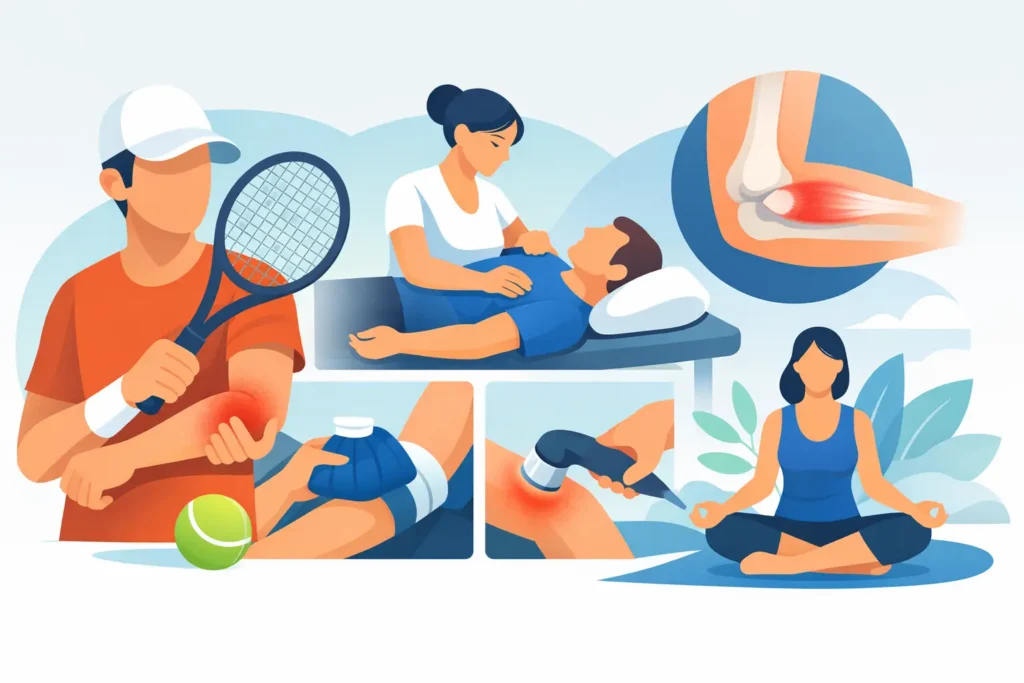
A coffee mug suddenly feels heavy. Turning a doorknob sends pain from the outside of your elbow into your forearm. For people who work with their hands, exercise regularly, or spend long hours at a keyboard, finding the best therapies for tennis elbow is about more than easing soreness. It is about getting back to work, training, and ordinary daily tasks without relying on pain pills to push through.
Tennis elbow, medically called lateral epicondylitis or lateral elbow tendinopathy, does not only affect tennis players. It commonly develops when the tendons that help extend your wrist and fingers are repeatedly overloaded. Pain may begin gradually, then become harder to ignore with lifting, gripping, typing, yardwork, or racquet sports.
The right treatment plan depends on how long symptoms have lasted, how much strength and function you have lost, and whether another issue is contributing to your pain. Most people improve without surgery when treatment addresses both the irritated tendon and the movement patterns that continue to strain it.
What Makes Tennis Elbow Hard to Treat?
Despite the name, tennis elbow is often less about sudden inflammation and more about a tendon that has not recovered well from repeated stress. Rest may calm an acute flare, but rest alone rarely rebuilds the tendon’s capacity to handle gripping and lifting again.
That is why a plan that only masks discomfort can fall short. Anti-inflammatory medication may be appropriate for some patients, especially in the short term, but it does not correct weakness, overload, or poor mechanics. Repeated steroid injections can also provide temporary relief while carrying potential risks to tendon health, particularly when used frequently.
A thorough evaluation matters. Pain on the outer elbow can resemble nerve irritation, arthritis, neck-related pain, or a more significant injury. Persistent symptoms, noticeable weakness, numbness, swelling, or pain following a fall should be assessed by a qualified clinician.
Best Therapies for Tennis Elbow: Start With Load Management
The first step is not necessarily stopping every activity. It is reducing the movements that sharply increase pain while keeping the arm active within a tolerable range. For example, a carpenter may need to modify repetitive gripping, while a tennis player may need a short break from backhands and review their technique.
Small adjustments can reduce strain right away. Use two hands for heavier objects when possible, hold tools with a less forceful grip, and take breaks before pain builds. An ergonomic mouse, a lighter tool, or a different handle size can make a meaningful difference for people whose symptoms are tied to work.
A counterforce strap or wrist splint may provide short-term support during aggravating activities. These devices are not a cure, but they can reduce stress through the painful tendon area while rehabilitation is underway. If a brace increases pain, causes numbness, or feels overly tight, it needs to be adjusted or discontinued.
Progressive Exercise Rebuilds Tendon Strength
Targeted exercise is one of the most valuable treatments for tennis elbow because it addresses the underlying problem: a tendon that needs to tolerate load again. The goal is not to force painful repetitions. The goal is gradual, consistent strengthening guided by symptoms and proper form.
Begin With Isometric Holds
Isometric exercises involve contracting a muscle without moving the joint. For tennis elbow, this may mean gently pressing the back of the hand into resistance while keeping the wrist still. These holds can be useful early in recovery because they may reduce pain and begin reintroducing controlled load without repetitive movement.
Progress to Slow Wrist Strengthening
As pain settles, slow wrist extension exercises with a light weight or resistance band can help rebuild capacity in the forearm muscles and tendon. Controlled lowering phases are often included because they challenge the tendon in a practical way. Grip strengthening, shoulder stability work, and exercises for the upper back may also be appropriate, since the entire arm and posture influence how force travels to the elbow.
Exercise should be individualized. Mild discomfort during training may be acceptable for some people, but pain that spikes sharply, lingers into the next day, or steadily worsens is a sign that the program needs adjustment. A clinician can help determine how much load is appropriate and prevent the cycle of doing too much, flaring up, and stopping altogether.
Shockwave Therapy Can Support Stubborn Tendon Pain
For symptoms that do not improve with activity changes and exercise alone, shockwave therapy may be a useful non-surgical option. This treatment delivers acoustic waves to the affected area with the goal of stimulating the body’s healing response, improving local circulation, and supporting tissue remodeling.
StemWave shockwave therapy is typically delivered in a series of visits and is often paired with a strengthening program rather than used as a stand-alone solution. Some patients notice improvement quickly, while others improve gradually over several weeks as the tendon responds to treatment and rehabilitation.
Shockwave therapy is not right for every patient. A provider should review your health history, medications, and diagnosis before recommending it. Still, for chronic tendon pain that has limited work, exercise, or sleep, it can be a practical option for people hoping to avoid surgery and reduce their dependence on medication.
Acupuncture May Help Reduce Pain and Muscle Guarding
Acupuncture is another therapy that can fit well into a comprehensive tennis elbow plan. Fine, sterile needles are placed at specific points around the elbow, forearm, and sometimes other areas that influence pain and muscle tension. Electroacupuncture may add a mild electrical stimulation to selected needles when clinically appropriate.
For many patients, the value of acupuncture is its ability to help reduce pain sensitivity and muscle guarding, making it easier to participate in the exercise and activity changes that support long-term recovery. Treatment should not be presented as a substitute for rebuilding strength, but it can be a helpful complement when pain is preventing progress.
Cupping or soft-tissue-focused care may also be considered for tight forearm muscles. These approaches can feel relieving, but the lasting gains still come from changing the load placed on the tendon and steadily restoring function.
When Injections or Surgery Enter the Conversation
Some cases require a broader medical discussion. Platelet-rich plasma and other orthobiologic injections may be considered for certain chronic tendon problems, although results vary and insurance coverage is inconsistent. Steroid injections can sometimes relieve pain in the short term, but patients should understand the trade-off: quick symptom relief does not always translate into better long-term tendon recovery.
Surgery is generally reserved for persistent, function-limiting cases that have not responded to a well-managed course of conservative care. Before reaching that point, it is worth confirming the diagnosis and making sure rehabilitation, work modifications, and appropriate non-surgical therapies have been given enough time.
A Practical Recovery Timeline
Tennis elbow rarely resolves overnight. A mild, recent flare may improve within weeks, while long-standing pain can require several months of consistent treatment. The encouraging news is that improvement is usually measured in more than pain scores. You may first notice that you can carry groceries with less discomfort, type longer without aching, or wake up without forearm tightness.
Keep an eye on function as you recover. Gradually return to heavier lifting, sports, or repetitive work rather than testing the elbow at full intensity after a good day. The tendon needs repeated evidence that it can handle more demand.
At Acupuncture & Injury, care can combine acupuncture, shockwave therapy, and injury-focused treatment planning so patients have options beyond simply waiting it out or depending on medication. The best next step is a clear assessment of what is aggravating your elbow, followed by a plan you can realistically follow. Consistent, properly paced care gives the tendon its best chance to become resilient again.
Leave a reply