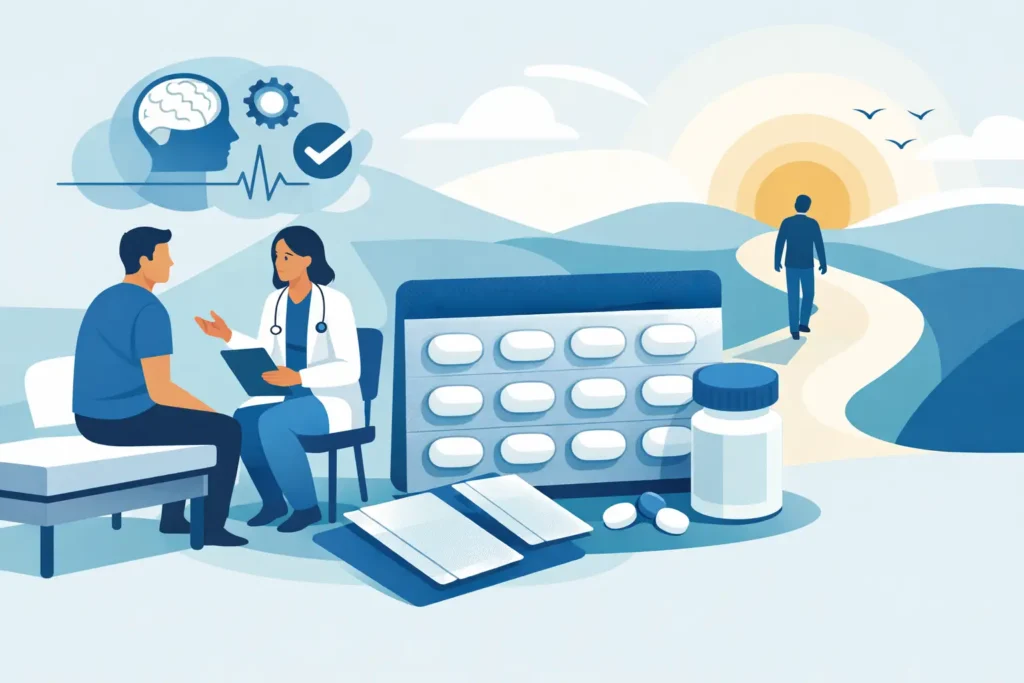
A person can want to stop using opioids and still feel terrified of withdrawal, pain, cravings, or failing again. An opioid recovery with Suboxone example can make the process feel more understandable: treatment is not about replacing one problem with another. It is about using a proven medication, medical oversight, and practical support to create enough stability for recovery to become possible.
Suboxone is a prescription medication used in medication-assisted treatment for opioid use disorder. It contains buprenorphine, which reduces withdrawal symptoms and cravings, and naloxone, which helps discourage misuse by injection. When it is prescribed and monitored appropriately, Suboxone can help many patients step away from the cycle of opioid use without having to endure unmanaged withdrawal.
What opioid recovery with Suboxone can look like
Every recovery plan should be individualized. The right approach depends on the opioid involved, how long it has been used, current health conditions, mental health needs, pain levels, and a patient’s home and work responsibilities. Still, a realistic example can show how the pieces often fit together.
Consider a fictional patient named Marcus. He is a 42-year-old construction supervisor who began taking prescription pain medication after a serious back injury. At first, the medication helped him work through pain. Over time, he needed more of it to get the same relief. When prescriptions became difficult to obtain, he began using other opioids to avoid withdrawal and continue functioning.
Marcus did not see himself as someone with an addiction problem. He saw himself as someone trying to get through the day without pain, sweating, nausea, anxiety, and severe body aches. That distinction matters. Opioid dependence is a medical condition, not a moral failure, and patients deserve care that addresses both symptoms and the circumstances that led them there.
Step one: A private medical evaluation
Marcus begins with a physician-guided evaluation. The visit covers his opioid use, prior withdrawal experiences, medical history, medications, injury history, pain pattern, sleep, stress, and treatment goals. The clinician also reviews safety concerns, including the risk of mixing opioids with alcohol, benzodiazepines, or other sedating substances.
The goal is not to rush a patient into a one-size-fits-all prescription. It is to determine whether Suboxone is appropriate and to create a plan for starting it safely. Patients need to be in the appropriate stage of withdrawal before their first dose of buprenorphine. Starting too soon after certain opioids can trigger sudden, intense withdrawal, which is why medical instructions and honest communication are so important.
For Marcus, the first goal is simple: get through withdrawal safely and stop the daily panic of finding opioids.
Step two: Stabilization without the constant high and crash
After beginning Suboxone under clinical guidance, Marcus notices that the severe withdrawal symptoms begin to ease. He is no longer spending much of the day thinking about when he will use again or worrying about becoming sick. That does not mean every problem disappears in a week. He still has back pain, disrupted sleep, guilt, and habits that developed around substance use.
What changes is his ability to participate in treatment. Rather than chasing short-term relief and then crashing into withdrawal, he has a steadier foundation. Suboxone is designed to reduce cravings and withdrawal without producing the same cycle of intoxication associated with misused full opioid medications when taken as prescribed.
Early follow-up appointments are often more frequent. The clinician monitors symptoms, side effects, cravings, medication adherence, and any return to use. The treatment plan may need adjustment. Recovery is not less valid because it requires adjustments; it is normal for medical care to be responsive.
Why pain treatment belongs in the recovery plan
For many people, opioid use began with real pain from an injury, surgery, arthritis, nerve irritation, or physically demanding work. Ignoring that pain can leave the original trigger untreated. On the other hand, treating pain only with pills can place someone back in a pattern they are working hard to leave behind.
Marcus’s care plan includes non-opioid pain strategies alongside Suboxone treatment. Depending on the diagnosis, this might include acupuncture, electroacupuncture, cupping, injury-focused rehabilitation, and shockwave therapy. These options are not substitutes for every medical need, and results vary by condition. However, they can be valuable tools for reducing pain, improving movement, and helping patients rely less on medication alone.
At Acupuncture & Injury, this combined approach reflects a practical reality: patients should not have to choose between physician-guided addiction treatment and therapies that support pain relief and physical recovery. When pain is lower and function improves, it may be easier to attend appointments, sleep more consistently, return to work safely, and protect recovery.
Step three: Building routines that protect recovery
By the second month, Marcus has fewer cravings and has stopped using non-prescribed opioids. This is meaningful progress, but it is also a vulnerable period. Stressful job sites, an argument at home, or a flare-up in back pain can still create strong urges to use.
His plan now focuses on routines. He keeps regular medical visits, follows his medication instructions, and works on a realistic sleep schedule. He identifies the people, places, emotions, and situations that make use more likely. Counseling, peer recovery support, or behavioral health treatment may be recommended based on the patient’s needs and preferences.
A good recovery plan is not built around perfection. It is built around what a patient will actually be able to do on a difficult Tuesday afternoon. That could mean calling a support person, attending a counseling session, using a pain-management strategy, or scheduling a follow-up before a problem becomes a crisis.
How long does Suboxone treatment last?
There is no responsible universal timeline. Some patients use Suboxone for months, while others benefit from longer-term maintenance treatment. Staying on medication is not “failing to recover.” For many patients, continued treatment lowers the risk of return to opioid use and overdose while they rebuild stability.
Marcus initially assumed he needed to stop Suboxone as quickly as possible. His physician explains that a fast taper may not be the safest choice if cravings, stress, pain, or other risks are still high. Together, they focus first on sustained recovery, stable housing and work, better pain control, and improved daily functioning. Any decision to taper is gradual, medically supervised, and based on readiness rather than pressure.
This is one of the most important trade-offs in treatment. Some people strongly prefer the idea of being medication-free quickly. Others need longer support to avoid a dangerous return to opioids. The safest plan is the one that considers the individual patient’s risks, goals, and response to care.
What if a patient returns to opioid use?
A return to use does not mean treatment has failed or that a patient should be shamed out of care. It means the treatment plan needs attention. The clinician may assess whether pain has worsened, whether the medication plan needs adjustment, whether there are untreated mental health concerns, or whether the patient needs more frequent support.
Because opioid tolerance can change during recovery, returning to previous amounts of opioids can greatly increase overdose risk. Patients and families should understand overdose prevention, including access to naloxone. Urgent medical help is needed for signs of overdose such as slowed or stopped breathing, blue or gray lips, inability to wake up, or extreme unresponsiveness.
Recovery can begin with one honest appointment
The strongest part of Marcus’s example is not that his recovery is perfectly smooth. It is that he finally receives care for the full picture: opioid dependence, pain, withdrawal, stress, and the need to function in everyday life. Suboxone can be a powerful part of that care when it is prescribed responsibly and paired with consistent follow-up.
If opioids have become the center of your day, you do not have to wait for a crisis to ask for help. A confidential medical evaluation can be the first practical step toward less pain, fewer cravings, and a life that feels like your own again.
Leave a reply