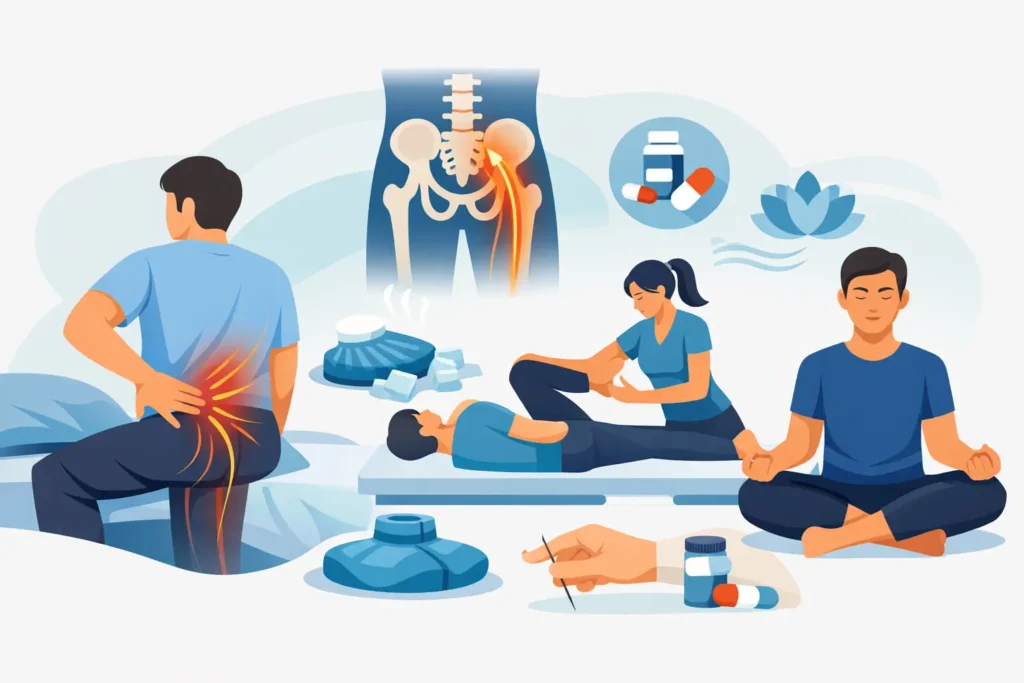
A sciatica flareup can turn a normal morning into a day of guarded steps, missed work, and sleepless nights. The best treatments for sciatica flareups are not always about doing more treatment at once. They are about calming the irritated nerve, protecting your ability to move, and identifying what is driving the pain so it is less likely to keep returning.
Sciatica describes pain that travels along the sciatic nerve, often from the low back into the buttock, hip, thigh, calf, or foot. It may feel sharp, burning, electric, numb, or weak. A flareup can be triggered by lifting, prolonged sitting, an auto injury, a sudden twist, or simply an underlying back condition becoming more irritated.
Start by Knowing When Sciatica Needs Urgent Care
Most sciatica flareups can be evaluated and treated without surgery. However, severe symptoms should not be managed at home alone. Seek urgent medical care for new loss of bladder or bowel control, numbness in the groin or saddle area, rapidly worsening leg weakness, fever with severe back pain, or pain following a significant fall or accident.
You should also schedule a clinical evaluation when pain is intense, lasts longer than a few days without improvement, repeatedly wakes you from sleep, or causes noticeable weakness in the foot or leg. These symptoms can point to more than routine muscle tightness and may require imaging, a neurologic exam, or physician-guided treatment.
The Best Treatments for Sciatica Flareups Often Begin With Movement
When pain shoots down the leg, bed rest can sound like the only reasonable option. Resting briefly may help during the most painful period, but staying still for days often makes the back, hips, and supporting muscles stiffer. That stiffness can make nerve irritation feel worse when you finally stand up.
The goal is gentle, tolerable movement. Short walks on level ground, changing positions regularly, and avoiding long stretches in a slumped chair can help keep the area from tightening further. Start small. A five-minute walk several times a day may be more useful than forcing one long walk that leaves you hurting later.
Some people feel better lying on their back with a pillow under their knees. Others get relief on their side with a pillow between their knees. The right position is the one that reduces leg symptoms without creating more pain. Avoid aggressive stretching during a sharp flareup, especially if a stretch sends pain farther down the leg. That is usually a sign to stop, not push through.
Use Heat or Ice Based on Your Symptoms
Ice can be helpful during the first day or two after a new strain, injury, or sudden increase in pain. Wrap a cold pack in a thin towel and use it for about 15 to 20 minutes at a time. Heat may be more comforting when muscle spasm and stiffness are prominent, particularly after the initial acute period.
Neither option fixes the underlying cause, but both can make movement more manageable. Many patients find that heat before gentle activity and ice after activity works well. Your response matters more than a rigid rule: use the option that safely gives you relief.
Reduce the Mechanical Triggers Behind the Flareup
Sciatica often worsens when the lower back and hips stay in one position too long. If your job involves driving, desk work, lifting, or standing on hard floors, small changes throughout the day can reduce repeated irritation.
Try sitting with both feet supported and your hips slightly higher than your knees when possible. Keep wallets, phones, and other bulky items out of your back pocket while sitting. When lifting, bring the item close to your body, bend through your hips and knees, and avoid twisting while carrying weight.
During a flareup, it is wise to postpone heavy lifting, deep bending, high-impact exercise, and long car rides when possible. This does not mean avoiding activity forever. It means giving the irritated area time to settle while you build back to normal movement with a better plan.
Acupuncture Can Help Calm Pain and Muscle Guarding
Acupuncture is a drug-free treatment option many people consider when sciatica is interfering with daily life or when they want to reduce reliance on pain medication. Fine, sterile needles are placed at carefully selected points to support the body’s pain-modulating response, improve local circulation, and reduce protective muscle tension around the low back, hips, and legs.
For some patients, acupuncture provides meaningful relief from radiating pain and stiffness. For others, it works best as part of a broader plan that includes movement guidance, injury care, and medical evaluation. The number of sessions depends on the severity of symptoms, how long the pain has been present, and whether there is an active injury or chronic spinal condition.
Electroacupuncture may also be considered in appropriate cases. It uses a mild electrical stimulation through acupuncture needles and may help address persistent muscle tension and pain signaling. Treatment should be tailored to your health history, medications, and level of nerve sensitivity.
Treat the Injury Pattern, Not Just the Pain Signal
Sciatica is not one diagnosis. A herniated disc, spinal narrowing, arthritis, piriformis-related irritation, hip dysfunction, or soft-tissue injury can all create similar symptoms. That is why a careful assessment matters. The location of numbness, which movements aggravate pain, reflex changes, and strength testing can help guide the next step.
Injury-focused care may include acupuncture, cupping, gentle manual techniques, therapeutic movement, and physician-guided pain management. If muscle and connective-tissue dysfunction are contributing to the problem, shockwave therapy may be considered for select soft-tissue conditions. It is not a universal sciatica treatment, and it should not replace a proper examination when nerve symptoms are present.
For people whose flareup followed a car accident, an on-the-job injury, or a sports incident, addressing the full injury pattern is especially important. Neck, hip, pelvic, and low-back injuries can change how you move, even when the most obvious symptom is pain down one leg.
Medication May Have a Role, but It Is Not the Whole Plan
Over-the-counter anti-inflammatory medicines or acetaminophen may help some people manage a short-term flareup, provided they are safe for that person’s medical history. Anti-inflammatory medications are not appropriate for everyone, particularly people with certain kidney, stomach, bleeding, or heart conditions. Ask a clinician or pharmacist if you are unsure.
Prescription medications, injections, or referral to a spine specialist may be appropriate when pain is severe or neurologic symptoms continue. These options can be valuable, but they work best when paired with a plan to restore movement and address the cause of the flareup.
Opioid medication is generally not a first-line answer for sciatica. It can bring real risks, including dependence, sedation, constipation, and reduced function over time. Patients who already use opioid medication or are in recovery deserve compassionate, individualized pain care that protects both comfort and long-term health.
Build a Plan for the Days After the Pain Eases
A flareup often improves before the underlying movement problem does. Once acute pain is calmer, the focus should shift to preventing the next episode. This may include gradual core and hip strengthening, walking progression, posture changes, safer lifting habits, and treatment for lingering muscle restriction.
The pace should match your symptoms. If an exercise creates more radiating pain, numbness, or weakness, it needs to be modified. Soreness in the muscles can be normal when rebuilding strength; worsening nerve pain is different.
At Acupuncture & Injury, patients with back and leg pain can receive an integrated assessment that considers both natural therapies and medically supervised options. The goal is not to force every patient into the same treatment. It is to find a practical path toward less pain, better movement, and fewer interruptions to life.
A sciatica flareup deserves attention before it becomes your normal. If pain is limiting your work, sleep, walking, or ability to care for yourself, a focused evaluation can help you move from simply enduring the next bad day to pursuing relief with a clear plan.
Leave a reply