
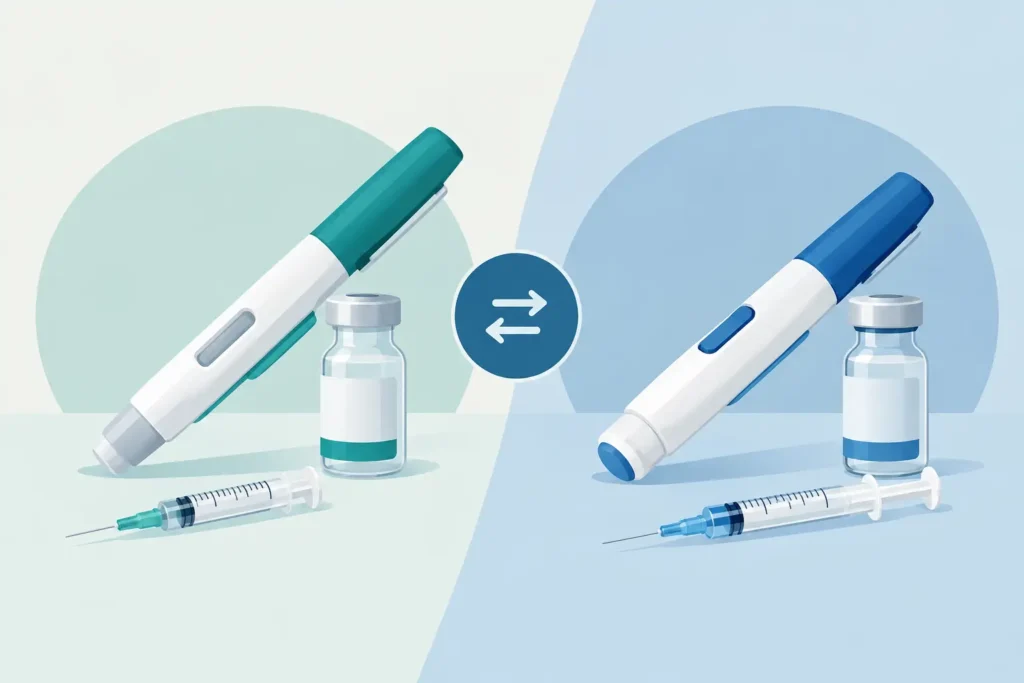
Many people searching for brixadi vs suboxone injection are trying to find a treatment that feels more manageable than taking medication every day. There is one critical distinction to clear up first: Brixadi is an injectable form of buprenorphine, but Suboxone itself is not an injection. Suboxone is usually taken as a film or tablet that dissolves under the tongue or inside the cheek.
Both medications can play an effective role in medication-assisted treatment for opioid use disorder. The right option depends on your medical history, current opioid use, treatment goals, daily routine, and access to consistent follow-up care. A physician-guided conversation can help you choose a plan that protects your recovery without making treatment harder than it needs to be.
Brixadi vs Suboxone Injection: The Main Difference
Brixadi is a long-acting buprenorphine injection given under the skin by a healthcare professional. It is available in weekly and monthly dosing options. Once administered, it releases buprenorphine gradually over time, helping maintain steady medication levels without a daily dose at home.
Suboxone contains buprenorphine and naloxone. It is a transmucosal medication, meaning it is absorbed through the lining of the mouth. Most patients take it once daily, although the exact schedule is determined by the prescribing clinician. Buprenorphine reduces opioid cravings and withdrawal symptoms, while naloxone is included to discourage misuse by injection.
When people say “Suboxone injection,” they may actually be asking about an injectable alternative to Suboxone. In that case, Brixadi may be one option. Sublocade, another extended-release buprenorphine injection, may also be part of the conversation. These medications are not interchangeable on a milligram-for-milligram basis, so a clinician should determine any transition carefully.
How Both Treatments Support Recovery
Buprenorphine is a partial opioid agonist. In practical terms, it activates opioid receptors enough to relieve withdrawal and reduce cravings, but it has a ceiling effect that lowers the risk of respiratory depression compared with full opioid agonists. That does not mean it is risk-free, especially when combined with alcohol, benzodiazepines, sedatives, or other substances that slow breathing.
For many people, buprenorphine treatment creates the breathing room needed to focus on work, family, sleep, counseling, and physical health. It is not replacing one addiction with another. It is evidence-based medical treatment for a chronic condition that can be dangerous when left untreated.
Medication works best as part of an individualized recovery plan. That may include counseling, recovery support, treatment for anxiety or depression, help with sleep, and practical strategies for reducing triggers. For patients who also live with chronic pain or a past injury, non-drug options such as acupuncture, electroacupuncture, or shockwave therapy may support comfort and function without adding unnecessary opioid exposure.
Why Someone May Choose Brixadi
The primary advantage of Brixadi is convenience. Instead of remembering a daily film or tablet, a patient receives treatment at scheduled weekly or monthly visits. This can be especially helpful for someone with a demanding job, frequent travel, a complicated home environment, or difficulty keeping medications secure.
Long-acting medication may also reduce the risk of missed doses, lost medication, theft, or diversion. Because the injection is administered in a clinical setting, there is no supply of medication to store at home. Some patients appreciate the privacy and structure that comes with a scheduled treatment plan.
Brixadi can be a good fit for patients who are stable on buprenorphine and want fewer daily treatment decisions. It may also be appropriate for people who have struggled with adherence to daily medication. However, the injection still requires regular appointments. It is convenient, but it is not a one-time treatment or a substitute for ongoing medical support.
There are trade-offs. Once a long-acting injection is given, the medication cannot simply be removed if a person dislikes how they feel. Dose changes are less immediate than they are with daily Suboxone. Injection-site reactions, including pain, redness, swelling, itching, or a small lump, can occur. Some people prefer the control of taking a medication daily for this reason.
Why Someone May Choose Suboxone
Suboxone gives patients and clinicians more day-to-day dosing flexibility. If a dose adjustment is needed, it can often be made more quickly than with a monthly injection. This can be valuable during early stabilization, when withdrawal symptoms, cravings, side effects, and life circumstances may still be changing.
Daily treatment also gives some patients a reassuring sense of control. Taking a prescribed dose each morning can become part of a steady recovery routine. For others, though, the daily responsibility feels burdensome or creates anxiety about forgetting a dose.
Suboxone is generally started and managed under medical supervision. Taking more than prescribed, sharing medication, or attempting to inject Suboxone film or tablets is unsafe. Injecting a product that is not intended for injection can cause serious harm, and the naloxone component may trigger sudden withdrawal in people who are physically dependent on opioids.
Suboxone may be the more practical starting point for someone who is new to treatment, needs close dose adjustments, or wants an oral option before considering an extended-release injection. It can also remain an effective long-term option for patients who are doing well with daily medication.
What the Transition to Brixadi Can Look Like
A transition from Suboxone to Brixadi should be planned by a qualified prescriber. The process begins with an assessment of your current medication, opioid use history, withdrawal risk, medical conditions, other prescriptions, and treatment stability. Your clinician will determine whether you need to be stabilized on transmucosal buprenorphine first and which Brixadi dosing schedule makes sense.
Do not stop Suboxone suddenly in order to seek an injection. Stopping can bring back withdrawal symptoms and cravings, increasing the risk of return to opioid use. A safe treatment plan is built around continuity of care, not abrupt changes.
Your provider should also know if you take medications for anxiety, sleep, pain, or attention concerns. Alcohol use, liver problems, pregnancy, breathing conditions, and a history of overdose are all relevant to medication planning. Honest information helps your care team make treatment safer, not more judgmental.
Choosing the Right Option for Your Life
The better medication is not automatically the newest one or the one that requires fewer doses. The better choice is the one you can follow consistently and safely while building a stable life in recovery.
Brixadi may make sense if you want weekly or monthly treatment, prefer not to keep medication at home, or have had trouble with daily adherence. Suboxone may make sense if you want more flexible dose adjustments, are early in treatment, or prefer a medication you can take at home as prescribed. Cost, insurance coverage, transportation, appointment availability, and personal preference also matter.
At Acupuncture & Injury, addiction care is approached with the same respect given to pain and injury care: without shame, pressure, or one-size-fits-all answers. A physician can discuss Suboxone, Brixadi, Sublocade, and other appropriate options while helping you address the physical and emotional factors that affect recovery.
If you are deciding between daily Suboxone and a long-acting buprenorphine injection, the most useful next step is a confidential medical evaluation. Recovery becomes more sustainable when your treatment fits your real life, not just a prescription schedule.
Leave a reply