
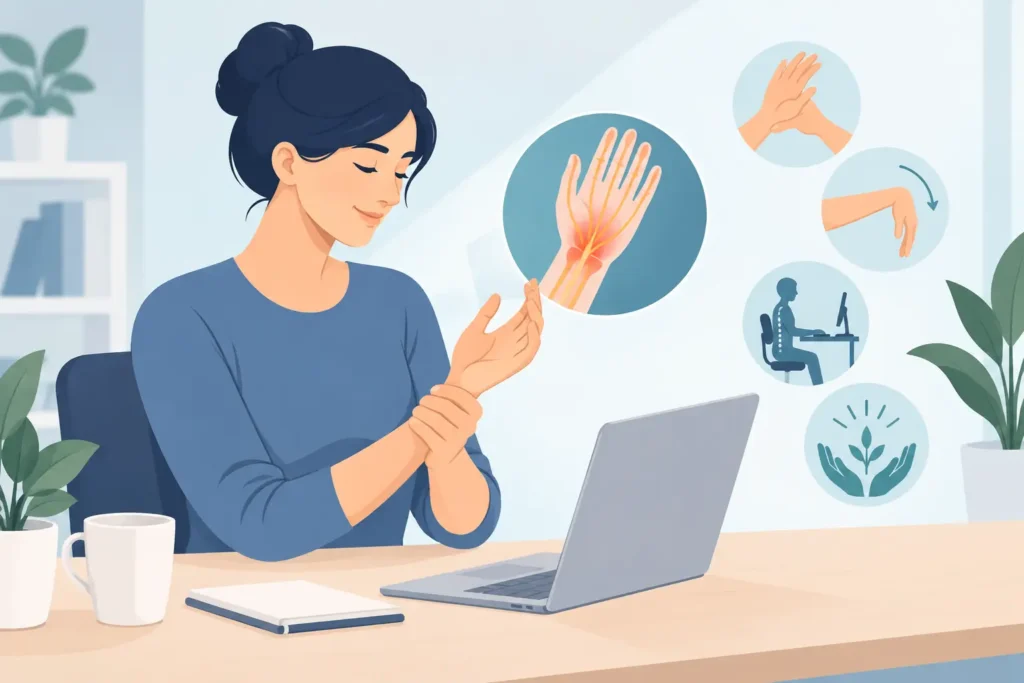
That tingling in your thumb, index, and middle fingers can turn ordinary tasks into a problem. Holding a steering wheel, typing an email, sleeping through the night, or opening a jar may suddenly hurt or make your hand feel weak. This guide to carpal tunnel relief explains what may help, what can make symptoms worse, and when it is time to get a professional evaluation.
Carpal tunnel symptoms are common, but they are not something you have to simply push through. Early, targeted care can often reduce irritation, protect hand function, and help you avoid relying on pain medication just to get through the day.
What Carpal Tunnel Syndrome Actually Is
The carpal tunnel is a narrow passageway on the palm side of your wrist. The median nerve runs through this space along with tendons that move your fingers. When swelling, inflammation, or repeated pressure narrows that passageway, the median nerve can become compressed.
The result may be numbness, pins and needles, burning pain, or weakness in the hand. Symptoms commonly affect the thumb, index finger, middle finger, and part of the ring finger. Many people notice symptoms at night or when their wrist stays bent for a long period of time.
Repetitive work can contribute, but carpal tunnel syndrome is not only a “typing injury.” It can be associated with wrist injuries, arthritis, pregnancy-related swelling, diabetes, thyroid conditions, and work that requires gripping, vibration, or forceful hand movements. The right treatment depends on the underlying cause and how advanced the nerve compression has become.
A Practical Guide to Carpal Tunnel Relief at Home
At-home strategies can be useful when symptoms are mild or occasional. They work best when you change the activity or position that is repeatedly irritating the nerve, rather than trying to work through pain.
Keep Your Wrist in a Neutral Position
A wrist that is deeply bent forward or backward places more pressure on the carpal tunnel. A nighttime wrist splint can help keep the wrist straight while you sleep, which is often when symptoms are most frustrating. It may take several weeks of consistent use to know whether a splint is helping.
During the day, adjust your workspace so your keyboard, mouse, tools, or steering wheel do not force your wrist into an awkward angle. Keep your shoulders relaxed, elbows close to your body, and wrists as straight as possible. A more expensive ergonomic setup is not always necessary. Often, a few simple position changes make a meaningful difference.
Take Short, Frequent Movement Breaks
Long periods of gripping, scrolling, typing, or using vibrating equipment can keep irritated tissues under stress. Brief breaks every 30 to 60 minutes give your hands and wrists a chance to reset. Open and close your hands gently, roll your shoulders, and move your wrists through a comfortable range without forcing a stretch.
Nerve and tendon gliding exercises may also help some people, but technique matters. If an exercise creates sharper tingling, burning, or numbness that lingers afterward, stop and ask a clinician to show you a safer approach. More stretching is not always better when a nerve is already irritated.
Use Cold or Heat Based on Your Symptoms
Cold packs may feel helpful after repetitive work or when the wrist feels swollen and inflamed. Use a cloth barrier and limit applications to about 10 to 15 minutes at a time. Heat can ease stiffness in the forearm or hand before gentle movement, especially if muscle tightness is part of the problem.
Neither heat nor ice fixes nerve compression by itself. Think of them as comfort measures that may support a broader recovery plan.
Look Beyond the Wrist
Tightness and overuse in the forearm can add strain to the wrist and hand. The same is true of poor shoulder and neck posture. This does not mean every case of hand numbness originates in the neck, but it does mean a complete assessment should not focus on one small area alone.
A clinician may evaluate how you use your hands at work, how your wrist moves, whether your forearm muscles are overloaded, and whether a neck or shoulder issue could be contributing to your symptoms.
When Symptoms Need More Than Self-Care
It is reasonable to try conservative measures for mild symptoms, but persistent numbness should not be ignored. Ongoing compression can damage the median nerve over time, which may lead to lasting weakness or loss of sensation.
Schedule an evaluation if symptoms repeatedly wake you at night, interfere with work, continue despite splinting and activity changes, or make it difficult to grip objects. A medical professional can also rule out conditions that can feel similar to carpal tunnel syndrome, including cervical nerve irritation, tendon problems, arthritis, diabetic neuropathy, and other nerve entrapments.
Seek prompt medical attention if you experience:
- Constant or rapidly worsening numbness
- Noticeable weakness or frequent dropping of objects
- Shrinking of the muscle at the base of the thumb
- Severe pain, major swelling, or symptoms following a wrist injury
Testing may include a physical examination and, when appropriate, nerve conduction studies or electromyography. These tests can help confirm whether the median nerve is compressed and show how severe the problem may be.
Professional Treatment Options for Carpal Tunnel Relief
Treatment should fit your symptoms, lifestyle, health history, and work demands. Some patients improve with a brace and activity changes. Others need a more structured plan, especially when pain has become chronic or an injury is involved.
Conventional care may include anti-inflammatory medication when appropriate, corticosteroid treatment, physical or occupational therapy, and referral for surgery in severe or persistent cases. Medication can reduce symptoms for some people, but it may not address the mechanical pressure causing the problem. It is also not the only path forward for people who want to reduce their dependence on pain pills.
Acupuncture is one non-drug option that some patients use as part of a conservative pain-management plan. Fine needles are placed at specific points to support the body’s pain-modulating response, improve local circulation, and address muscle tension that may be contributing to wrist and forearm discomfort. Research on acupuncture for carpal tunnel symptoms is still evolving, and results vary, but it can be a reasonable complementary option when provided as part of an individualized clinical plan.
Electroacupuncture may be considered when muscle tension, pain, or nerve-related symptoms require additional stimulation. Cupping or soft-tissue-focused care may also be used for forearm tightness in selected patients. These treatments are not substitutes for evaluation when there is progressive weakness or severe nerve compression, but they can support recovery for appropriate cases.
At Acupuncture & Injury, care can be coordinated around the full picture: pain level, work demands, injury history, medications, and functional goals. For a person who drives for work, the goal may be a stronger, more comfortable grip. For someone at a computer all day, it may be getting through a shift without tingling or waking up with numb hands.
Everyday Changes That Protect Your Hands
Relief is easier to maintain when treatment is paired with realistic daily adjustments. If a task repeatedly triggers symptoms, change the way you do it when possible. Alternate hands, use a lighter grip, take micro-breaks, and choose tools with handles that do not require excessive force.
Pay attention to patterns. Symptoms after a long shift, a weekend of home projects, or hours of gaming provide useful clues. Keep a simple note of when numbness happens, what activity came before it, and whether it improves with rest or a splint. This information helps your provider create a more specific plan than a generic recommendation to “rest your wrist.”
If you have diabetes, thyroid disease, inflammatory arthritis, or are recovering from an auto accident or other injury, mention it during your appointment. Addressing the wider health picture can matter just as much as treating the wrist itself.
Carpal tunnel relief is rarely about one perfect stretch or one quick fix. It is about reducing pressure on the nerve, restoring better movement habits, and getting help before weakness becomes your new normal. If your hands are limiting your sleep, work, or independence, a focused evaluation can give you a clearer path forward.
Leave a reply