A twisted ankle at work, a hard fall, or a sore shoulder after an auto accident can swell quickly and make even simple movement painful. Knowing how to ice acute injuries can help you manage pain in the first hours after an injury, but the goal is comfort and protection, not trying to treat a potentially serious injury at home.
Cold therapy is a useful first-aid tool. Used correctly, it can temporarily reduce pain and limit the feeling of throbbing around a fresh injury. Used for too long or directly on bare skin, however, it can cause skin damage and may delay your ability to notice whether the injury is worsening.
What Counts as an Acute Injury?
An acute injury is a new injury that happens suddenly, rather than pain that has built up over months. Common examples include ankle sprains, muscle strains, bruises, minor sports injuries, falls, and soft-tissue injuries after a car accident. Symptoms may include pain, swelling, tenderness, warmth, bruising, stiffness, or difficulty moving the affected area.
Ice may be reasonable for a mild injury when you can still safely move the area and symptoms are not severe. It is not a substitute for an evaluation when there is concern for a broken bone, dislocation, concussion, nerve injury, or significant tissue damage.
How to Ice Acute Injuries Safely
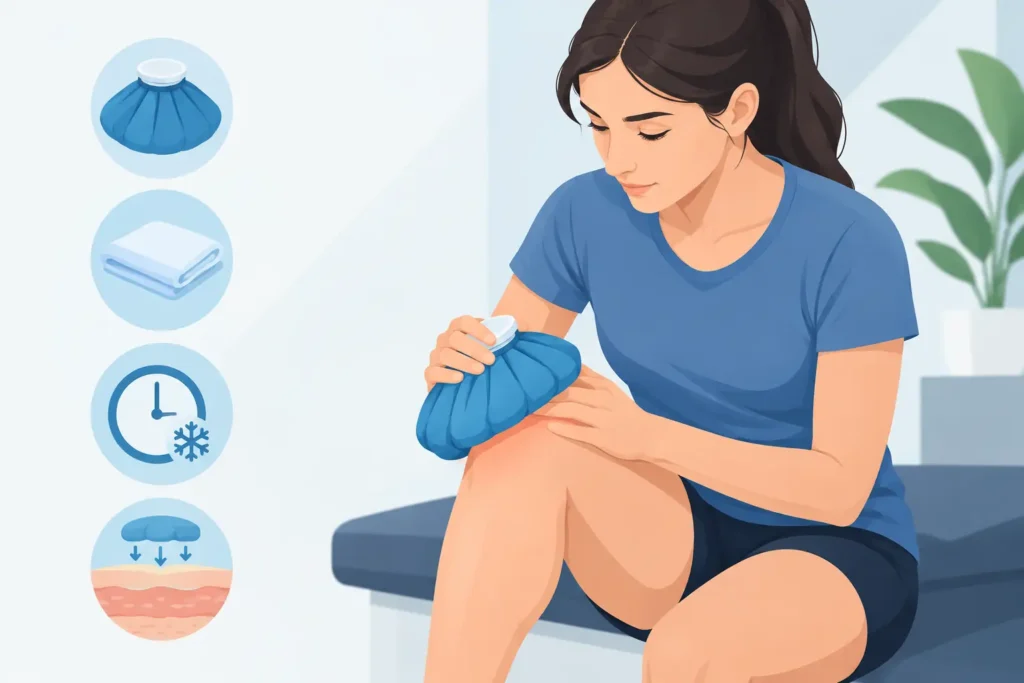
Start by protecting the skin. Wrap an ice pack, bag of crushed ice, or frozen gel pack in a thin towel. Never place ice directly against your skin. Direct contact can cause an ice burn, also called cold injury, sometimes before you realize it is happening.
Place the wrapped pack over the painful or swollen area for about 15 to 20 minutes. For smaller or bony areas, such as a finger, wrist, ankle, or knee cap, stay closer to 10 to 15 minutes. Remove the pack if you feel burning, sharp pain, excessive numbness, blotchy skin, or intense discomfort.
After a session, allow the skin and underlying tissues to warm fully before icing again. For many people, this means waiting at least one to two hours. You can repeat cold therapy several times during the first day or two if it continues to relieve pain.
A simple rule is to use ice for comfort, not on a rigid schedule. If it reduces throbbing enough to help you rest, walk more comfortably, or tolerate gentle movement, it is doing its job. If it makes the area ache more, creates stiffness, or is not helping after a few sessions, stop and consider an evaluation.
Choosing the Right Cold Pack
A flexible gel pack is convenient and molds well around joints. A bag of crushed ice can conform even more closely to an ankle, shoulder, or knee. A bag of frozen peas also works in a pinch, although it should be reserved for first aid rather than returned to the freezer for food.
Avoid falling asleep with an ice pack in place. Also avoid securing a pack so tightly that it creates pressure or restricts circulation. The cold pack should rest lightly against the injured area, with a cloth barrier between the pack and skin.
Ice Is Only One Part of Early Injury Care
For many mild strains and sprains, a balanced approach works better than complete rest. Protect the injured area from another impact, but avoid forcing yourself to stay completely still for days unless a medical professional tells you otherwise. Gentle, pain-limited movement can help prevent excessive stiffness.
Compression and elevation may also help some people with swelling. A light elastic wrap can provide support, but it should not cause tingling, numbness, color changes, increased pain, or a cold feeling below the wrap. Elevating an injured arm or leg above heart level while resting may reduce swelling, especially in the first 24 to 48 hours.
There is a trade-off with cold therapy. Inflammation is part of the body’s healing response, so icing is not meant to erase all inflammation or “fix” the injury. Its most dependable role is short-term pain relief. If your pain is manageable without ice, you do not need to force it into your recovery routine.
When You Should Not Use Ice
Cold therapy is not appropriate for everyone. Speak with a medical professional first if you have poor circulation, reduced sensation from neuropathy, Raynaud’s disease, cold hypersensitivity, or a condition that affects blood flow. Patients with diabetes may also need extra caution, particularly if they have decreased feeling in their feet or hands.
Do not ice an area with an open wound unless a clinician specifically instructs you to do so. Avoid ice over a suspected fracture or dislocation while you are delaying needed care. You can use a wrapped cold pack briefly for comfort while arranging help, but do not attempt to straighten, pop back into place, or aggressively test the injured body part.
If you have had a recent procedure, follow your surgeon’s or treating provider’s instructions. Post-procedure recommendations vary depending on the treatment and the area involved.
Signs an Acute Injury Needs Medical Attention
Some injuries need prompt care regardless of how much ice reduces the pain. Seek urgent evaluation if you notice a visible deformity, inability to bear weight, severe or rapidly worsening swelling, uncontrolled bleeding, or loss of function in the arm or leg.
Numbness, weakness, pale or blue skin, a cold limb, or persistent tingling can indicate a circulation or nerve problem. Severe pain that feels out of proportion to the injury also deserves immediate attention. After a motor vehicle accident, get evaluated for neck pain, back pain, headache, dizziness, confusion, chest pain, abdominal pain, or symptoms that appear hours later.
Head injuries require special caution. Do not use an ice pack as reassurance that a head injury is minor. Loss of consciousness, repeated vomiting, worsening headache, confusion, seizures, unequal pupils, or unusual drowsiness require emergency medical care.
Even when there are no emergency signs, schedule an evaluation if pain and swelling are not improving over several days, you cannot return to normal use of the area, or the injury keeps recurring. A condition that seems like a simple strain may involve tendon damage, joint instability, a fracture, or another issue that benefits from a structured treatment plan.
What Happens After the First 48 Hours?
After the initial period, the best next step depends on the injury. Some people still benefit from occasional cold therapy after activity if swelling flares. Others feel better with gentle heat before movement, especially when stiffness is the main complaint rather than new swelling.
Do not use heat on a newly swollen injury or immediately after a fresh impact if it makes throbbing or swelling worse. Heat can relax tight tissue, but it may increase blood flow and aggravate an actively inflamed area. A clinician can help you decide when heat, exercise, manual therapy, acupuncture, or other treatments fit your recovery.
At Acupuncture & Injury, patients with acute and accident-related pain can receive a careful assessment and a treatment plan focused on reducing pain, restoring movement, and helping the body recover without relying on unnecessary medication. Depending on the injury, care may include acupuncture, electroacupuncture, shockwave therapy, and targeted injury treatment under medical supervision.
The right response to a new injury is rarely complicated: protect it, use a wrapped cold pack briefly if it helps, and pay close attention to what your symptoms are telling you. Getting the right evaluation early can turn a painful interruption into a safer, more confident recovery.
Leave a reply