Getting out of bed should not be the most painful part of your day. Yet for many people with plantar fasciitis or chronic heel pain, the first few steps in the morning can feel like stepping on a nail. Shockwave therapy heel pain results can be encouraging for people who have not found lasting relief with rest, stretching, supportive shoes, or pain medication. Still, the right expectation is not instant relief after one visit. This treatment is designed to support the body’s healing response over time.
At Acupuncture & Injury, shockwave therapy is used as part of a practical, non-surgical plan for patients who want to move with less pain and rely less on pills. A thorough evaluation matters because heel pain has more than one cause, and the best treatment plan depends on what is actually happening in the foot.
What Shockwave Therapy Does for Heel Pain
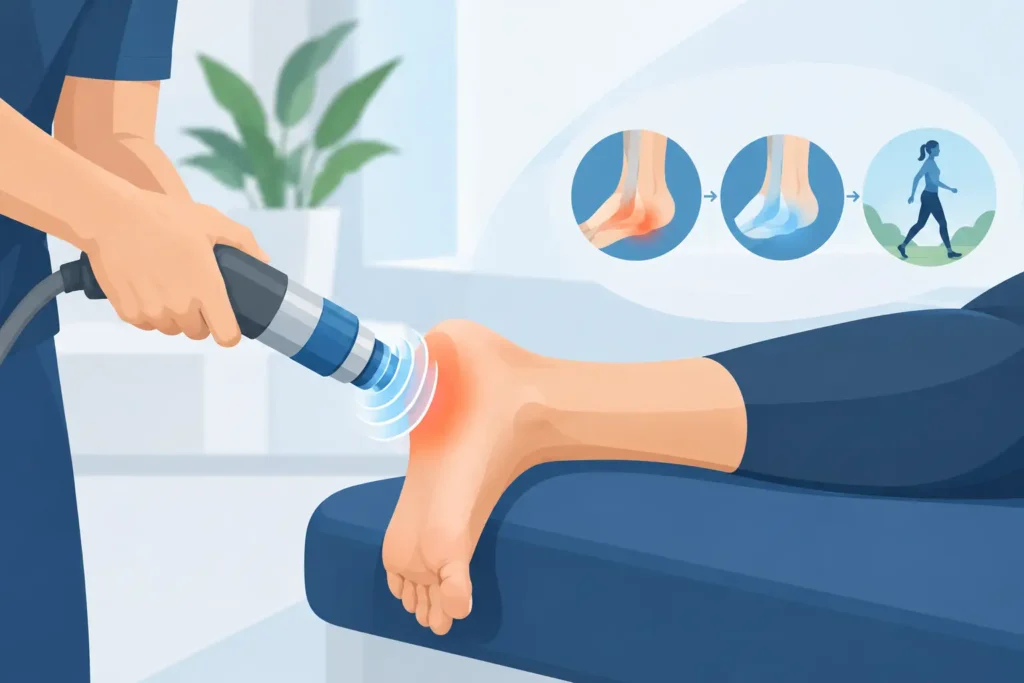
Shockwave therapy, often called extracorporeal shockwave therapy, uses focused acoustic energy delivered through a handheld device. The energy is applied to the painful area of the heel and surrounding soft tissue. It is not an electrical shock, and it does not involve surgery, needles, or an incision.
For chronic heel pain, the goal is to stimulate circulation and the body’s natural tissue-repair processes in an area that may have become irritated, stiff, or slow to heal. In plantar fasciitis, the thick band of tissue running from the heel toward the toes can become painful from repeated strain. Shockwave treatment may help reduce sensitivity and encourage healthier tissue remodeling while you work on the movement and loading habits that contributed to the problem.
The treatment itself is usually brief. Patients may feel tapping, pulsing, or a deep pressure during the session. The intensity can be adjusted based on comfort and the treatment area. Some tenderness afterward is possible, particularly when the heel has been painful for months, but most people can return to normal daily activity the same day.
Shockwave Therapy Heel Pain Results: A Realistic Timeline
The timeline varies. Some patients notice that their heel feels less tight or less painful within days. Others do not recognize meaningful improvement until several weeks into a treatment series. That difference does not necessarily mean the treatment is not working. Chronic tendon and fascia problems generally do not heal on the same schedule as a bruise or minor muscle strain.
A common pattern is gradual change rather than a dramatic overnight shift. Morning pain may become less sharp first. Then walking around the house, standing at work, or taking the first steps after sitting may become more manageable. Over time, some patients are able to tolerate longer walks, more time on their feet, or a return to exercise with less flare-up.
Many treatment plans include a series of sessions spaced over several weeks. Your provider may recommend reassessing progress after the initial sessions rather than judging the full outcome after one appointment. The number of treatments depends on the duration and severity of pain, your activity demands, and whether there are contributing issues such as poor ankle mobility, calf tightness, altered gait, or a previous injury.
It is also possible to feel temporarily more sore after treatment. That can occur as sensitive tissue is stimulated. It should be discussed with your provider, especially if pain is severe, persistent, or accompanied by swelling, numbness, skin changes, or an inability to bear weight.
Who May Benefit Most
Shockwave therapy is often considered when heel pain has lasted for several months and has not improved enough with basic conservative care. It may be a useful option for people with persistent plantar fasciitis, certain tendon-related heel conditions, or pain that repeatedly returns when they resume normal activity.
It can be especially appealing for people who want to avoid repeated steroid injections, long-term use of anti-inflammatory medication, or surgery. That does not mean shockwave therapy replaces every other form of care. It works best when it fits into a broader recovery plan.
A patient who stands on concrete all day may need help with footwear, activity pacing, and calf mobility. A runner may need a gradual return-to-running plan and changes in training volume. Someone recovering from an auto injury may have altered how they walk because of pain in the knee, hip, or back. Treating the heel without addressing those factors can limit progress.
When Heel Pain Needs a Different Evaluation
Not all heel pain is plantar fasciitis. Pain at the back of the heel may involve the Achilles tendon. Burning, tingling, or numbness can point to nerve irritation. Sudden pain after a fall, a popping sensation, significant bruising, fever, or marked swelling deserves prompt medical evaluation.
Shockwave therapy may not be appropriate for every person. Pregnancy, certain bleeding disorders, use of some blood-thinning medications, active infection, and specific medical conditions can affect whether treatment is recommended. A clinician should review your history and examine the painful area before beginning care.
What Improves the Chances of Better Results
Shockwave therapy is not a passive fix. The treatment can support healing, but daily choices influence how well the heel tolerates load while it recovers. A provider may recommend a few targeted changes rather than asking you to stop your life completely.
Supportive shoes are often a starting point. Shoes that are worn down, overly flexible, or unsupportive can keep irritating the heel with every step. Temporary inserts, heel cushions, or orthotics may help some patients, depending on their foot mechanics and symptoms.
Gentle calf and plantar fascia mobility can also be useful, particularly before taking those first morning steps. Strengthening the foot, ankle, calf, and hips may be added as pain settles. The goal is not simply to stretch harder. It is to build enough capacity that standing, walking, work, and exercise no longer overwhelm the tissue.
Activity modification matters as well. This does not always mean bed rest. In fact, complete inactivity can make stiffness worse for some people. It may mean reducing high-impact activity for a period, changing the route or surface you walk on, taking short movement breaks during long shifts, or choosing lower-impact exercise while the heel calms down.
How Shockwave Therapy Fits With Integrative Pain Care
Heel pain can affect sleep, work, exercise, and mood. When it drags on, it is understandable to look for anything that brings quick relief. But relying on pain medication alone does not correct the underlying strain pattern, and it can create concerns for patients trying to reduce medication use.
An integrative approach gives patients more than one path forward. Shockwave therapy may be paired with acupuncture for pain modulation and muscle tension, along with injury-focused evaluation, guided movement recommendations, and physician-supervised care when needed. The purpose is not to force every patient into the same treatment. It is to create a plan that matches the diagnosis, health history, and recovery goals.
For some people, the best result is less pain during a full workday. For others, it is being able to walk the dog, play with children, return to the gym, or stop planning every outing around where they can sit down. Those outcomes are meaningful because they restore function, not just a number on a pain scale.
Questions Patients Commonly Ask
Does shockwave therapy hurt?
The treatment can be uncomfortable over a very tender heel, but it should be tolerable. The provider can adjust the intensity and communicate with you throughout the session. Brief soreness afterward is possible.
How many sessions will I need?
There is no one number that fits everyone. Many people receive a series of treatments, then progress is reviewed based on changes in pain, walking tolerance, and function. Long-standing pain or physically demanding work may require a more gradual approach.
Can I keep working after treatment?
Most patients can continue with normal daily responsibilities, although high-impact exercise or activities that clearly aggravate the heel may need to be modified. Your provider can give guidance based on your specific condition.
Will the pain come back?
Recurrence is possible if the original stressors remain. That is why footwear, strength, mobility, workload, and return-to-activity planning are part of lasting heel pain care. Treatment is most useful when it helps you build a stronger foundation for daily movement.
If heel pain has kept you from moving comfortably or made every morning feel like a setback, you do not have to accept it as normal. A focused evaluation can help determine whether shockwave therapy and a personalized recovery plan may be a sensible next step toward being active with less pain.
Leave a reply