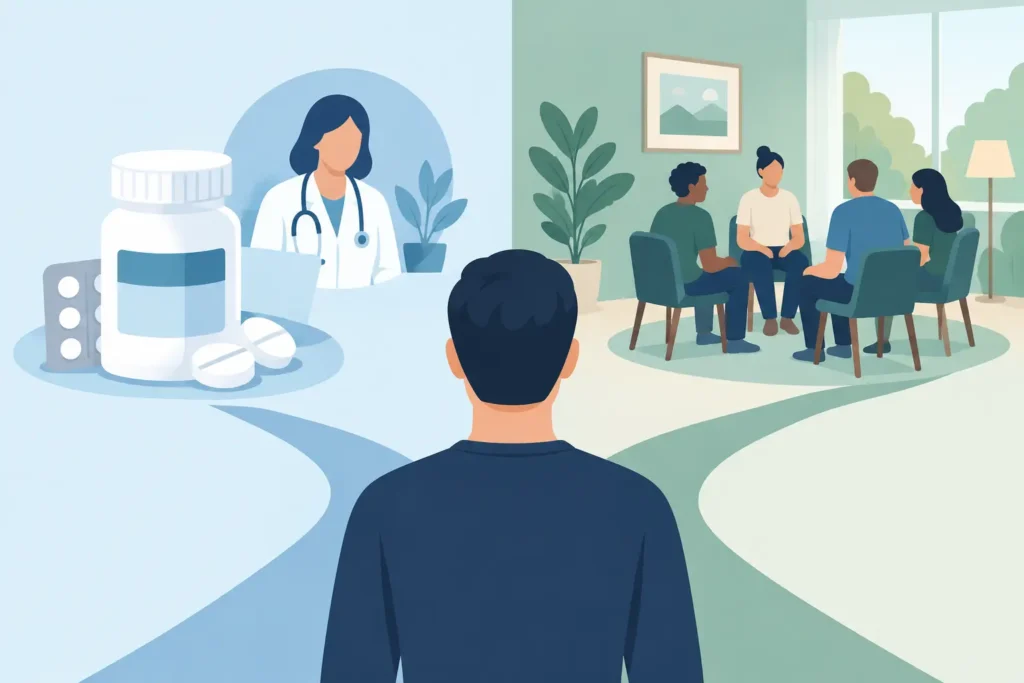
Someone who is dependent on opioids may be told they need to “go to rehab,” while another provider recommends medication. The choice between Suboxone versus inpatient rehab can feel confusing, especially when withdrawal, pain, work obligations, family responsibilities, and fear of relapse are all part of the picture.
The most useful answer is often not one treatment or the other. Suboxone and inpatient rehabilitation address different needs, and many people benefit from a plan that includes medication, counseling, medical monitoring, and support for the pain or stress that contributed to opioid use in the first place.
What Suboxone Treatment Does
Suboxone is a prescription medication used to treat opioid use disorder. It combines buprenorphine, a partial opioid agonist, with naloxone. Buprenorphine helps reduce withdrawal symptoms and cravings without producing the same effects as full opioid agonists such as oxycodone, hydrocodone, fentanyl, heroin, or methadone. Naloxone is included to discourage misuse by injection.
When prescribed and monitored appropriately, Suboxone can help a patient stabilize. Instead of spending each day trying to avoid withdrawal, patients can return their focus to work, family, sleep, physical health, counseling, and the practical work of recovery.
Suboxone is not simply “trading one drug for another.” Opioid use disorder is a medical condition that changes brain chemistry, tolerance, and the body’s response to stress. Medication-assisted treatment uses an FDA-approved medication to reduce the risks that come with untreated addiction, including relapse and overdose.
For many patients, outpatient Suboxone treatment is especially practical. Appointments can fit around a job or caregiving duties, and the patient remains connected to daily life while building healthier routines. Treatment may begin with frequent follow-ups and become less frequent as the patient stabilizes.
What Suboxone does not replace
Medication is a powerful tool, but it is not a complete recovery plan by itself. A patient may still need therapy, recovery coaching, treatment for anxiety or depression, help with housing or employment challenges, and a strategy for managing chronic pain without returning to opioid medication.
A qualified provider should also review other medications and substances. Combining opioids with alcohol, benzodiazepines, or sedatives can be dangerous. Patients should never start, stop, or adjust Suboxone without medical guidance.
What Inpatient Rehab Provides
Inpatient rehab is a structured residential setting where a person lives at the facility for a period of time, often ranging from a few weeks to longer depending on clinical need and insurance coverage. The setting removes the person from many of the people, places, and pressures connected to substance use.
Inpatient programs commonly provide medical assessment, group therapy, individual counseling, education, peer support, and a daily routine. Some programs offer medically supervised withdrawal management, often called detox, at the beginning of treatment. The intensity and quality of programs vary, so it is worth asking exactly what medical and behavioral services are included.
For a person in immediate crisis, inpatient treatment can provide distance from an unsafe environment and a concentrated period of support. It may be appropriate when someone has repeatedly relapsed despite outpatient care, lacks a safe place to live, has severe co-occurring mental health symptoms, or needs close medical observation during withdrawal.
However, completing a residential stay does not automatically protect someone from relapse after discharge. Opioid tolerance can drop quickly during abstinence. If a person returns to the same amount of opioids they used before treatment, overdose risk can be higher. Discharge planning, follow-up care, naloxone access, and ongoing support matter greatly.
Suboxone Versus Inpatient Rehab Is Often the Wrong Choice
The question is not always whether medication is better than rehab. A better question is: What level of care will help this person stay safe and remain engaged in treatment?
Some inpatient programs use medication-assisted treatment, including buprenorphine. A patient may begin Suboxone during a residential stay and continue it after returning home. Others may be stable enough to begin treatment in an outpatient medical practice without entering a facility at all.
The right approach depends on clinical needs, not shame, pressure from others, or the mistaken belief that recovery only “counts” if a person stops all medication immediately. Some patients use Suboxone for months. Others need it longer. Decisions about tapering should be individualized and based on stability, cravings, relapse history, mental health, pain, and the patient’s support system.
When Outpatient Suboxone May Be a Good Fit
Outpatient treatment may be appropriate for a patient who has a reasonably stable living situation, can attend appointments, and does not need round-the-clock supervision. It can also be a strong option for someone who needs privacy and flexibility to keep working or caring for family.
It may be especially helpful for adults whose opioid dependence began with a prescription for injury-related or chronic pain. These patients need more than withdrawal relief. They need a realistic plan for pain management, movement, sleep, stress, and flare-ups so that opioids do not become the default response to discomfort.
At Acupuncture & Injury, physician-guided addiction care can be paired with non-drug-focused therapies for pain and recovery when clinically appropriate. Acupuncture, electroacupuncture, and other supportive therapies are not replacements for evidence-based opioid use disorder treatment. They may, however, help some patients address pain, tension, and physical function as part of a broader care plan.
When Inpatient Care May Be Safer
Inpatient or residential treatment deserves serious consideration when outpatient care is not enough to keep a person safe. This can include frequent overdose events, ongoing fentanyl or polysubstance use, severe withdrawal complications, untreated psychiatric symptoms, active suicidal thoughts, or a home environment where substances and triggers are unavoidable.
A patient may also need inpatient care after multiple unsuccessful outpatient attempts. That is not a failure. Recovery plans often need to change as new information becomes clear. More structure can create the time and safety needed to stabilize.
If someone is in immediate danger, has taken too much of a substance, cannot stay awake, has slow or stopped breathing, or may harm themselves, call 911 right away. Naloxone can reverse an opioid overdose and should be used when an overdose is suspected.
Questions to Ask Before Choosing Treatment
The best program is one that treats the whole situation, not just the last substance used. Before deciding, ask whether the provider can prescribe and manage medication for opioid use disorder, how they handle cravings and relapse, and what follow-up care looks like after the first few weeks.
Also ask how pain will be addressed. For many people, unmanaged pain is a major relapse trigger. A plan based only on willpower is rarely enough when an old injury, auto accident trauma, arthritis, or nerve pain is still disrupting sleep and daily function.
Cost and access matter, too. Inpatient care may require time away from work, travel, and insurance approval. Outpatient treatment can be more affordable and easier to maintain, but it requires a reliable commitment to appointments and a safe recovery environment. Neither option should be chosen solely because it is more convenient if a higher level of care is medically necessary.
Recovery Needs a Plan for Real Life
The strongest treatment plan is one a patient can continue after the first difficult days have passed. That may mean starting Suboxone in an outpatient setting, entering inpatient rehab with medication support, or stepping down from residential care into ongoing medical treatment and counseling.
Recovery is not measured by how much someone suffers. It is measured by greater safety, fewer cravings, restored function, honest support, and the ability to build a life that does not revolve around opioids. The right next step is the one that gives you a realistic path to stay connected to care and move forward with dignity.
Leave a reply