A painful shoulder that keeps you awake, low back pain after a car accident, or knee stiffness that makes stairs difficult can change how you work, sleep, and move. Many patients want to know how acupuncture works before trying it, especially when they are looking for pain relief without adding another medication to their routine. The short answer is that acupuncture uses very thin, sterile needles to stimulate specific points on the body that can influence pain processing, muscle tension, circulation, and the nervous system.
It is not a quick fix for every condition, and results vary based on the injury, the duration of symptoms, and your overall health. But when acupuncture is part of a thoughtful care plan, it can be a practical, drug-reducing option for many people dealing with pain, inflammation, and reduced mobility.
How Acupuncture Works in the Body
Traditional Chinese medicine describes acupuncture points as part of pathways that influence the body’s balance and flow of energy. Modern medical research looks at acupuncture through a different lens: its effect on the nervous system, local tissues, and chemical messengers involved in pain and healing. These perspectives are not identical, but they can coexist in an integrative treatment setting.
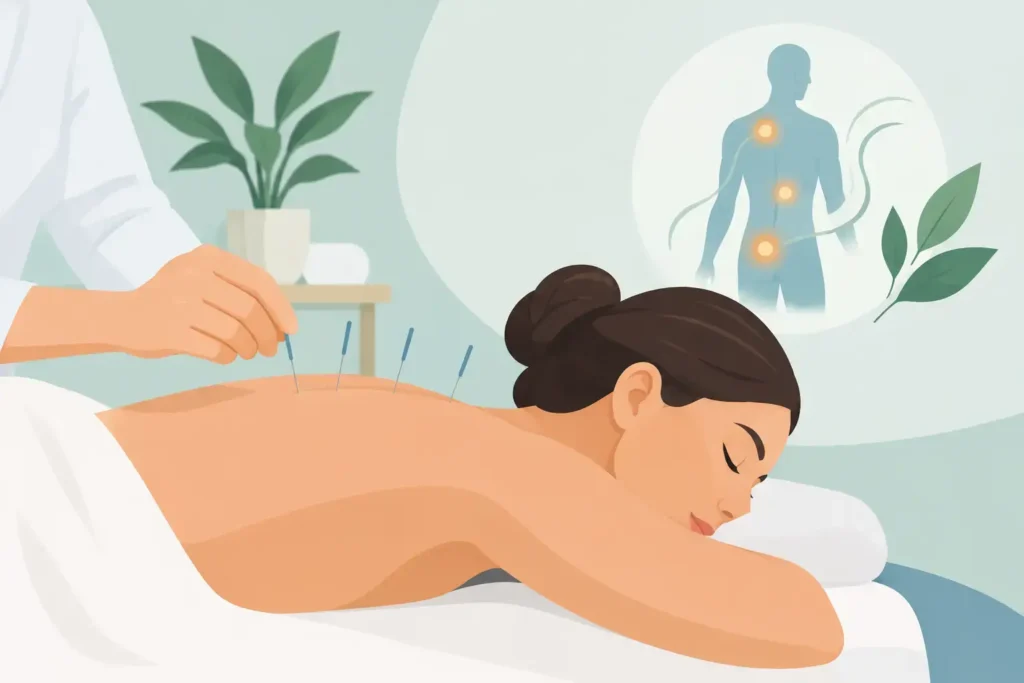
When an acupuncture needle is placed at a targeted point, it creates a small, controlled stimulus. That stimulus sends signals through sensory nerves to the spinal cord and brain. In response, the body may release substances involved in pain modulation, including endorphins and other neurotransmitters. These natural chemicals can help reduce the intensity of pain signals and support a calmer nervous system response.
Acupuncture may also affect local circulation. Improved blood flow to tight or irritated tissue can support the delivery of oxygen and nutrients while helping the body clear metabolic waste products. For someone with muscle guarding after an injury, this may contribute to less stiffness and better range of motion over time.
The treatment can also influence the autonomic nervous system, which controls functions such as heart rate, digestion, and the stress response. Chronic pain often keeps the body in a heightened state of protection. By encouraging relaxation and reducing excessive muscle tension, acupuncture may help the body shift out of that constant alarm state.
Why Pain Can Improve After Treatment
Pain is more than a signal from one sore spot. The brain, spinal cord, muscles, joints, sleep quality, stress level, and past injuries can all shape how strongly pain is felt. That is why two people with similar imaging results can have very different symptoms.
Acupuncture is often used to address several parts of that pain cycle at once. It may help quiet overactive pain signaling, relax trigger points in muscle, and make movement more comfortable. When a patient can move more normally, they are often better able to participate in exercise, injury rehabilitation, work activities, and daily tasks that support recovery.
This does not mean acupuncture repairs every structural problem. A torn tendon, fracture, significant nerve compression, or severe joint damage may require additional medical evaluation and treatment. Acupuncture can still be a useful supportive therapy in some cases, but it should not replace necessary diagnostic care or emergency treatment.
What an Acupuncture Session Feels Like
The needles used for acupuncture are much thinner than the needles used for injections or blood draws. Most patients feel little to no pain as they are inserted. Some people notice a brief pinch, warmth, heaviness, tingling, or a dull sensation around the treatment area. These sensations are typically mild and short-lived.
A treatment visit begins with an assessment of your symptoms, health history, medications, activity level, and treatment goals. For an injury, the provider may also evaluate posture, movement patterns, painful areas, muscle tightness, and range of motion. This helps determine which points and techniques may be most appropriate.
Needles commonly remain in place for about 15 to 30 minutes while you rest. Depending on your needs, treatment may include manual acupuncture alone or may be combined with approaches such as electroacupuncture, cupping, injury care, or shockwave therapy. Combining therapies is not automatically better. The right plan depends on the cause of pain, the stage of healing, and how your body responds.
Conditions Acupuncture May Help Address
Acupuncture is commonly used as part of care for musculoskeletal pain and recovery concerns. Patients often seek it for low back pain, neck pain, sciatica symptoms, headaches, shoulder pain, knee discomfort, arthritis-related stiffness, muscle strain, and pain following an auto accident.
It may also be helpful when pain has begun to affect sleep, mood, or daily function. For example, a person with chronic back pain may start sleeping poorly, become less active, and develop more muscle tension. A plan that addresses pain while supporting better rest and movement can be more useful than simply masking symptoms for a few hours.
For people trying to reduce reliance on pain medication, acupuncture may offer another layer of support. It should never be used as a reason to abruptly stop prescribed medications. Medication changes, especially involving opioids, should be handled with the guidance of the prescribing clinician or a qualified medical provider.
How Many Treatments Does It Take?
There is no single answer because every pain condition has its own timeline. A recent muscle strain may respond more quickly than pain that has been present for years. Acute injuries can sometimes improve within a few visits, while chronic pain or complex injury recovery may require a series of treatments and periodic reassessment.
Consistency matters. Acupuncture works best when it is part of a plan that also considers activity modification, proper movement, sleep, hydration, stress, and any needed medical care. Your provider should set realistic expectations, monitor your progress, and adjust the plan if treatment is not producing meaningful improvement.
A good treatment plan focuses on function, not just a number on a pain scale. Can you turn your head more easily? Walk farther? Return to work with less discomfort? Sleep through the night? These changes often matter most.
Is Acupuncture Safe?
When performed by a properly trained professional using sterile, single-use needles, acupuncture is generally considered safe. Minor side effects can include temporary soreness, slight bruising, light bleeding at a needle site, or fatigue after treatment. Some patients feel relaxed or sleepy afterward.
Tell your provider about blood-thinning medications, bleeding disorders, pregnancy, implanted electrical devices, active infections, severe needle anxiety, or any major medical conditions. This information helps the provider choose techniques safely. Electroacupuncture, which applies a gentle electrical current to selected needles, is not appropriate for everyone and should be considered carefully.
It is also wise to seek prompt medical care for warning signs such as chest pain, sudden weakness, severe headache, loss of bladder or bowel control, high fever, or pain after a major trauma. These symptoms need medical assessment beyond acupuncture.
Acupuncture as Part of a Recovery Plan
The most effective pain care is rarely one-size-fits-all. At Acupuncture & Injury, care can be tailored around the source of discomfort and the outcome you want, whether that is returning to work after an accident, moving without constant back pain, or finding a path forward that does not depend solely on pills.
Acupuncture may work well alongside physician-guided pain management, rehabilitation strategies, cupping, electroacupuncture, or shockwave therapy when clinically appropriate. The goal is not to force a choice between holistic and conventional care. It is to use the right tools responsibly, with your safety and recovery in mind.
If pain has been limiting your life, the next useful step is a careful evaluation of what is driving it. A personalized treatment plan can help you decide whether acupuncture fits your recovery and what meaningful progress could look like for you.
Leave a reply