A sore heel that makes the first steps of the morning miserable, a shoulder that will not settle down, or an old injury that keeps limiting your workday can make any new treatment feel like a gamble. So, does shockwave therapy hurt? It can be uncomfortable, particularly over a sensitive or inflamed area, but it should be tolerable and carefully adjusted to your comfort level.
Shockwave therapy is not an electric shock, and it is not intended to make you push through severe pain. At Acupuncture & Injury, treatment is approached as part of a personalized recovery plan: the goal is to support healing, improve function, and help reduce reliance on pain medication, not simply to endure a procedure.
Does Shockwave Therapy Hurt During Treatment?
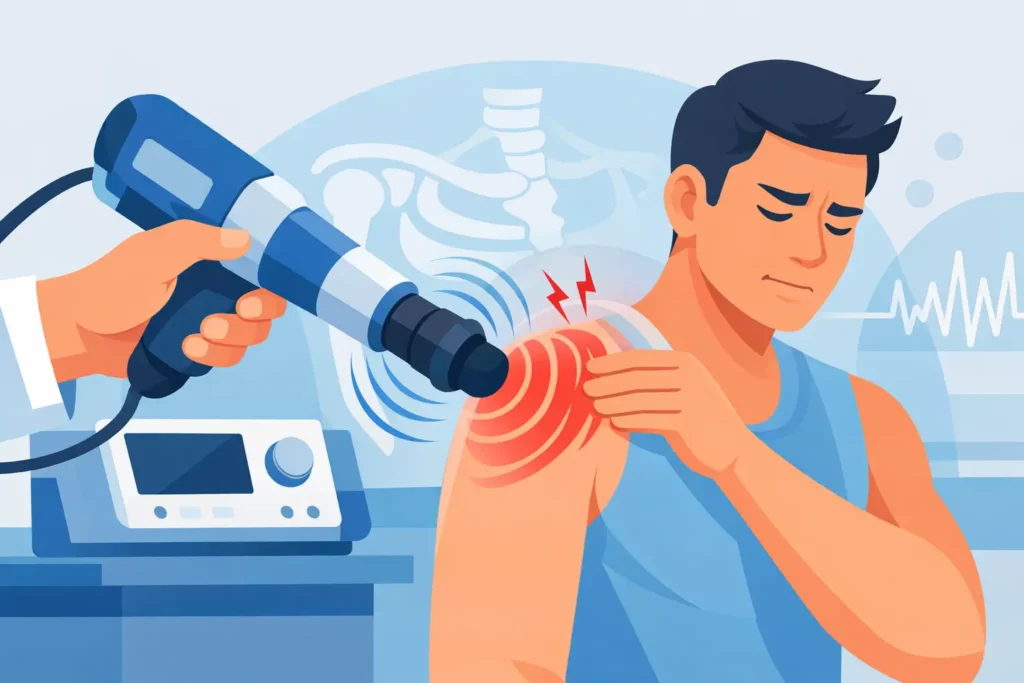
Most patients describe shockwave therapy as a series of rapid tapping, pulsing, or deep thumping sensations at the treatment site. The feeling can range from mildly unusual to moderately uncomfortable. If the tissue is very irritated, tender, or close to bone, the first few minutes may feel more intense.
The good news is that treatment settings can be adjusted. Your provider can begin at a lower intensity and increase it only as you tolerate it. Communication matters throughout the visit. A brief sensation of discomfort may be expected, but sharp, overwhelming, or escalating pain is not something you should silently accept.
Many people find that the area becomes easier to tolerate as the session continues. Others notice that certain spots are more sensitive than others. That variation is normal, especially when treating chronic tendon irritation, muscle tightness, scar tissue, or an injury that has remained painful for months.
What Shockwave Therapy Actually Feels Like
Shockwave therapy uses acoustic waves delivered through a handheld device placed against the skin with gel. These waves are designed to stimulate the affected tissue. Depending on the area being treated and the type of shockwave technology used, you may feel tapping, vibration, pressure, or a quick percussion-like pulse.
It does not involve needles, incisions, or sedation. The treatment itself is usually brief, often lasting only several minutes per area. For many patients, that makes it a practical option when they want a non-surgical approach to pain and recovery.
Sensitivity often depends on where the pain is located. Areas with thin tissue over bone, such as the heel, shin, elbow, or certain parts of the shoulder, may feel more tender than a larger muscle group. Treating a fresh injury can also feel different from treating long-standing stiffness or tendon pain.
Why Intensity Varies From Person to Person
There is no single answer that applies to everyone because pain is personal. Your current inflammation level, the severity of the condition, your nervous system sensitivity, and previous injuries can all affect what you feel.
A person with chronic plantar fasciitis may feel sharp tenderness when the applicator first reaches the most painful point in the heel. Someone receiving treatment for a tight calf or hamstring may primarily notice deep pressure. A patient recovering after an auto accident may have guarded muscles and sensitive soft tissue that require a more gradual approach.
Your provider also considers the treatment area and your health history before selecting settings. Effective care is not about using the highest possible intensity. It is about delivering an appropriate treatment dose while keeping you safe and able to continue your recovery plan.
Will You Be Sore After Shockwave Therapy?
Some soreness after treatment is possible. It may feel similar to the tenderness you experience after a deep tissue massage, a hard workout, or pressure on a bruised area. Mild redness, temporary sensitivity, or aching can occur at the treatment site and often improves within a day or two.
This response does not automatically mean something is wrong. Shockwave therapy is intended to stimulate a healing response in damaged or slow-healing tissue, so a temporary increase in local soreness can happen. Still, recovery should be monitored. If you develop severe pain, significant swelling, unusual numbness, or symptoms that concern you, contact your provider for guidance.
Your care team may recommend avoiding high-impact activity for a short period after treatment, particularly if a tendon or acute injury is involved. That does not always mean complete rest. In many cases, controlled movement and a gradual return to activity are part of getting better. The right plan depends on your diagnosis, job demands, exercise routine, and goals.
How We Help Keep Treatment Comfortable
A good shockwave therapy visit starts before the device is turned on. Your provider should identify the painful area, review your symptoms, and discuss what you have already tried. This helps determine whether shockwave therapy fits your condition and whether it should be combined with treatments such as acupuncture, cupping, electroacupuncture, or injury rehabilitation support.
During treatment, speak up early if the sensation is too strong. Small adjustments in intensity, treatment angle, or the exact area being addressed can make a meaningful difference. Patients should never feel embarrassed about asking questions or requesting a slower start.
Comfort is not the only reason to individualize care. Pain can cause people to compensate in the way they walk, sit, lift, or move. Addressing the original painful tissue while also considering muscle tension, mobility, and daily activity can support more lasting improvement.
Who Should Be Cautious About Shockwave Therapy?
Shockwave therapy is not appropriate for every person or every painful condition. Before treatment, tell your provider about pregnancy, bleeding disorders, blood-thinning medication, active infection, cancer in or near the treatment area, loss of sensation, recent surgery, implanted devices, or any significant medical condition.
Some areas of the body should not be treated, and certain conditions require physician guidance or a different approach. A thorough evaluation is especially valuable if your pain began after a car accident, a fall, a workplace injury, or a sudden sports injury. What feels like a simple strain may sometimes involve a fracture, tear, nerve issue, or other problem that needs different care.
For patients who have been using pain medication for a long time, the conversation should also be handled with care. Non-drug therapies can be valuable tools for pain management, but medication changes should be made only with appropriate medical supervision. The goal is relief and function, not abrupt decisions that create new problems.
Is the Discomfort Worth It?
For the right patient, many find the short-lived discomfort manageable when compared with ongoing pain, reduced mobility, repeated medication use, or the prospect of more invasive treatment. But shockwave therapy is not a shortcut, and results are not identical for everyone. Some conditions respond quickly, while others need a series of sessions and supportive changes in activity, mobility, or rehabilitation.
The most useful question is not only whether shockwave therapy hurts. It is whether the treatment is appropriate for the source of your pain and whether it is being delivered with a plan that respects your limits. A careful evaluation can help you decide if this non-surgical option fits the recovery you are trying to achieve.
Leave a reply