A hand that wakes you up at night with burning, numbness, or pins-and-needles can make ordinary tasks feel exhausting. Typing, driving, holding a phone, opening jars, or picking up a child may suddenly hurt. Acupuncture for carpal tunnel symptoms may be a useful part of a conservative treatment plan for some people, particularly those who want pain relief without relying on medication alone.
Carpal tunnel syndrome is not simply hand pain. It involves pressure or irritation of the median nerve as it travels through a narrow passage in the wrist called the carpal tunnel. The right treatment depends on the severity of nerve involvement, how long symptoms have been present, and whether there is weakness or muscle loss. Acupuncture can support symptom management, but it should not delay appropriate medical evaluation when warning signs are present.
What Carpal Tunnel Symptoms Can Feel Like
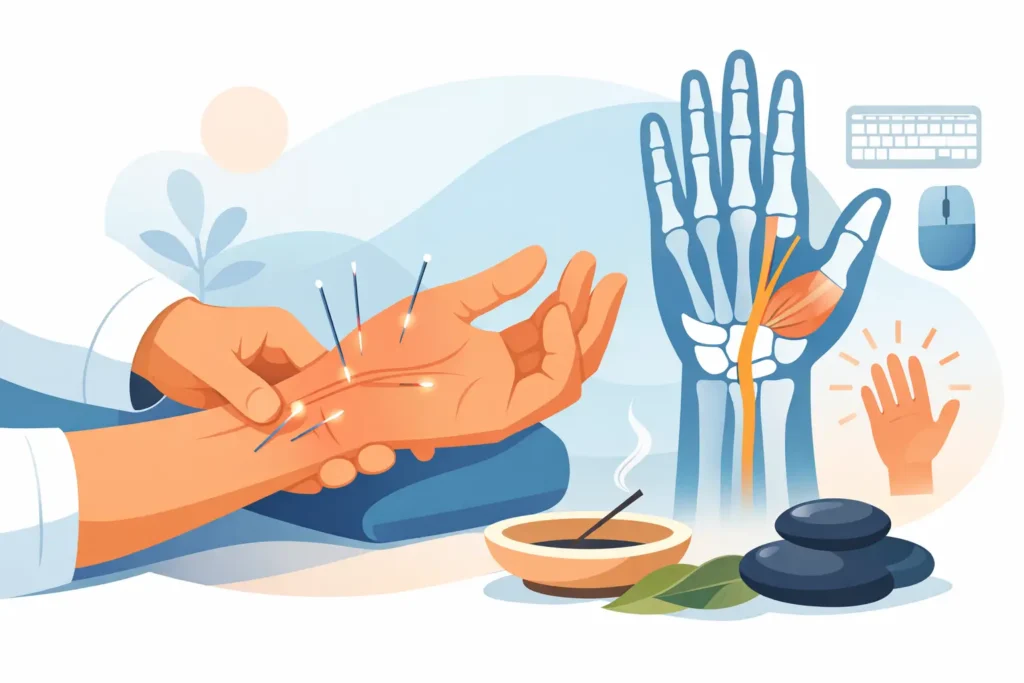
The median nerve supplies sensation to much of the thumb, index finger, middle finger, and part of the ring finger. When that nerve is compressed, symptoms often include tingling, numbness, burning pain, or a swollen feeling in the fingers even when no visible swelling is present.
Many people notice symptoms at night or first thing in the morning. Others feel discomfort during repetitive work, prolonged gripping, computer use, tool use, or driving. You may find yourself shaking or hanging your hand down to get temporary relief.
As the condition progresses, hand weakness can become more noticeable. Buttons, keys, utensils, and small objects may become harder to manage. Dropping items is not something to ignore, especially if it is getting worse.
Carpal tunnel symptoms can overlap with problems that begin in the neck, shoulder, elbow, or upper back. Arthritis, tendon irritation, diabetes, thyroid conditions, fluid retention, and past wrist injuries can also contribute. That is why a thoughtful evaluation matters before assuming every numb hand is carpal tunnel syndrome.
How Acupuncture for Carpal Tunnel Symptoms May Help
Acupuncture uses very thin, sterile needles placed at selected points in the body. For carpal tunnel concerns, treatment may include points in the hand and wrist as well as the forearm, elbow, shoulder, neck, and other areas that influence pain signaling and muscle tension.
The goal is not to force an injured nerve to heal overnight. Rather, acupuncture may help calm pain sensitivity, reduce protective muscle tension, support circulation in surrounding tissues, and make it easier to move the wrist and hand comfortably. Some patients report less nighttime tingling, less aching after repetitive activity, and improved ability to sleep or work through the day.
Research on acupuncture for carpal tunnel syndrome is promising but not absolute. Some studies suggest it can improve symptoms and function for certain patients, while the strength and consistency of the evidence vary. Results also depend on whether the nerve compression is mild, moderate, or severe. A patient with occasional tingling and a patient with longstanding weakness need different expectations and may need different levels of care.
At Acupuncture & Injury, care is built around practical recovery. Acupuncture may be combined with electroacupuncture, in which a mild controlled current is used with needles to stimulate targeted areas. This option is not necessary for everyone, but it may be considered when symptoms involve persistent pain, muscle tightness, or nerve-related discomfort.
When Acupuncture Fits Into a Treatment Plan
For mild to moderate symptoms, acupuncture often works best as part of a broader conservative approach. That may include changing aggravating activities, using a neutral-position wrist brace at night, improving workstation setup, and addressing tightness or repetitive strain in the forearm, shoulder, and neck.
If your symptoms began after an auto accident, a fall, or another injury, the wrist may not be the only area involved. Whiplash, shoulder strain, and upper-back tension can affect how the arm and hand move and how nerve symptoms are felt. A treatment plan should look beyond the spot where tingling appears.
Acupuncture can also be a reasonable option for people who want to reduce their reliance on pain medication. It is not a replacement for medically necessary treatment, and it does not require patients to choose between holistic care and conventional medicine. The most effective plan may include acupuncture alongside physician-guided evaluation, bracing, physical rehabilitation, imaging, or nerve testing when needed.
What to Expect During Treatment
Your first visit should start with questions about your symptoms, work demands, injury history, medical conditions, and goals. A provider may assess wrist movement, grip strength, areas of tenderness, posture, and whether symptoms seem connected to the neck or shoulder.
Acupuncture needles are typically much thinner than needles used for injections or blood draws. Most patients feel little more than a brief pinch, a dull ache, warmth, heaviness, or a mild tingling sensation at some points. Treatment sessions are generally quiet and relaxing, and patients remain fully clothed except for the treatment areas.
The number of sessions varies. Recent symptoms tied to overuse may respond faster than symptoms that have been present for months or years. A short series of treatments is often used to assess response, then the plan can be adjusted based on changes in sleep, pain level, numbness, hand function, and daily activity tolerance.
Improvement is not always linear. You may have a few better days, then notice symptoms after a demanding work shift or a long day at the keyboard. Tracking those patterns helps identify what is helping and what still needs to change.
Signs You Need Medical Evaluation Promptly
Acupuncture can be supportive care, but severe nerve compression needs timely attention. Seek medical evaluation promptly if you have constant numbness, worsening weakness, visible shrinking of the thumb muscles, frequent dropping of objects, or pain and numbness that are rapidly progressing.
Sudden arm weakness, facial drooping, trouble speaking, chest pain, shortness of breath, or symptoms affecting one side of the body unexpectedly require emergency care. Those signs may point to a condition other than carpal tunnel syndrome.
A clinician may recommend nerve conduction testing or electromyography to assess how well the median nerve is functioning. These tests can help distinguish carpal tunnel syndrome from a pinched nerve in the neck or another nerve problem. In more advanced cases, referral for surgical consultation may be appropriate. Surgery is not the first answer for every patient, but delaying care when nerve damage is progressing can reduce the chance of full recovery.
Practical Steps That Can Protect Your Hands
Treatment has a better chance of lasting when the daily triggers are addressed. Keep the wrist as neutral as possible during sleep and repetitive tasks. Avoid prolonged bent-wrist positions, gripping tools too tightly, or resting the wrist on a hard desk edge for long periods.
Short movement breaks can help if you type or use a mouse all day. Adjusting chair height, keyboard position, and mouse placement may reduce strain more effectively than simply pushing through discomfort. If your job requires repetitive assembly work, lifting, or vibrating tools, ask about task rotation, grip modifications, or ergonomic changes.
Gentle mobility and nerve-gliding exercises may be useful, but they should not produce sharp pain or increase numbness. An individualized recommendation is safer than aggressively stretching an already irritated nerve.
A More Comfortable Path Forward
Persistent hand numbness is easy to dismiss until it begins affecting sleep, work, and independence. You do not have to wait until symptoms become severe to get answers. A careful assessment can clarify whether acupuncture is appropriate, what may be contributing to your symptoms, and which non-surgical steps can help you move toward steadier relief.
The goal is simple: protect nerve function, reduce pain, and help you use your hands with more confidence in everyday life.
Leave a reply